Knife Block
| March 2024 |
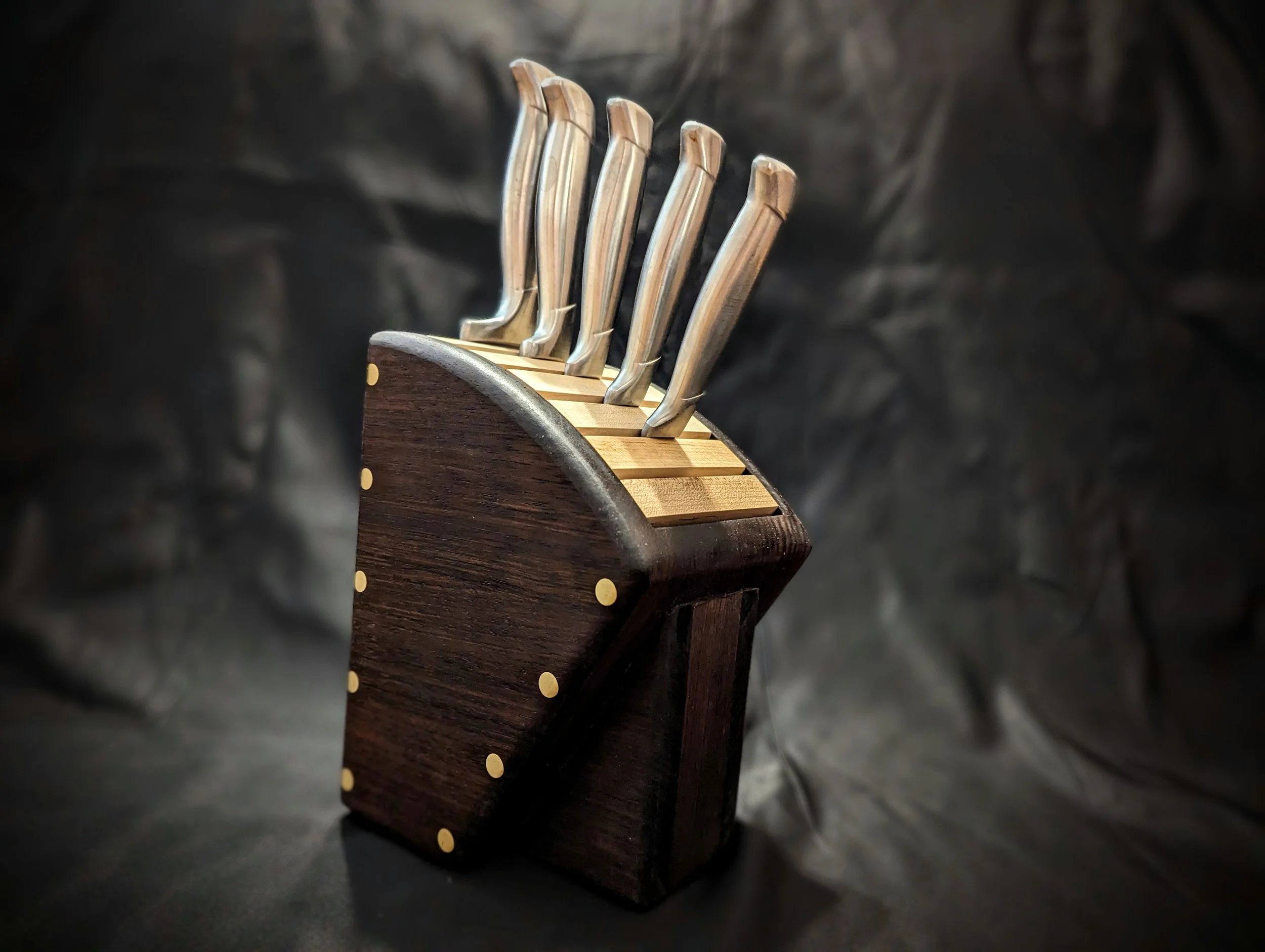
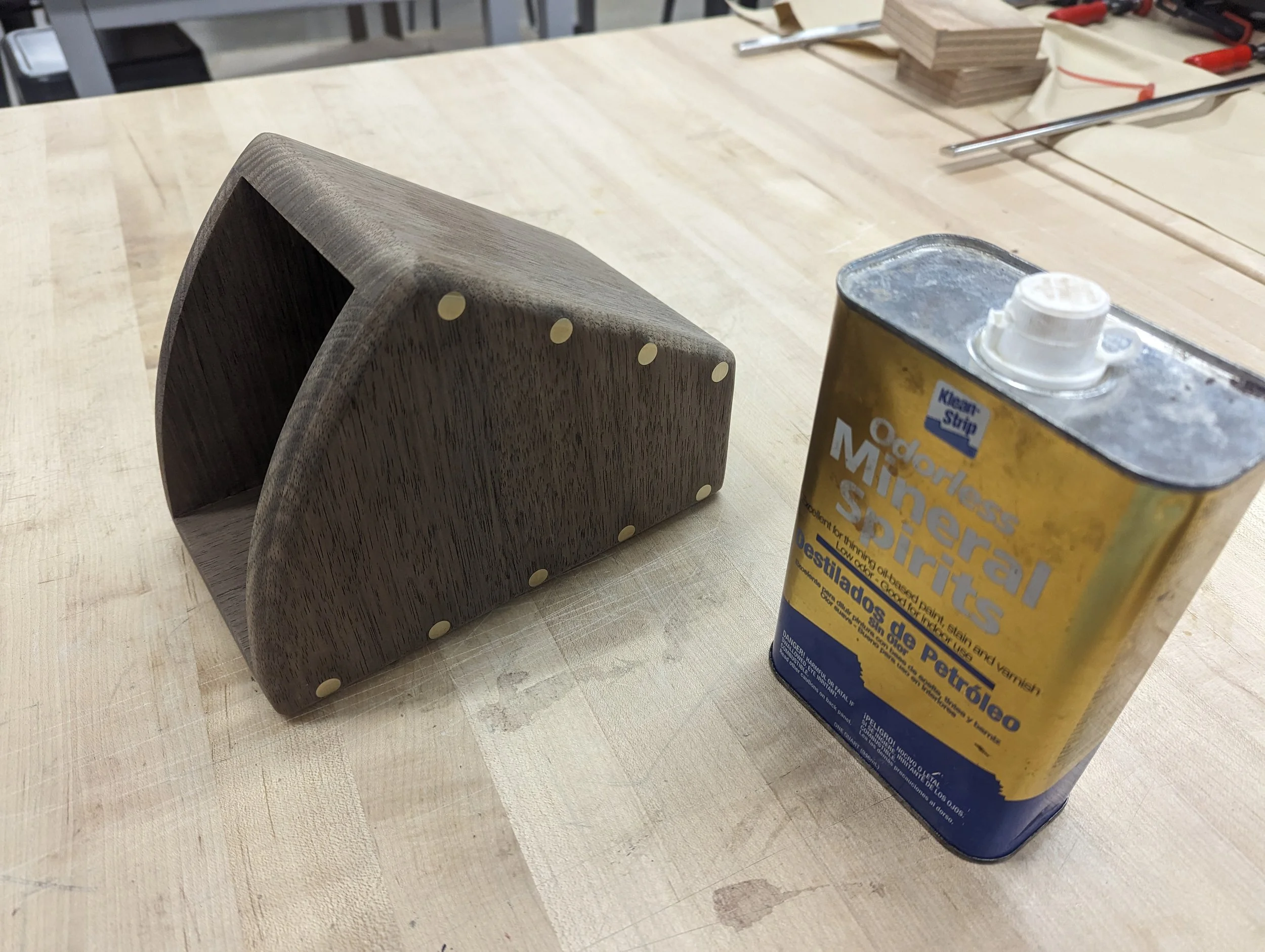
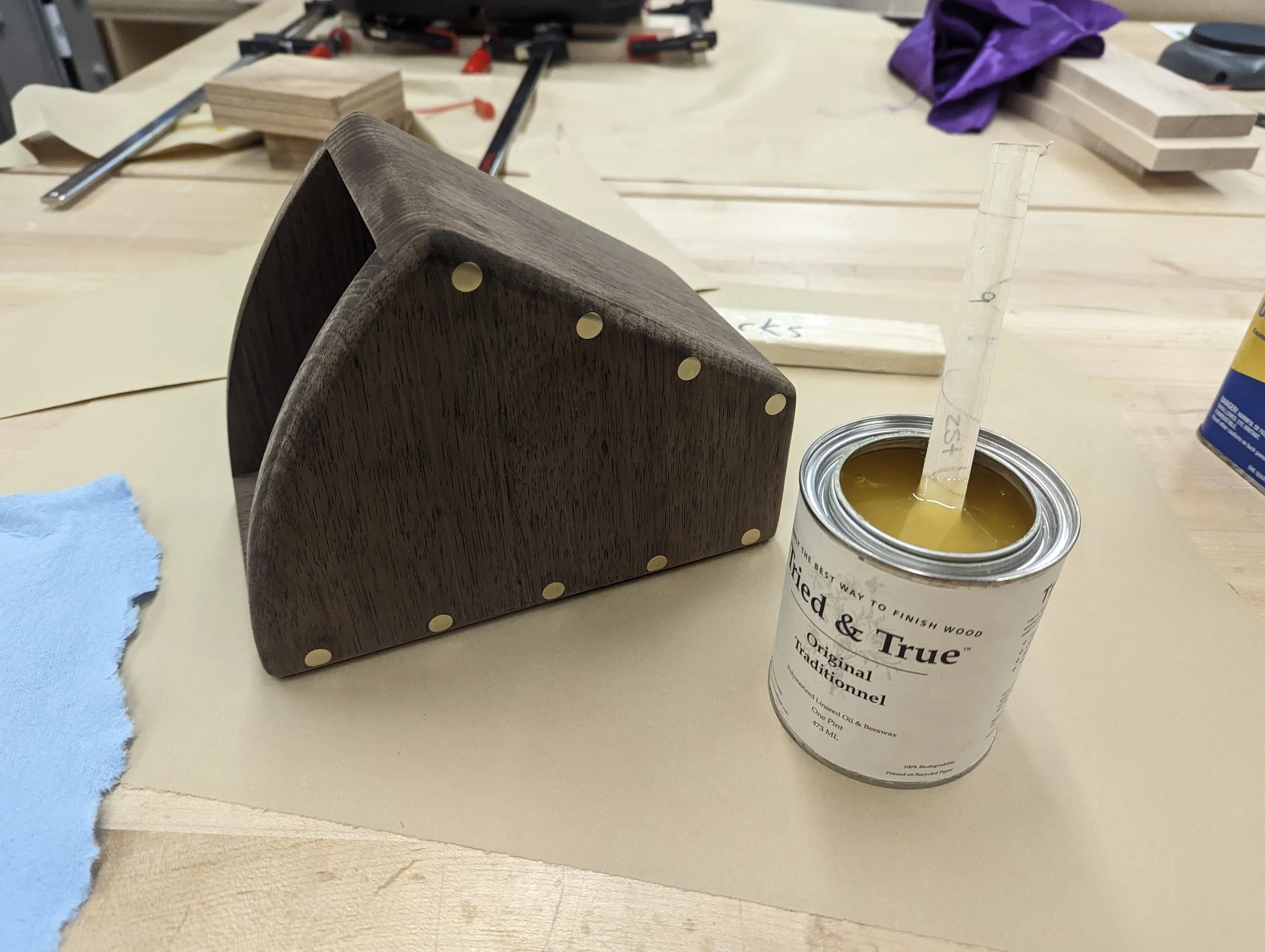
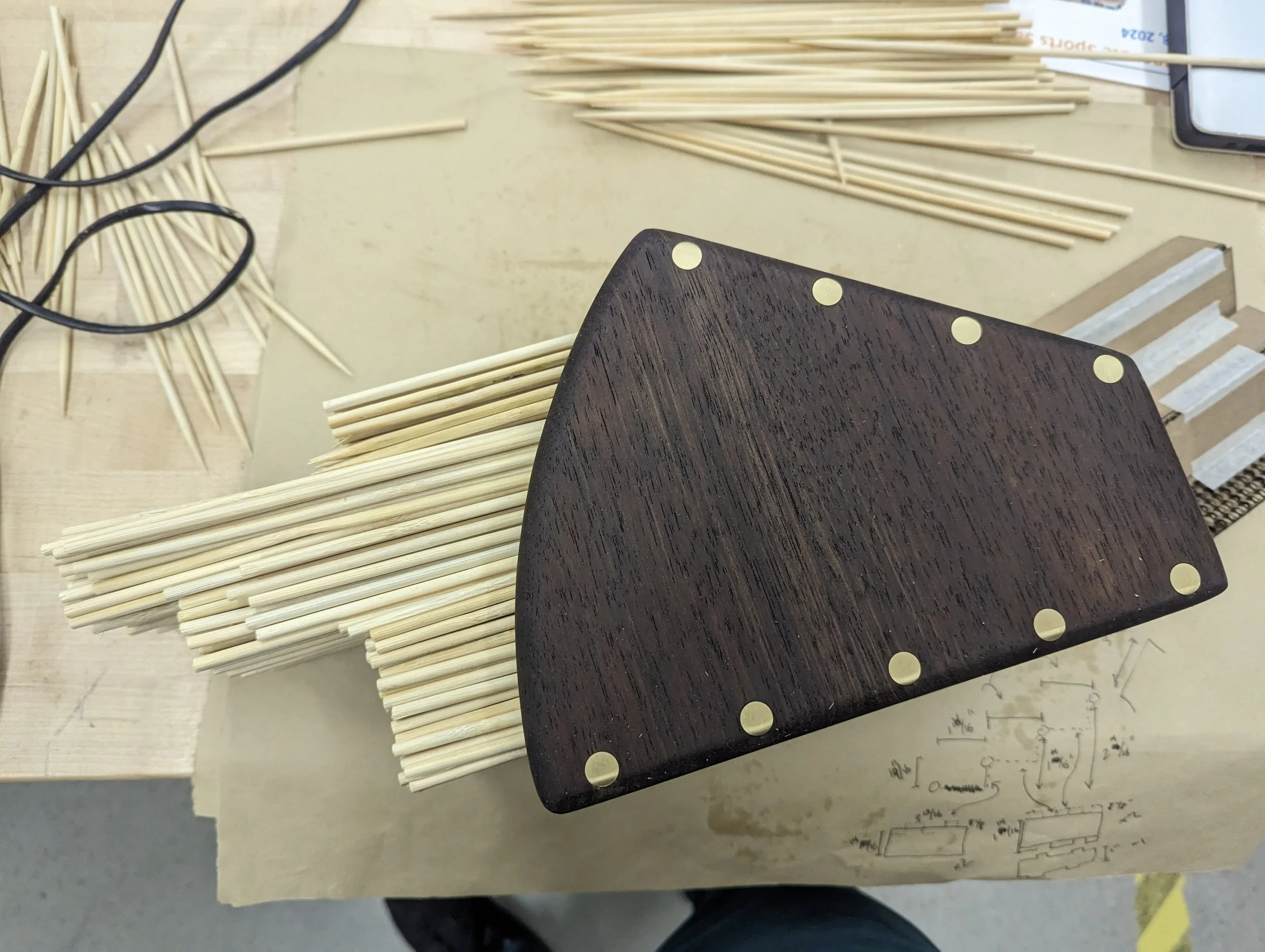
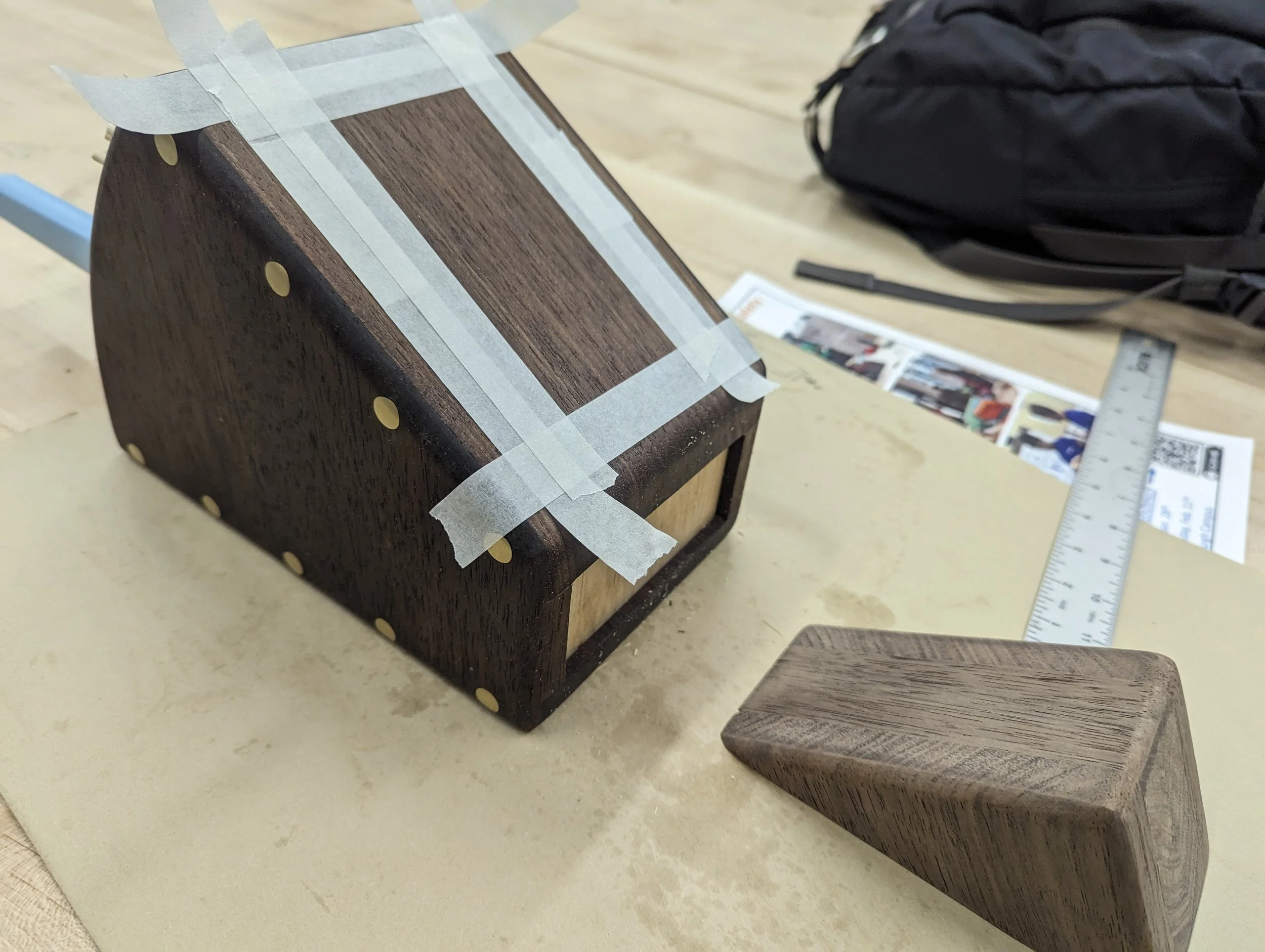
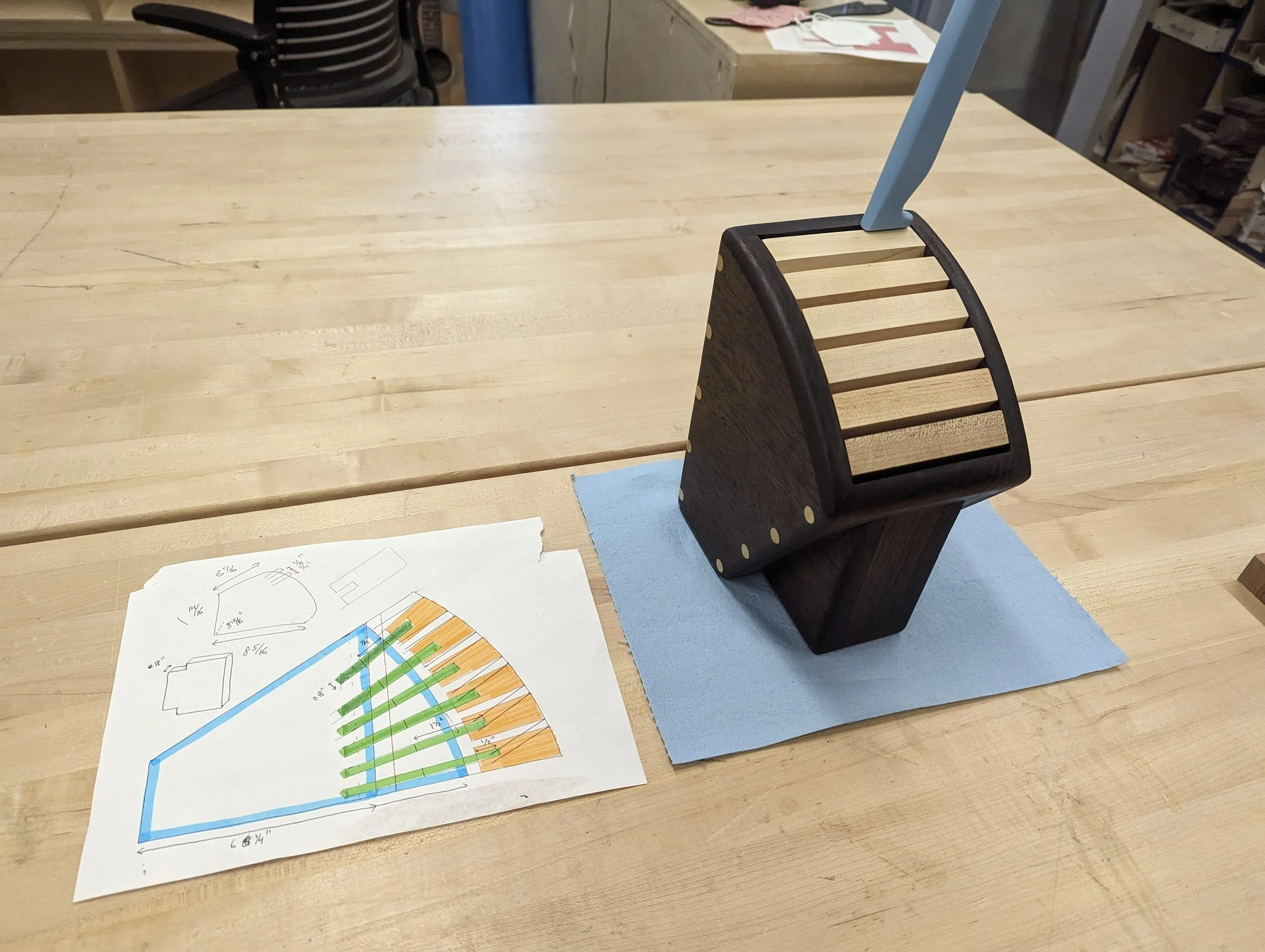
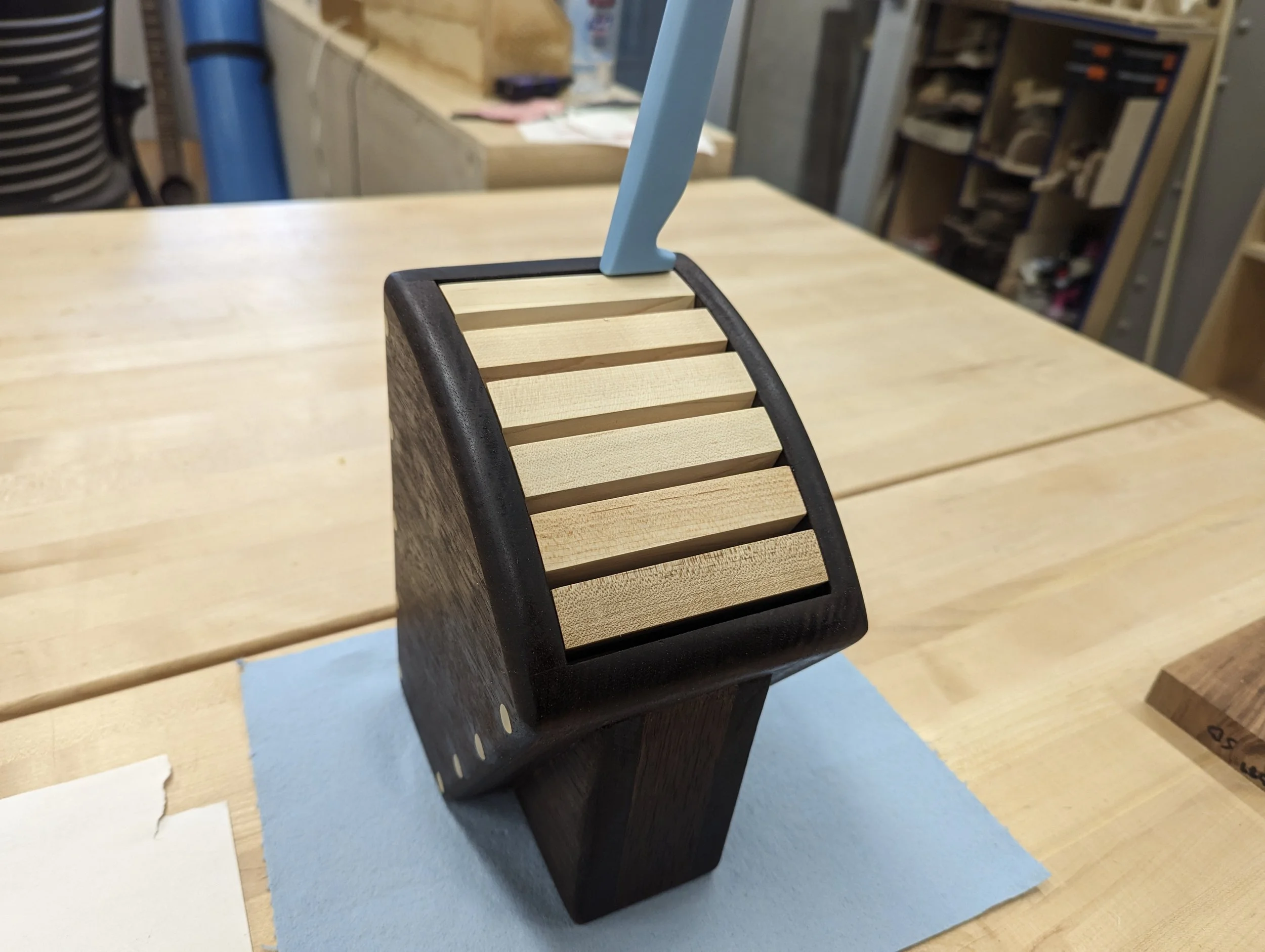
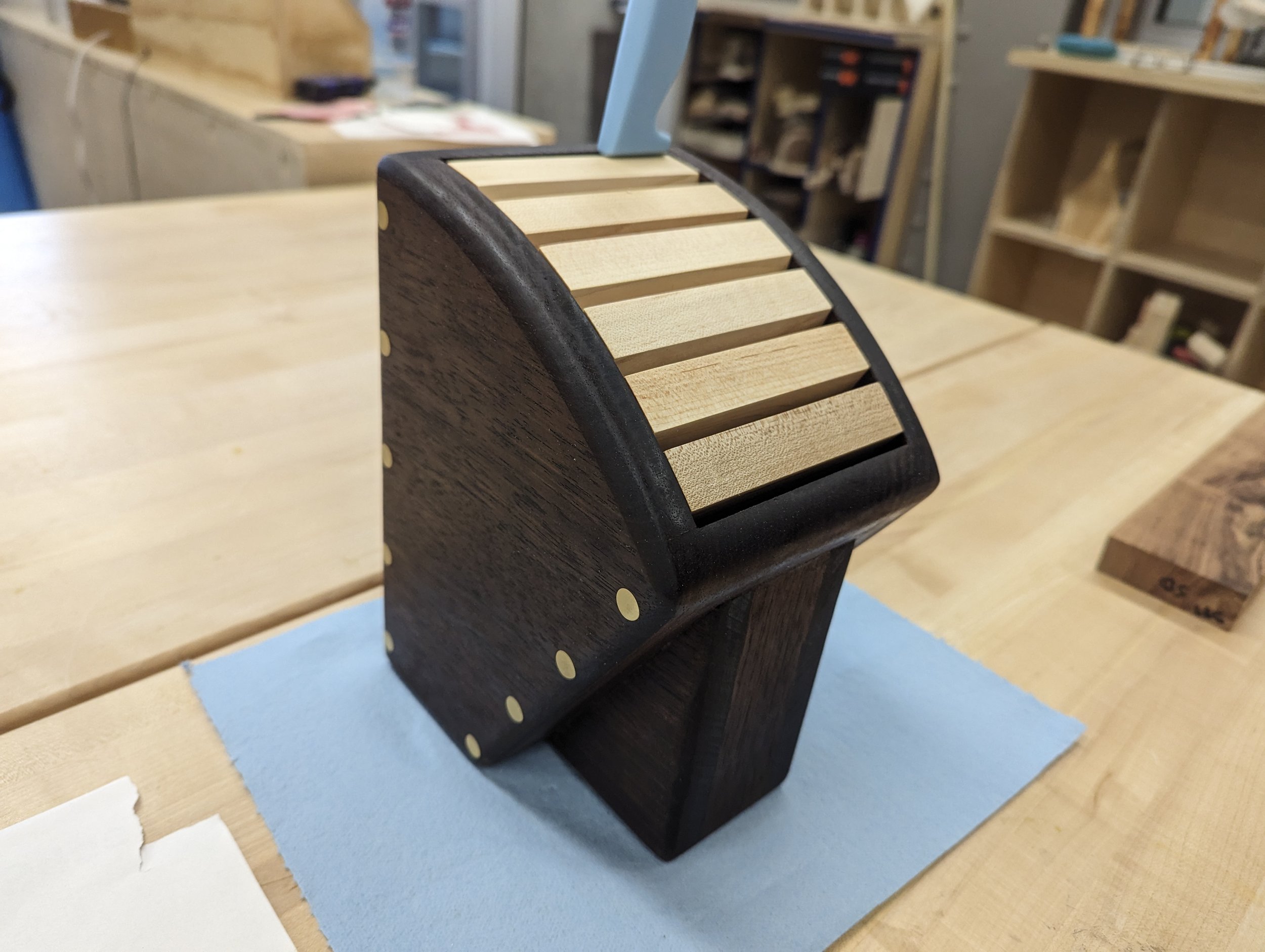
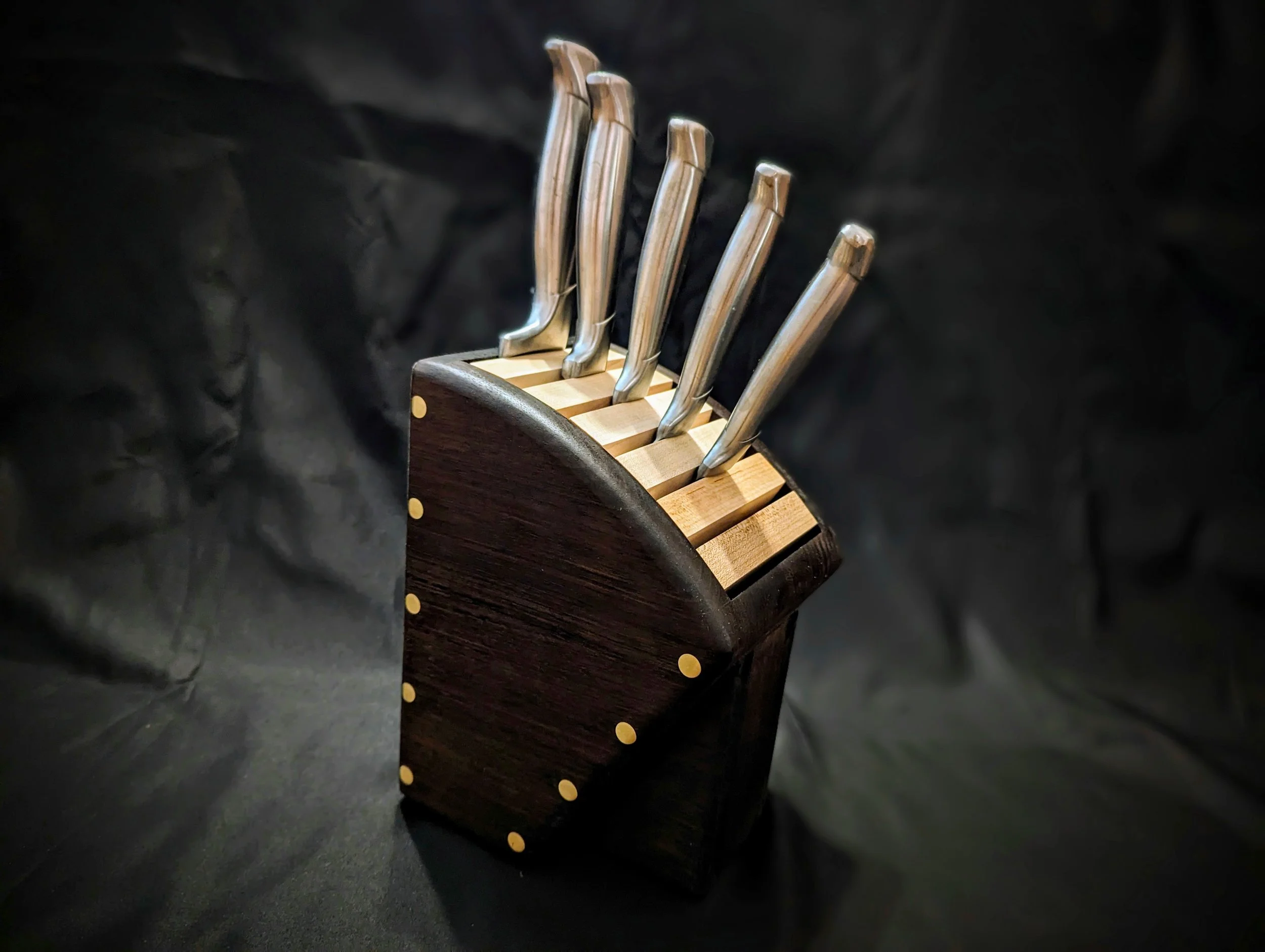
This knife block is made from Peruvian Walnut with brass pins and Maple accents. This project was meant to be relatively simple, but ended up being my most challenging project to date. Every attempt I made to solve the issues I faced only created more problems...
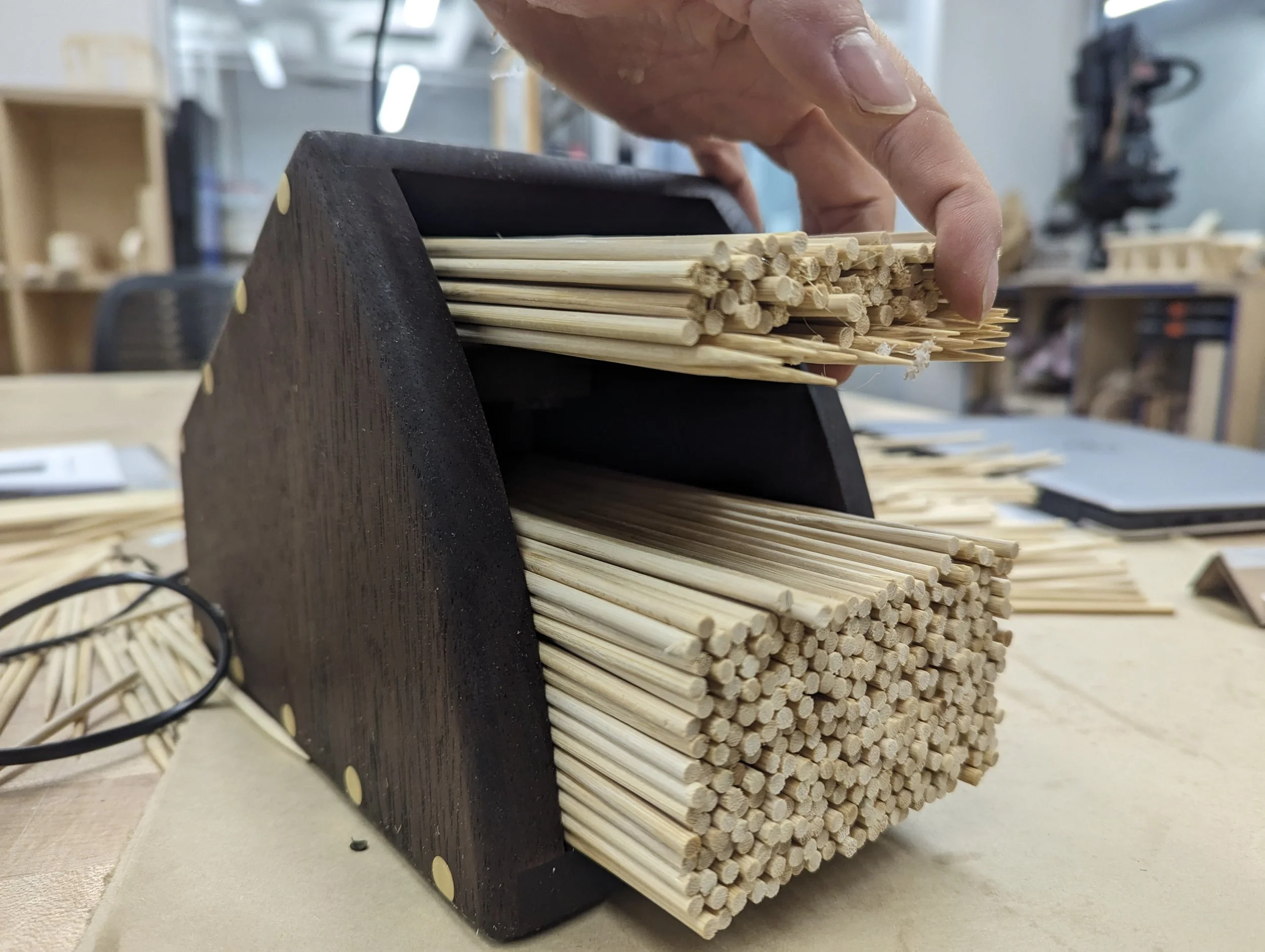
I decided to make a more aesthetically rounded knife block filled with bamboo skewers to make it more modular and allow it to fit all shapes and sizes of knives instead of a traditional rectangular block. This was a serious design flaw that was the source of the problems I faced later in the build process.
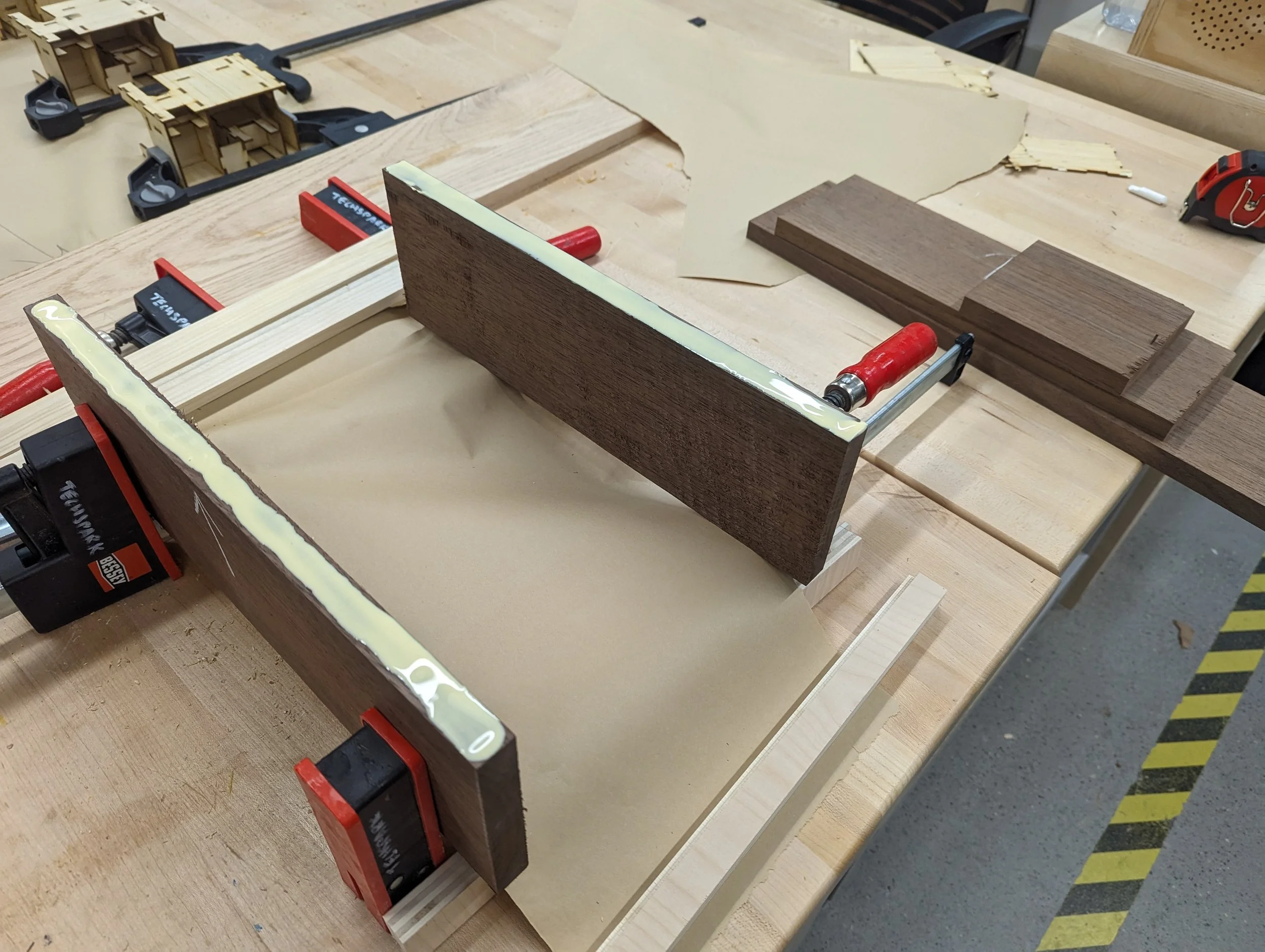
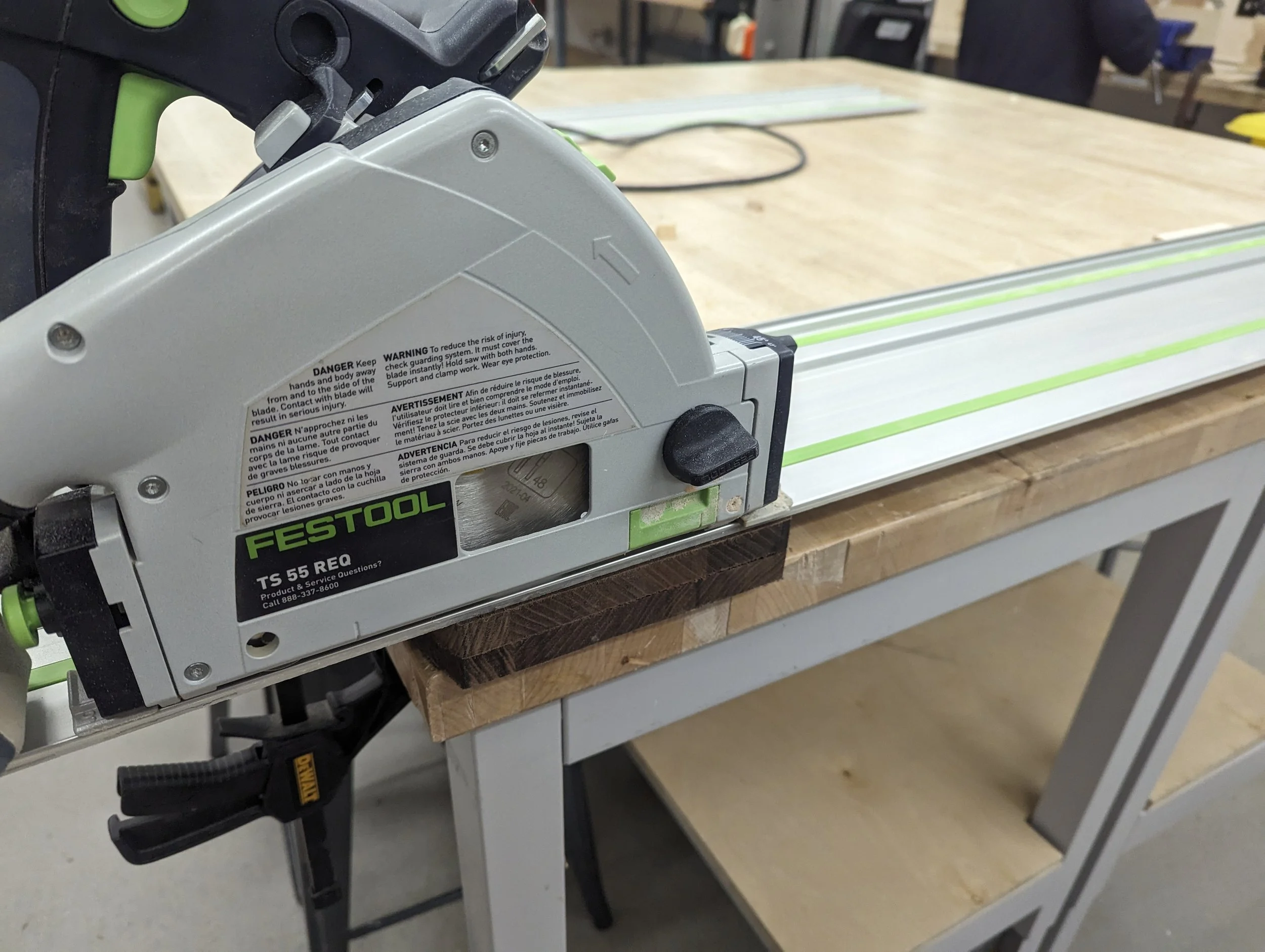
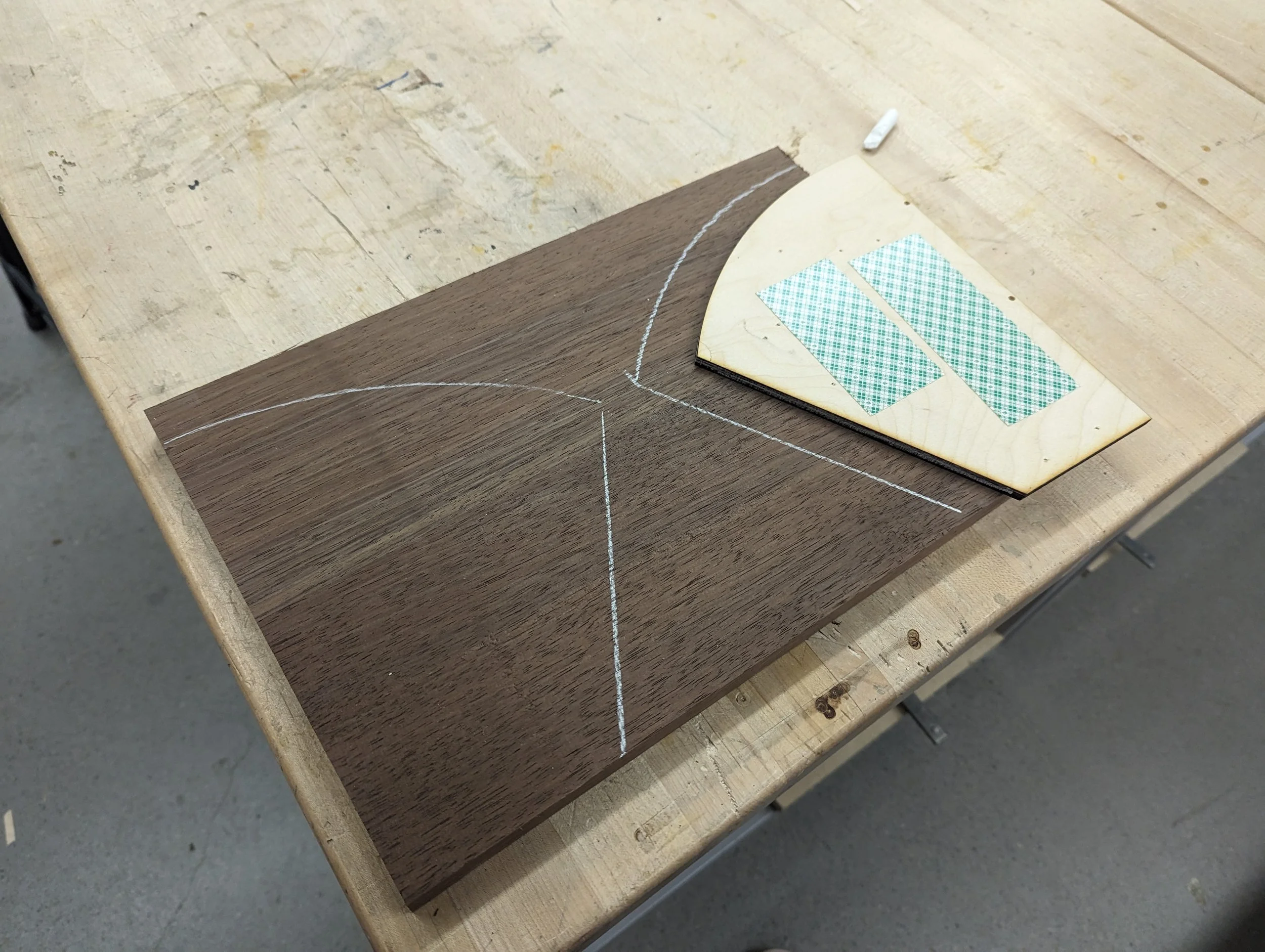
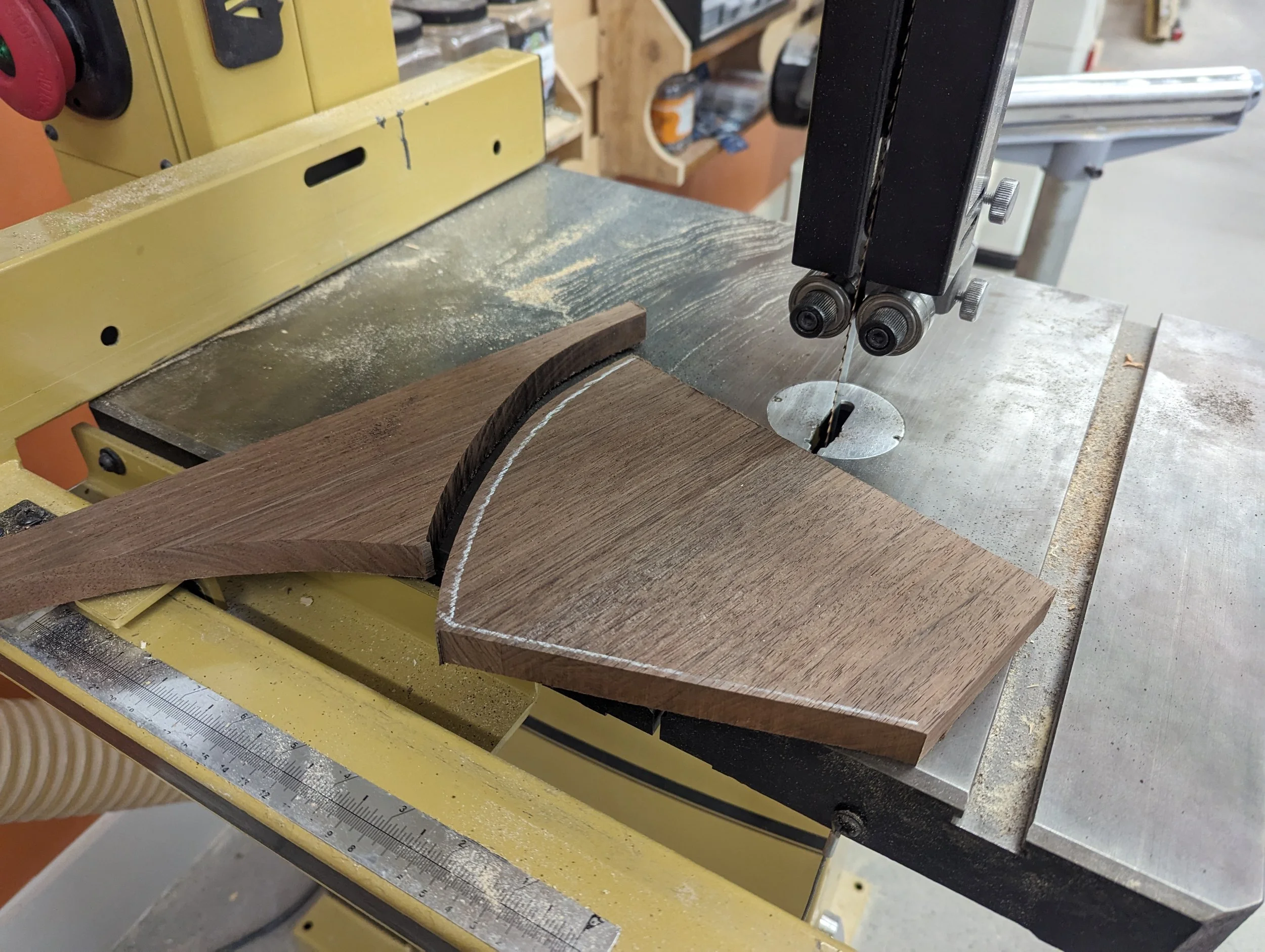
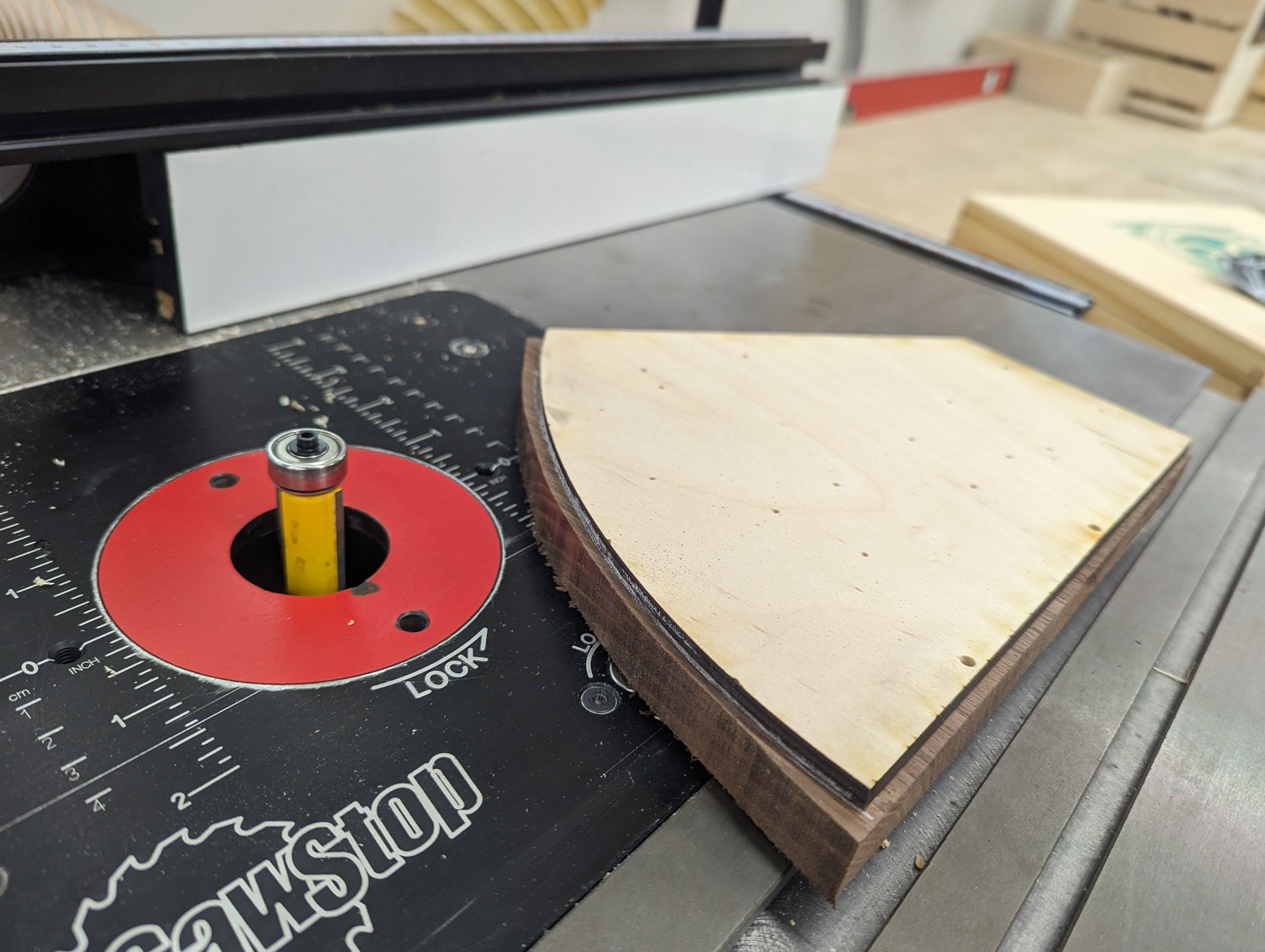
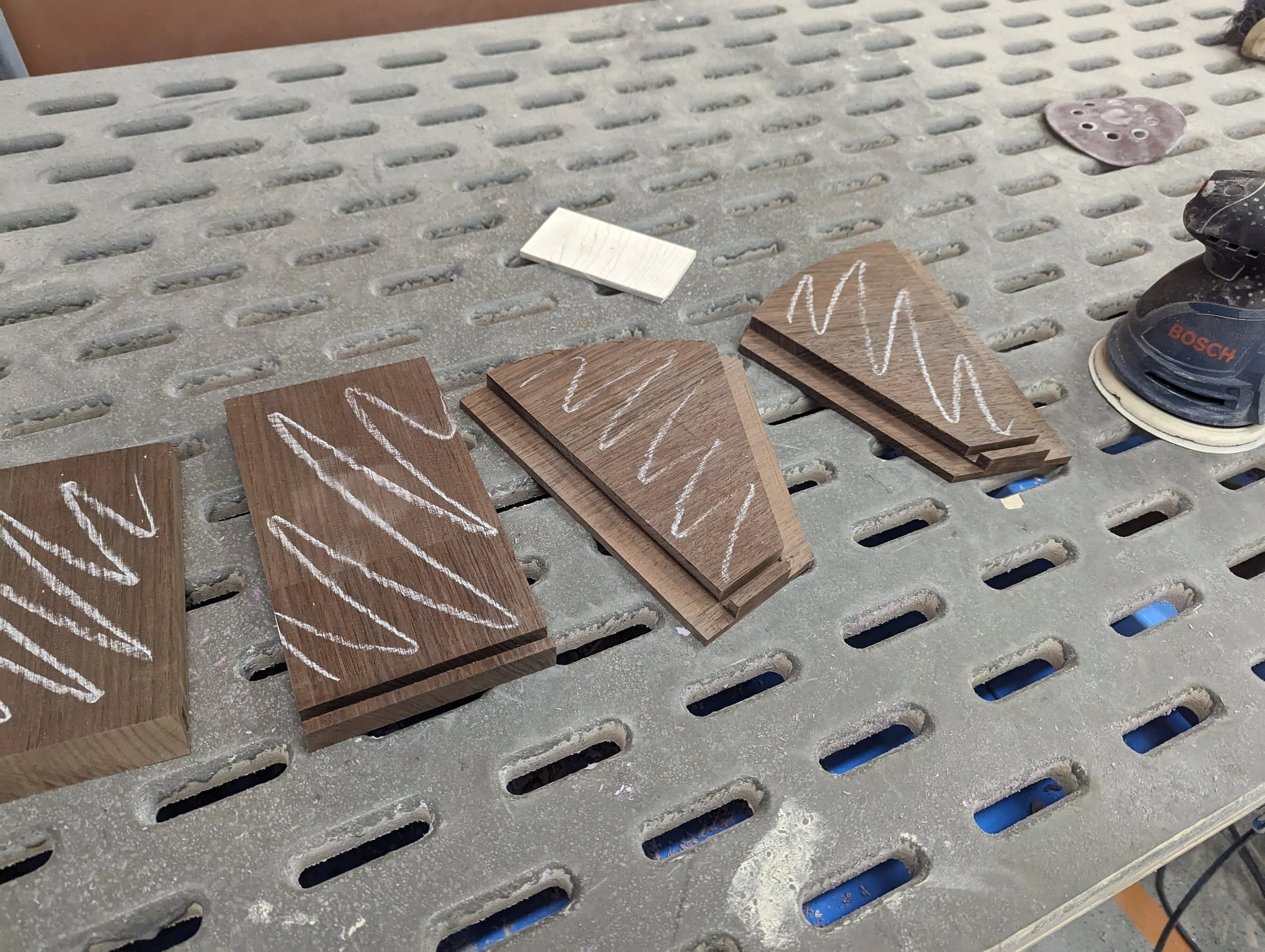
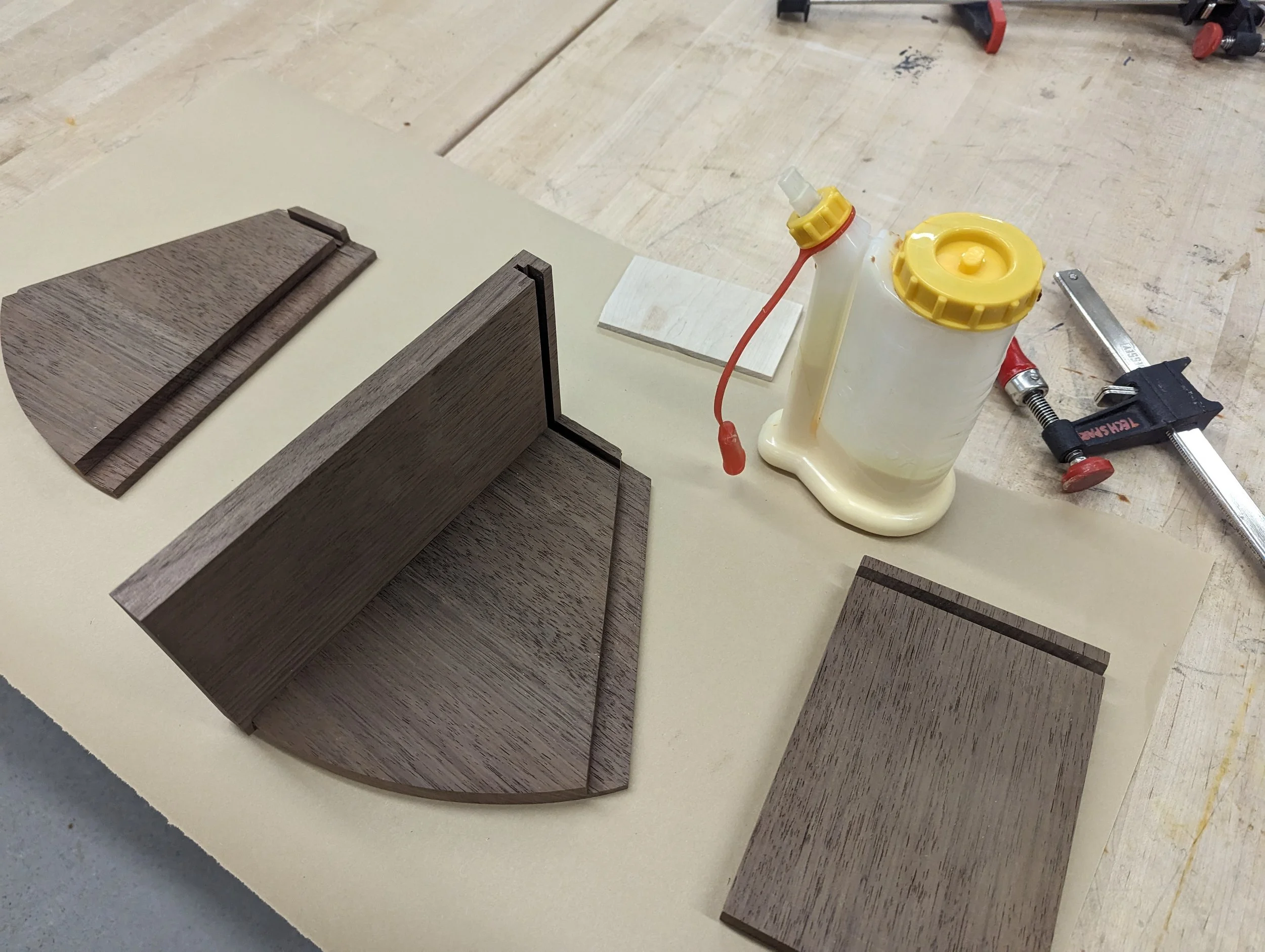
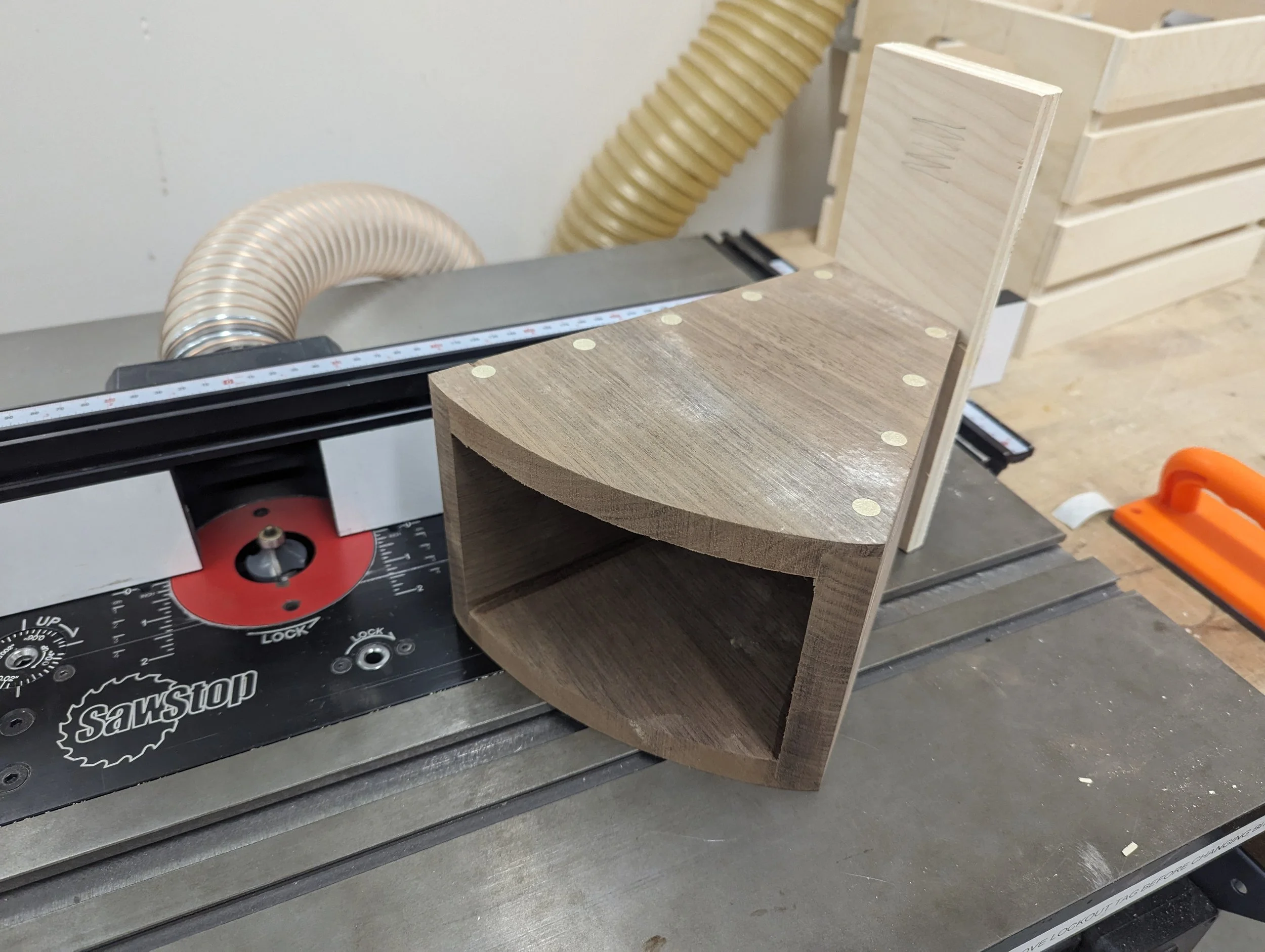
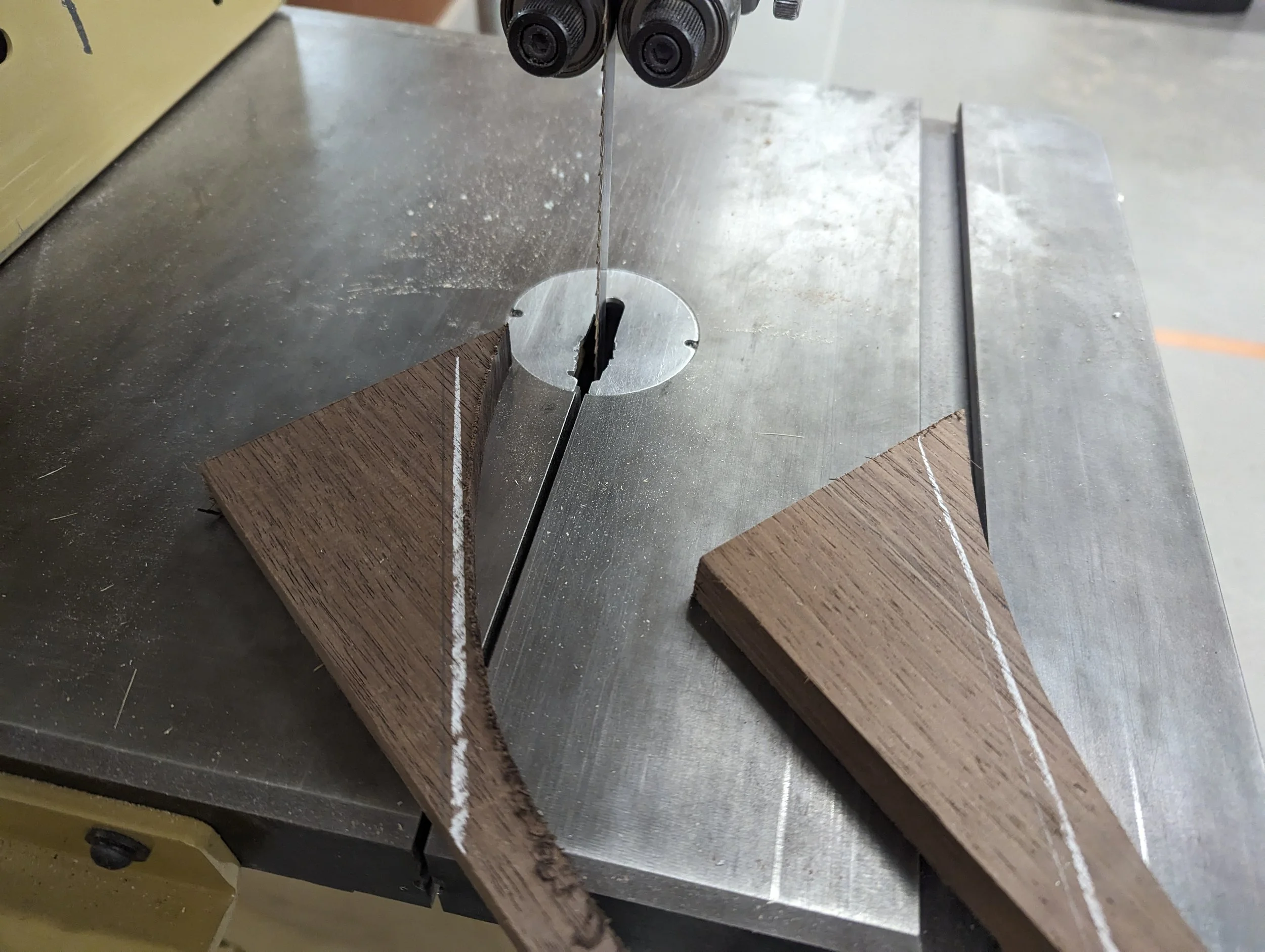
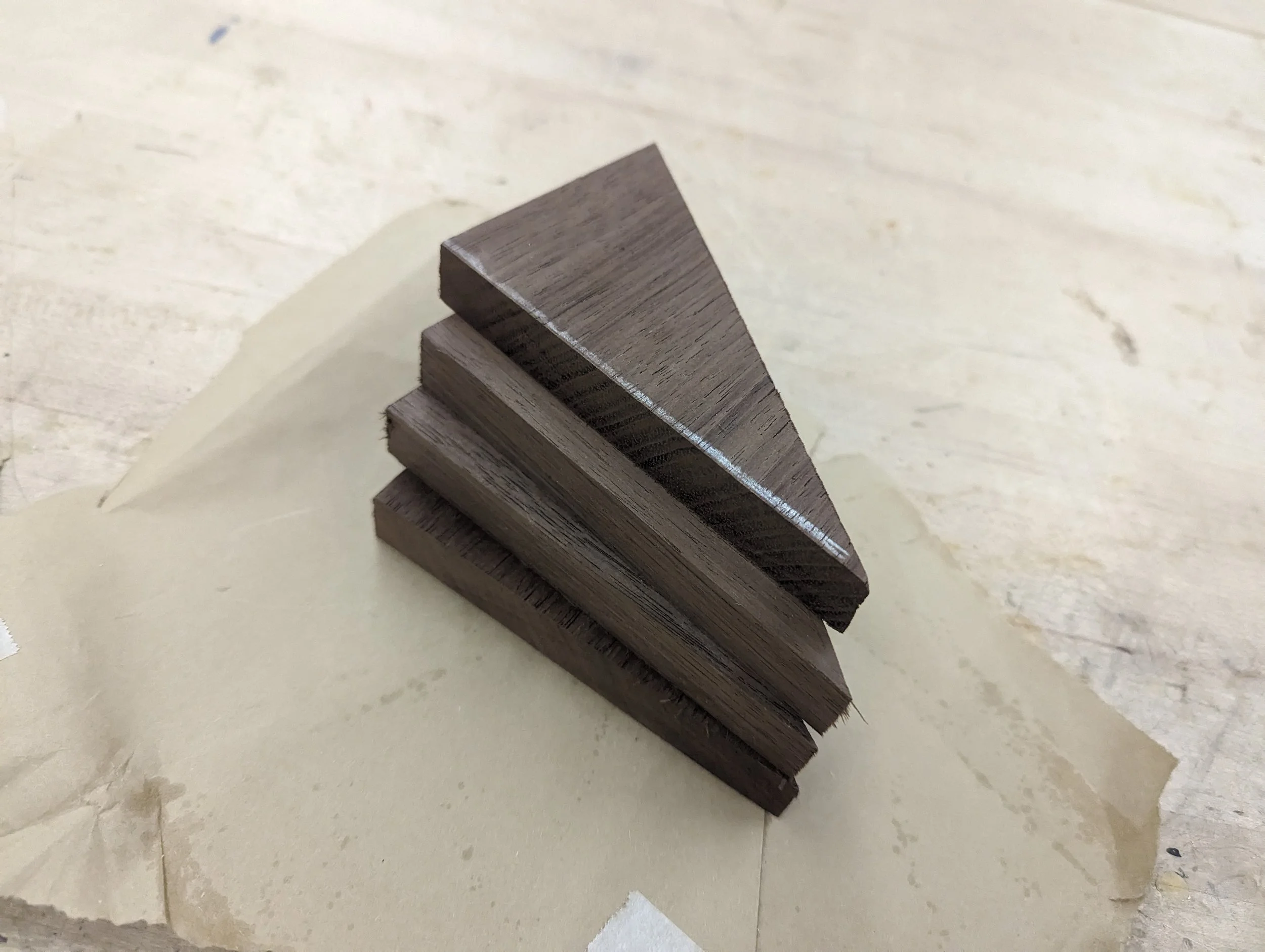
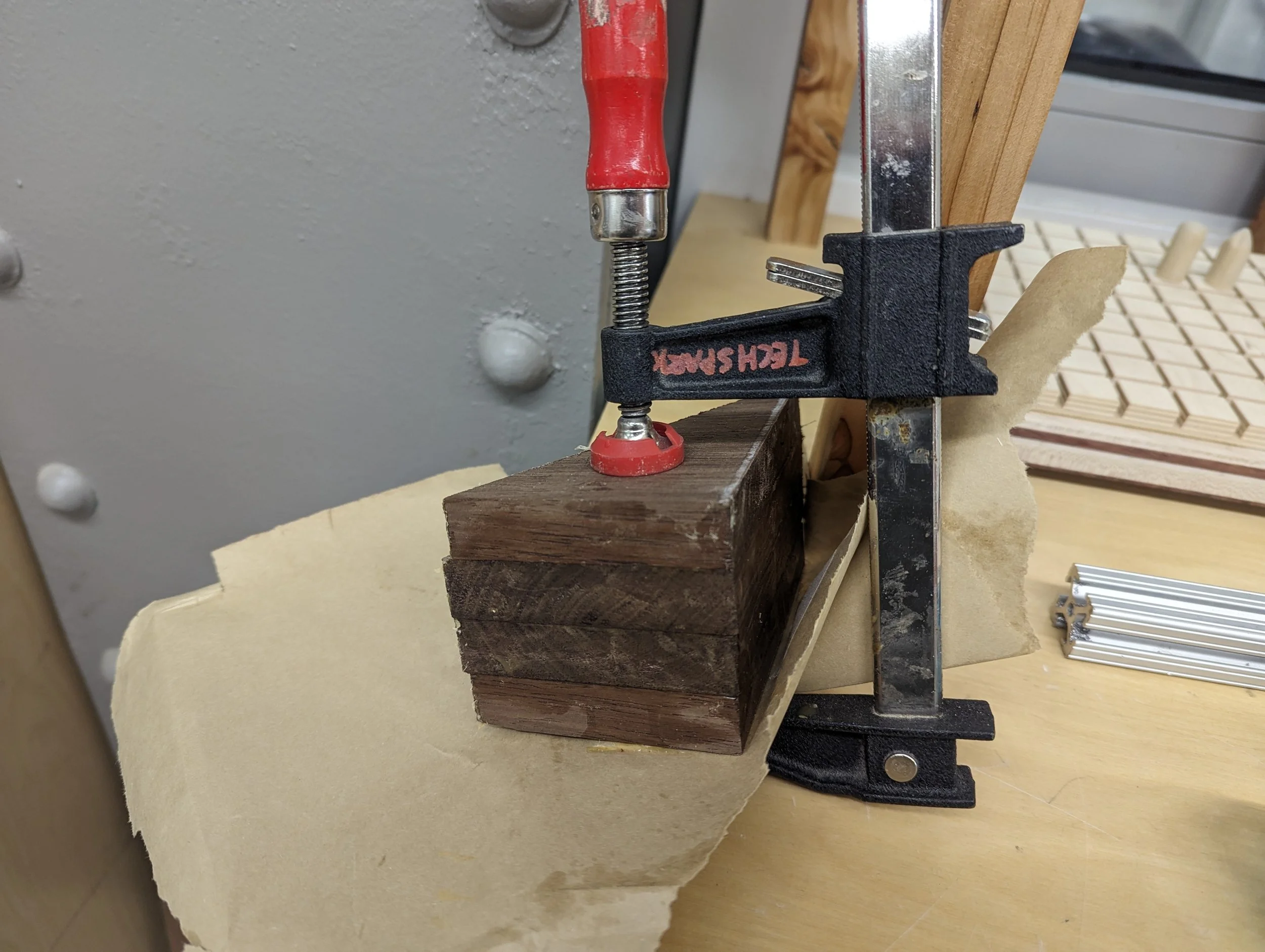
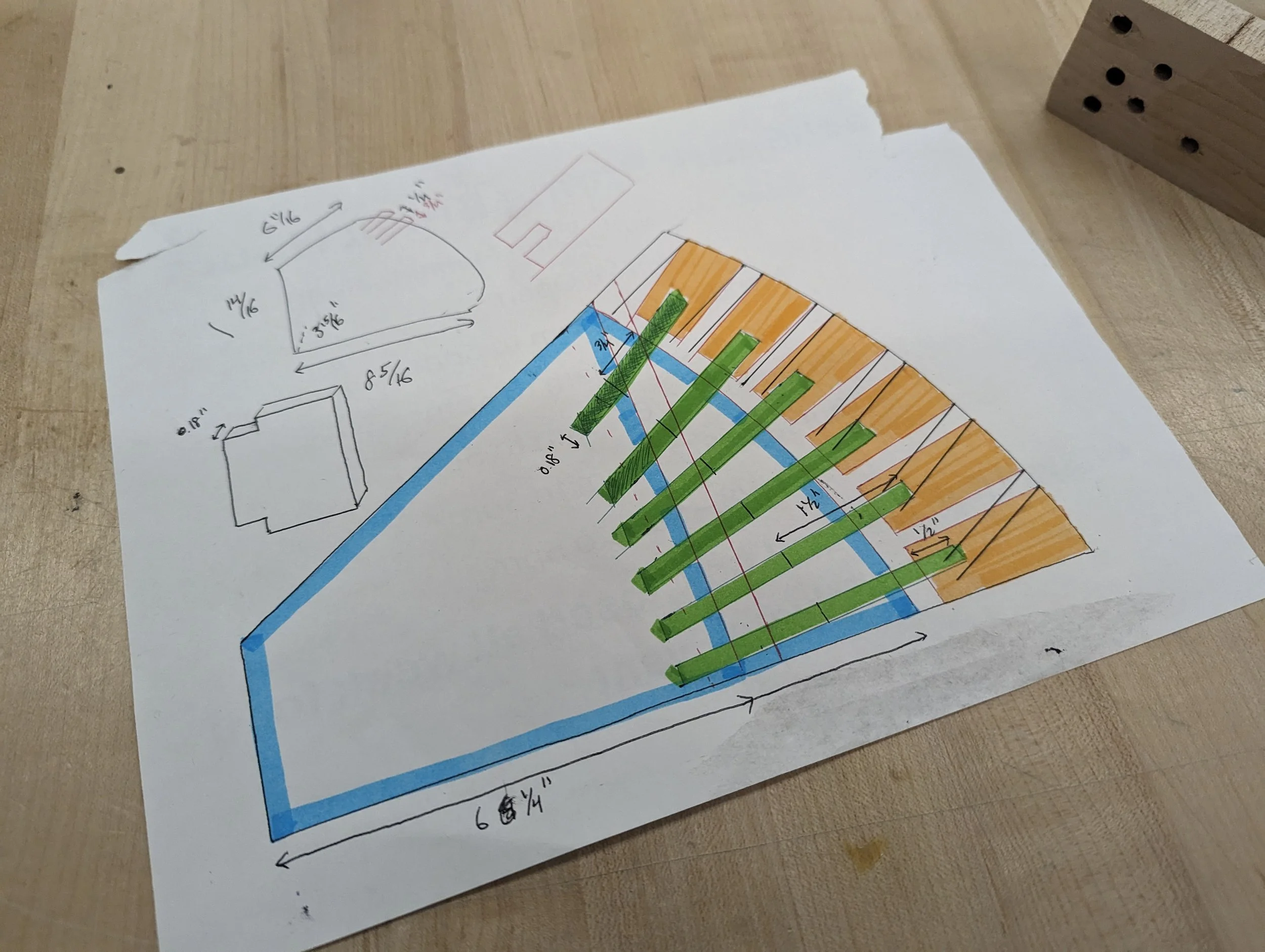
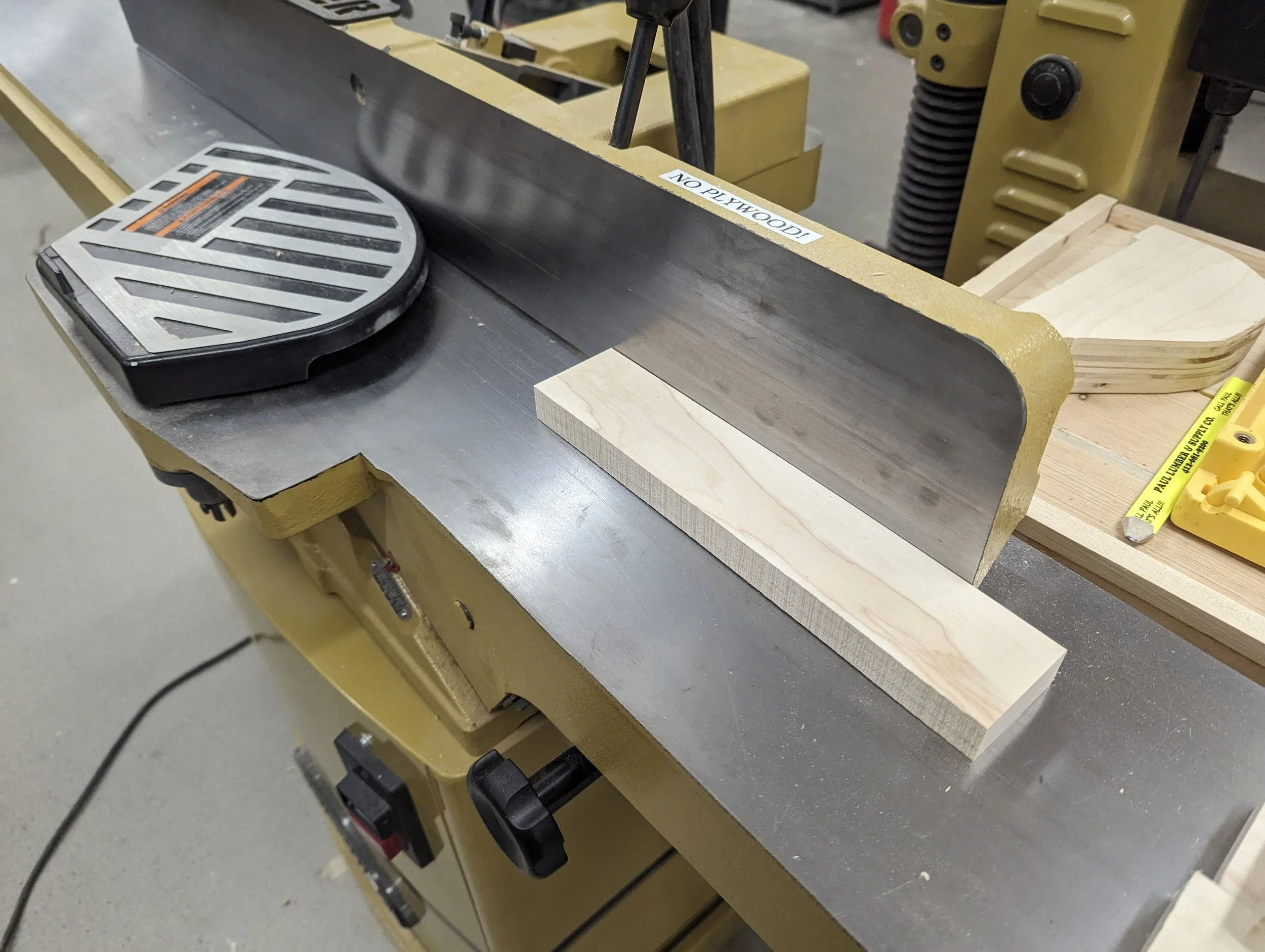
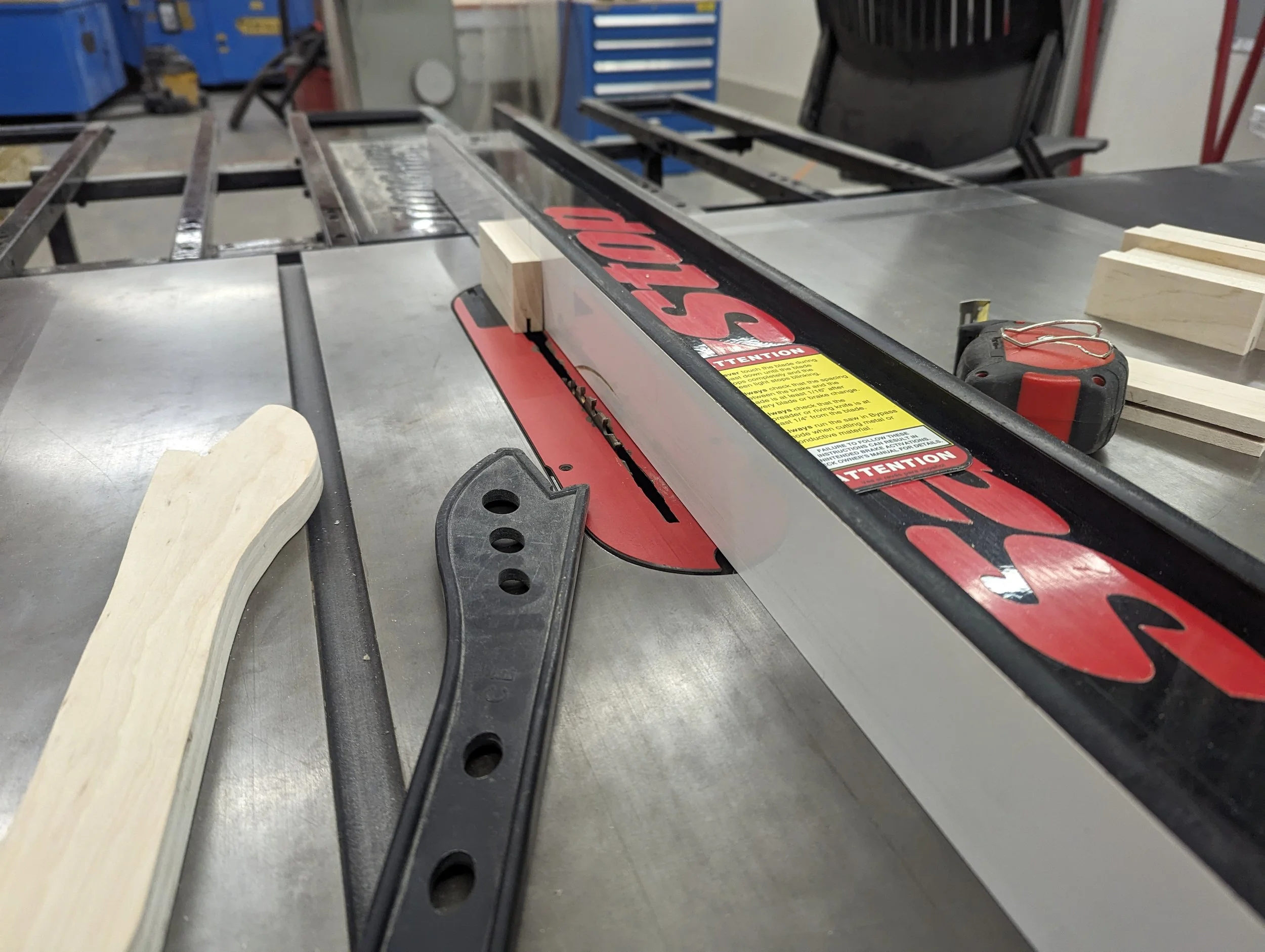
The main structure of the knife block was relatively simple. I did a glue up to create a larger board to work with, grain matched accordingly, and I planed it afterwards to get back to a smooth surface. I created a DXF of the profile in AutoCAD and laser cut a template on 1/4" plywood. Using the template, I marked out a rough outline using chalk, cut the walnut to the rough shape on the bandsaw, and used a table router with a flush trim bit to get the side pieces to their final dimensions.
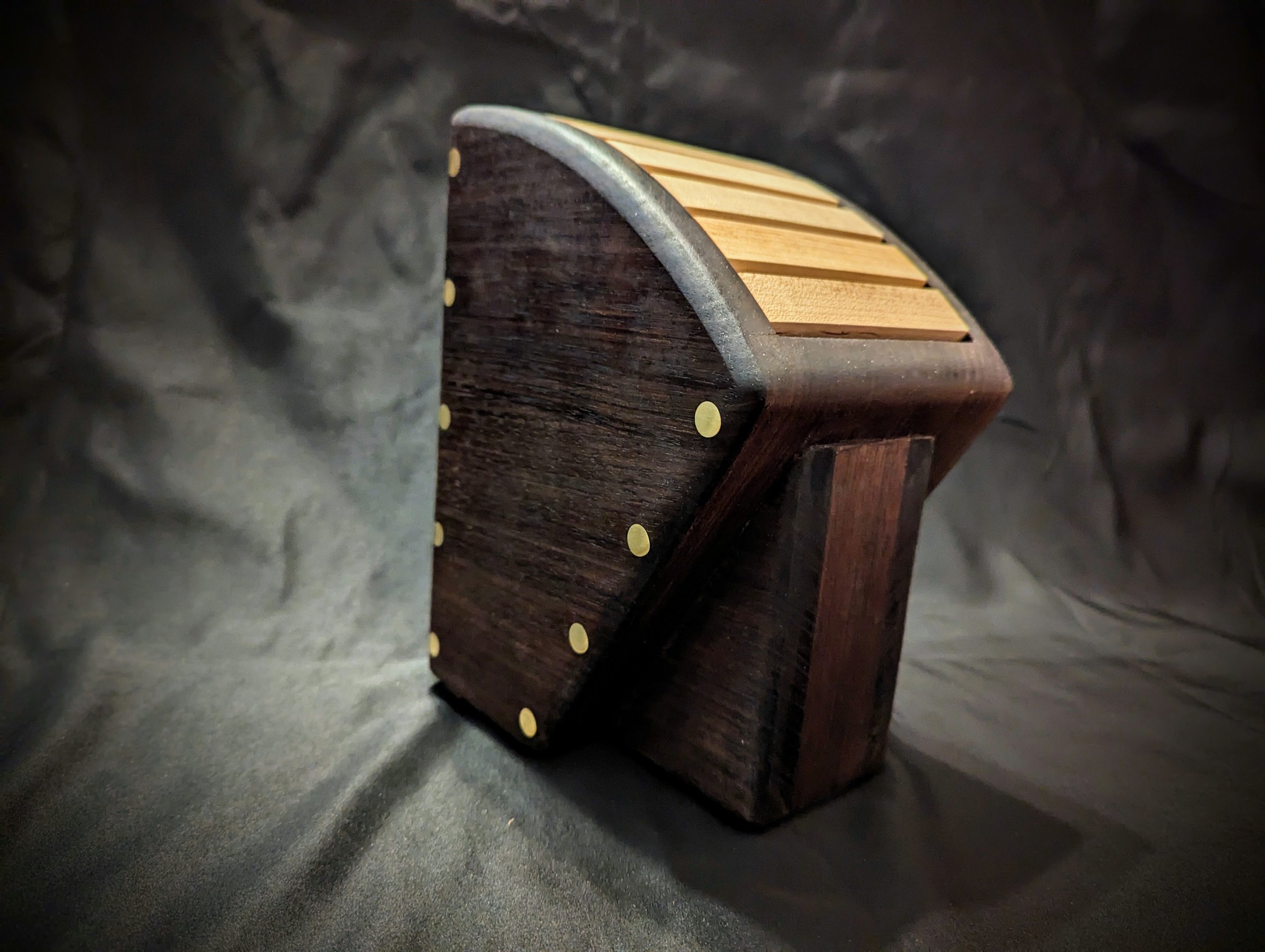
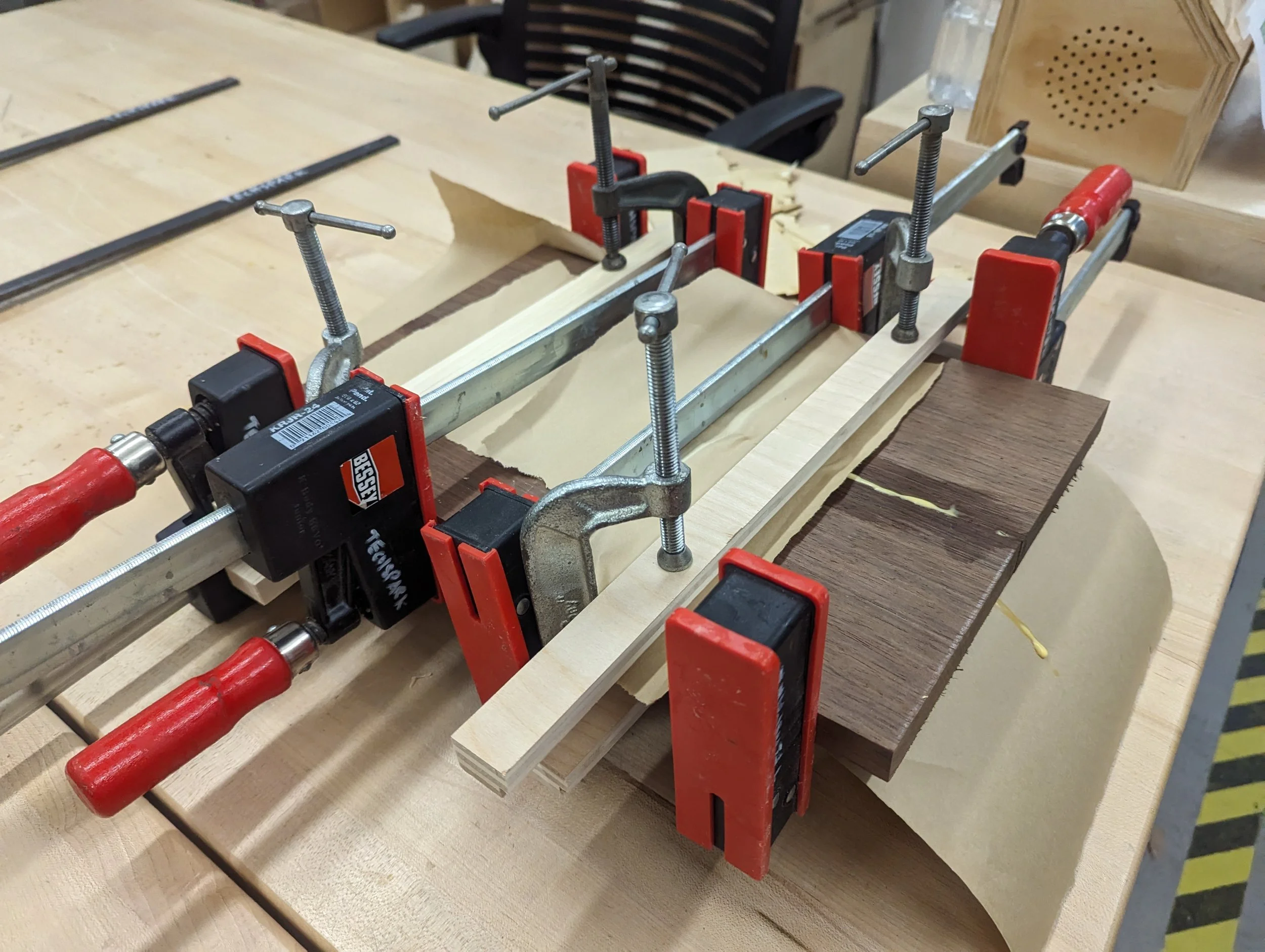
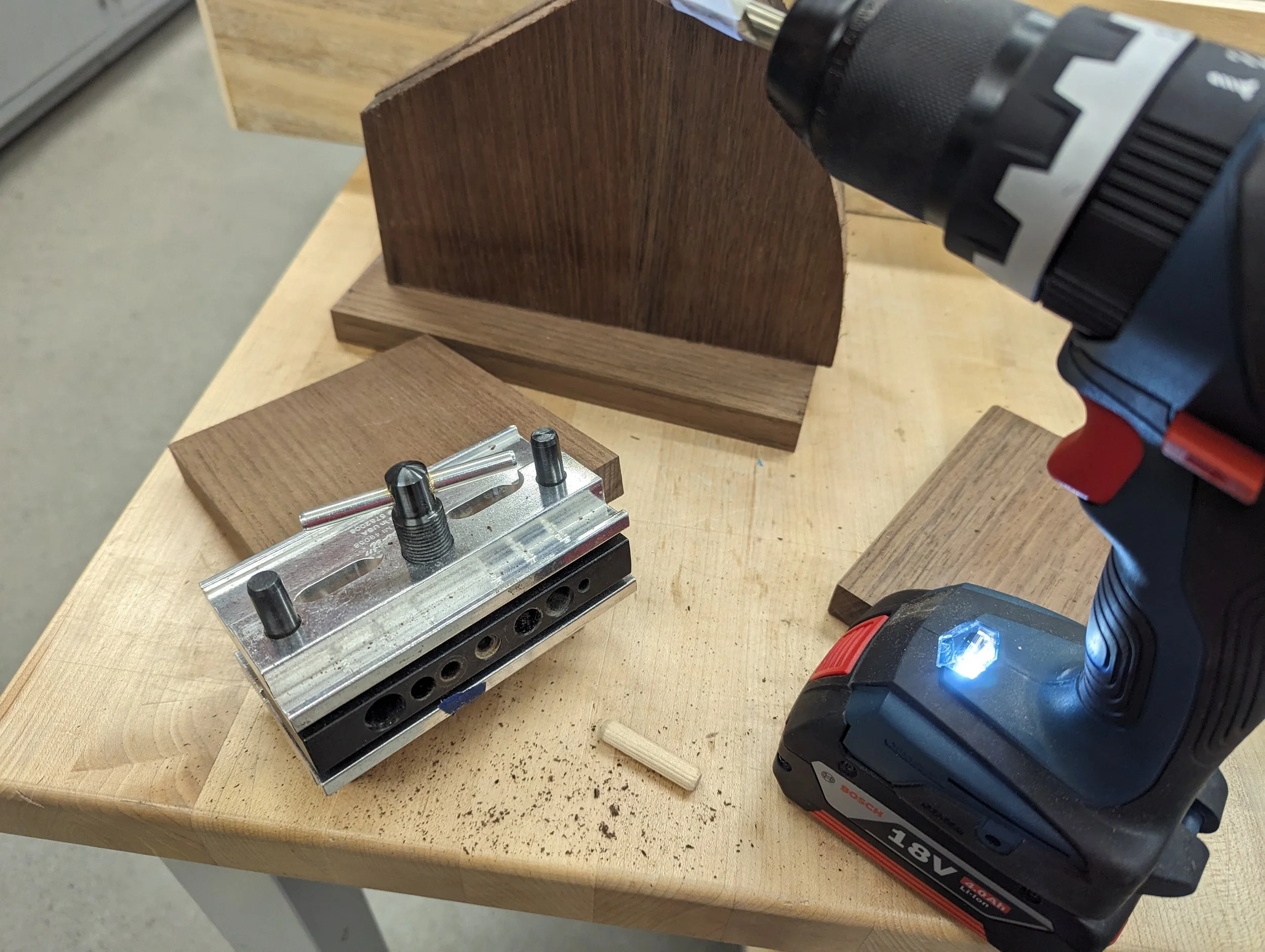
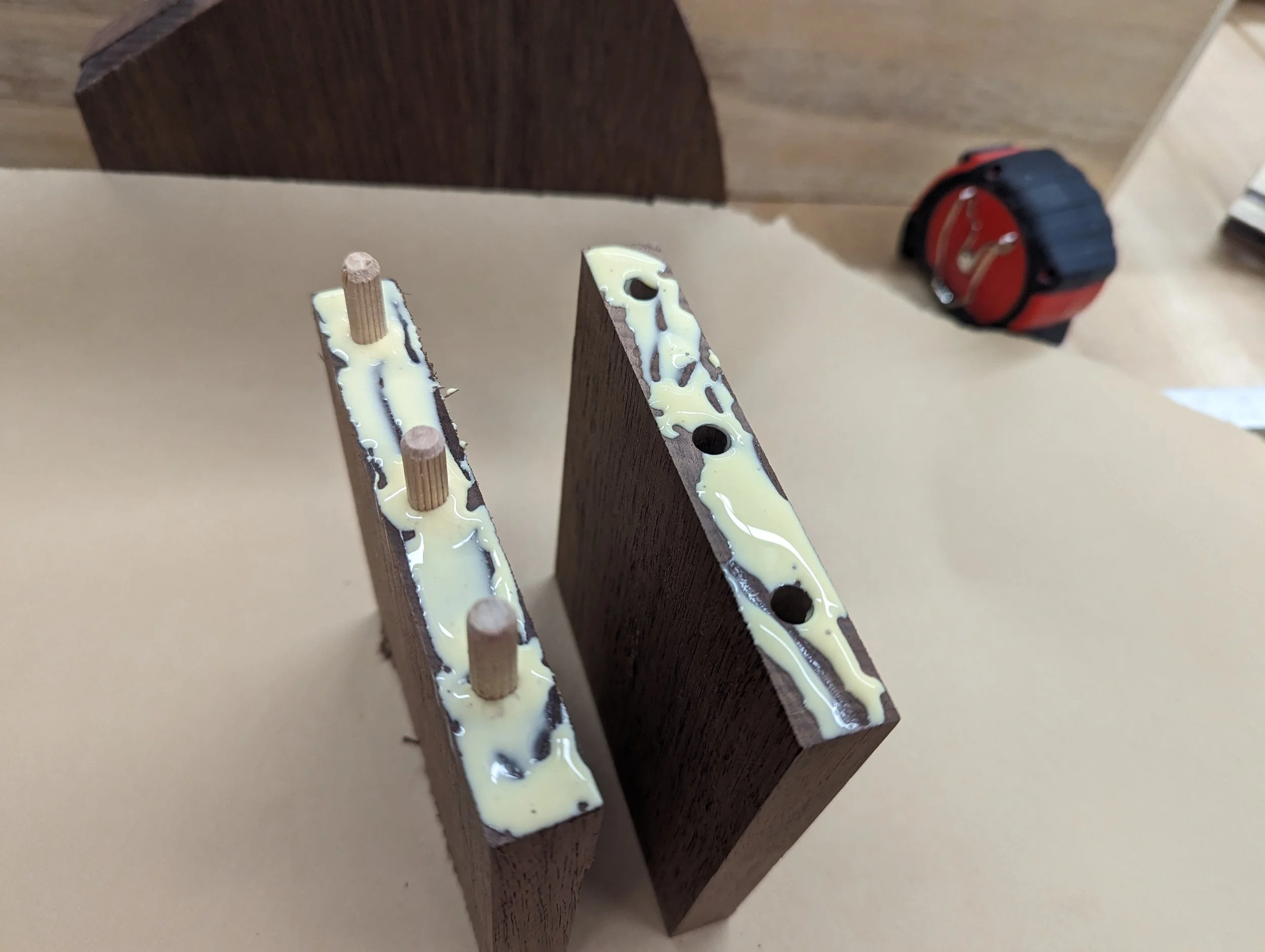
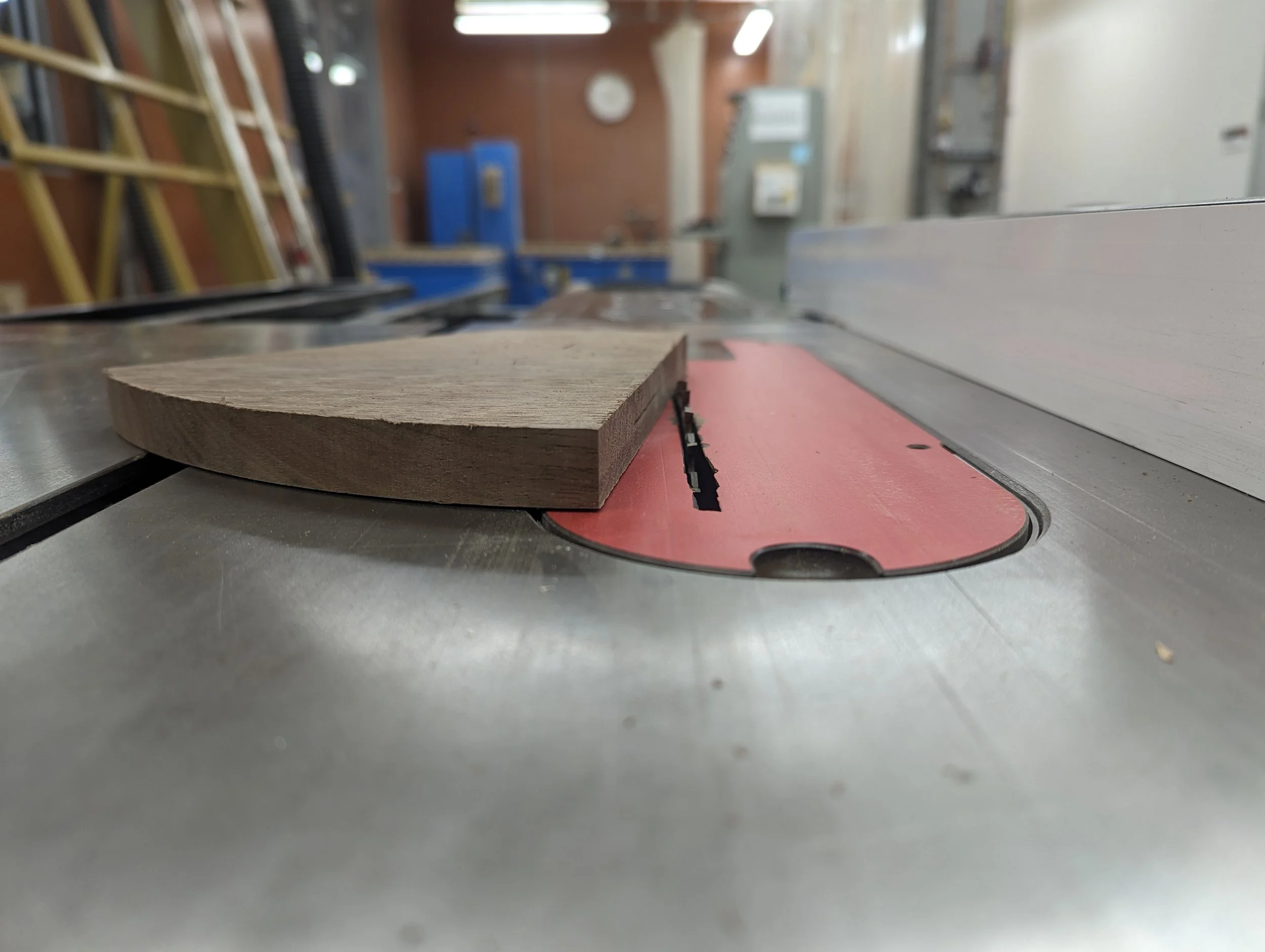
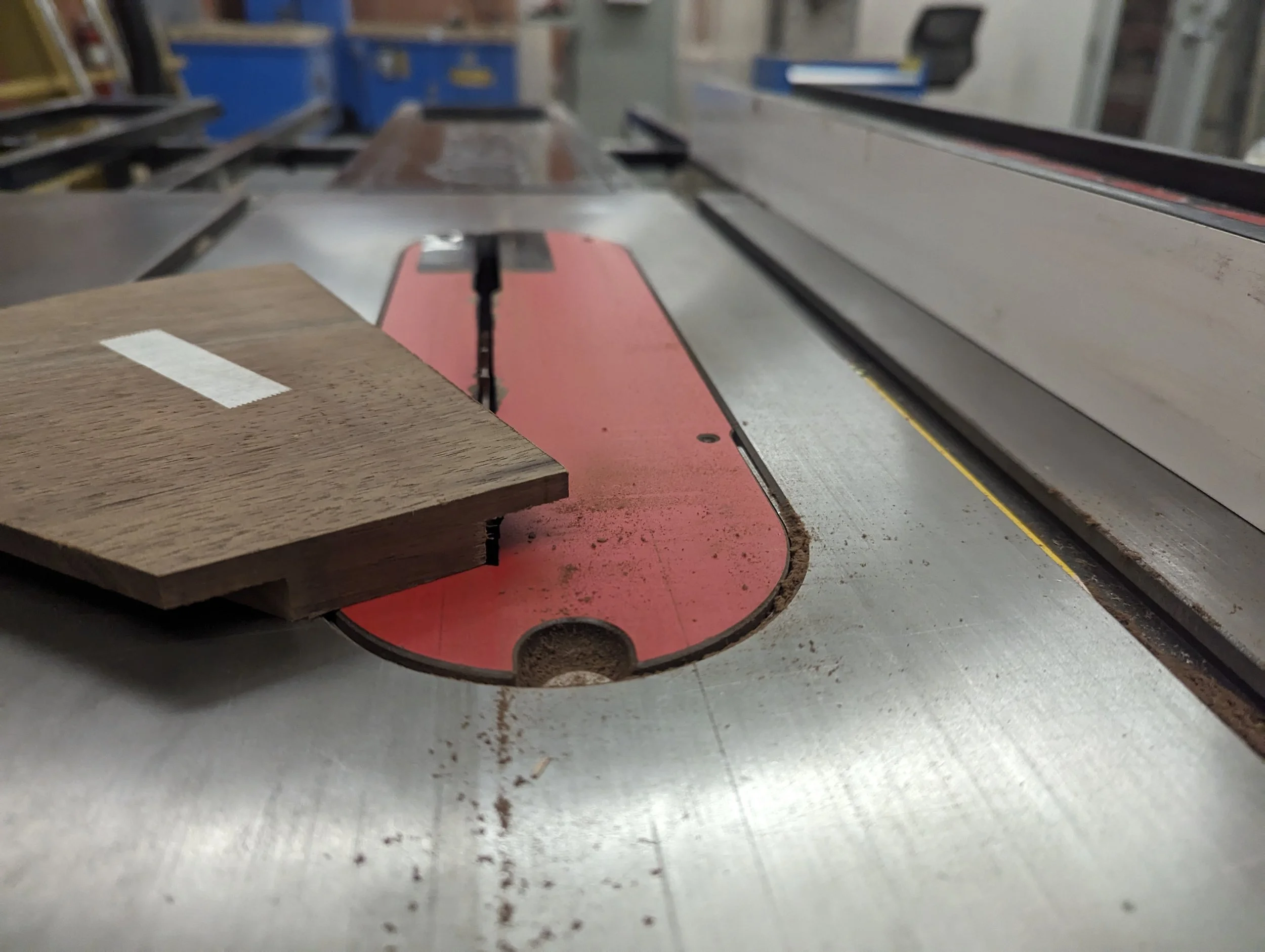
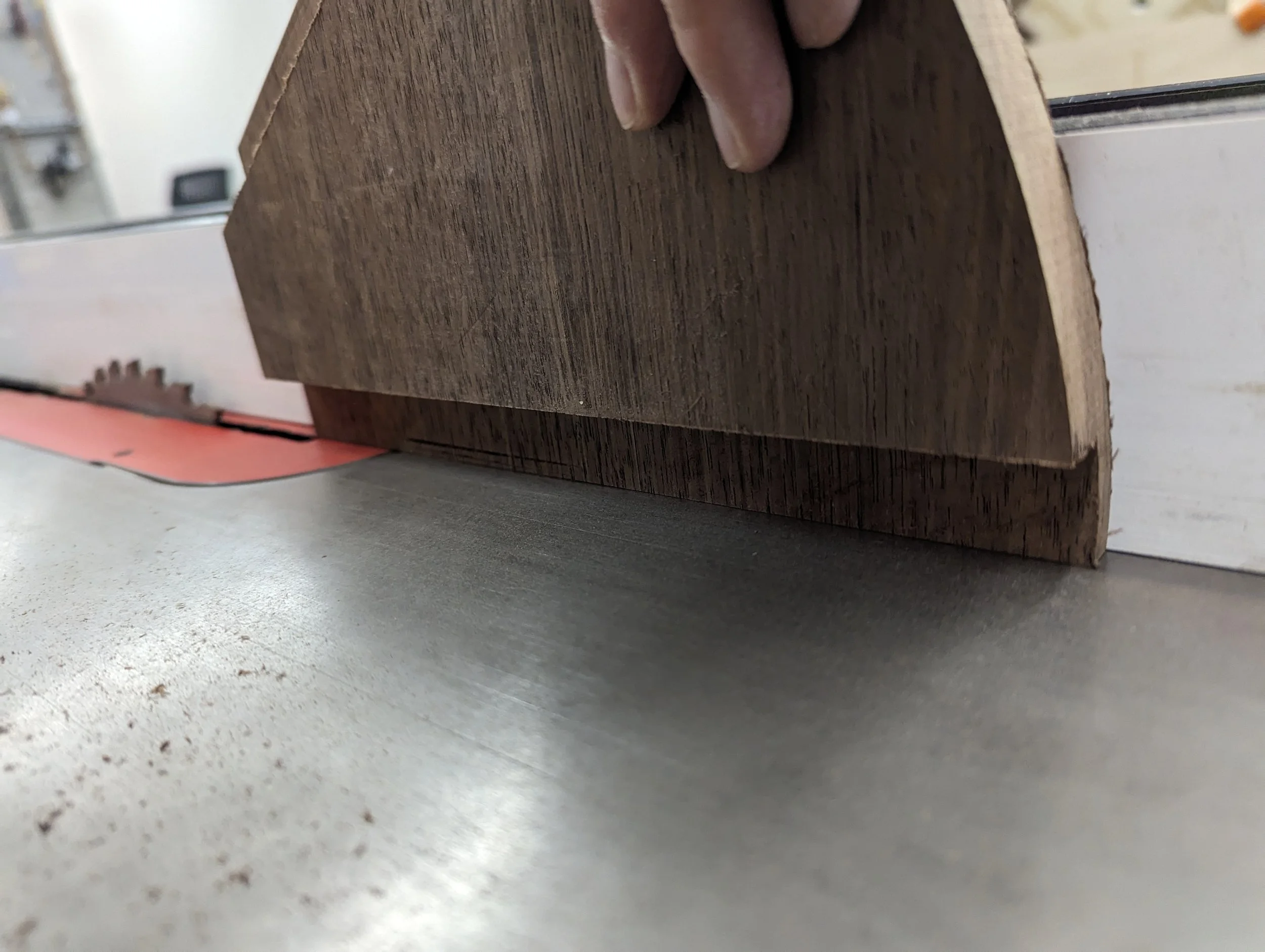
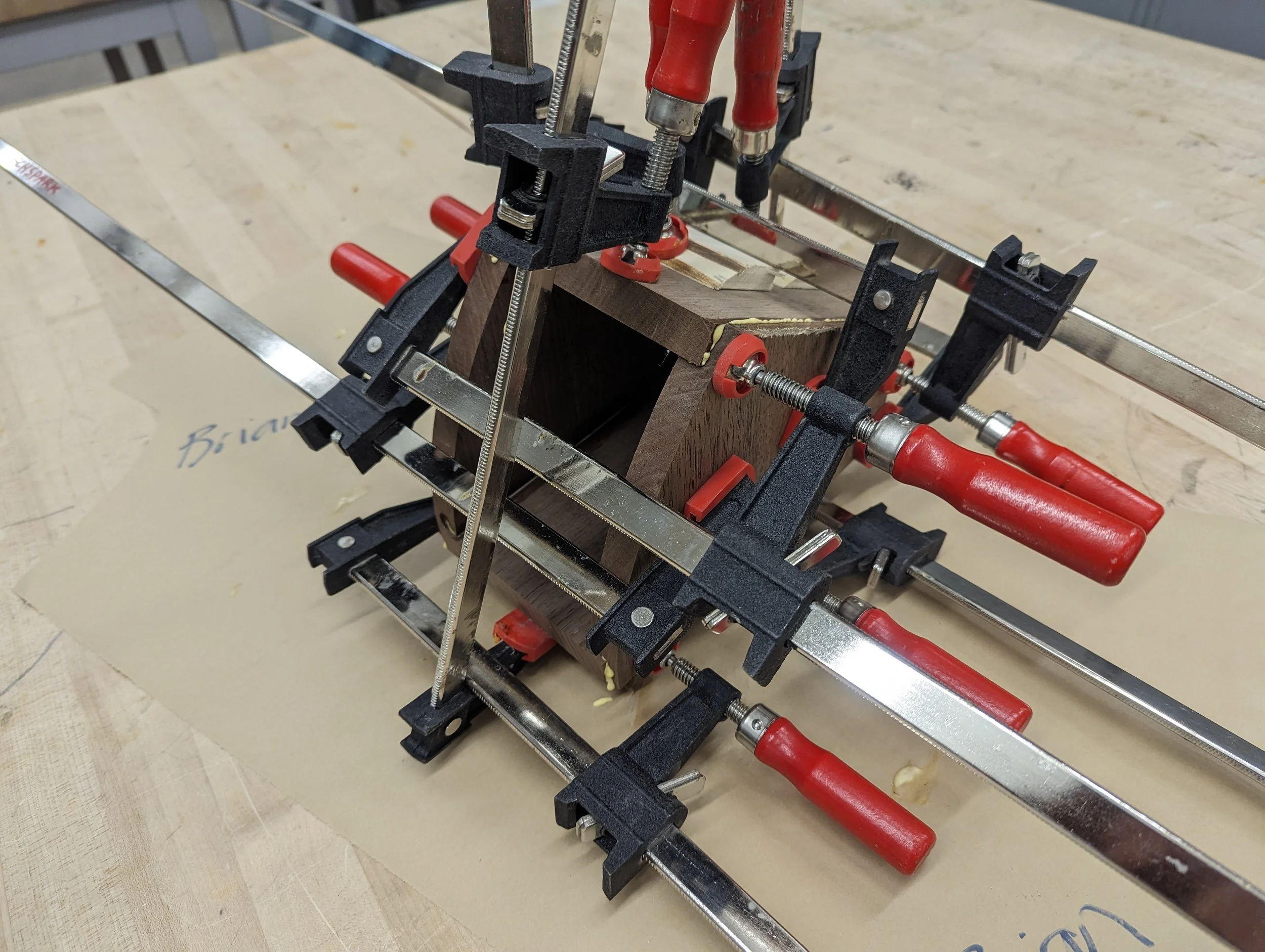
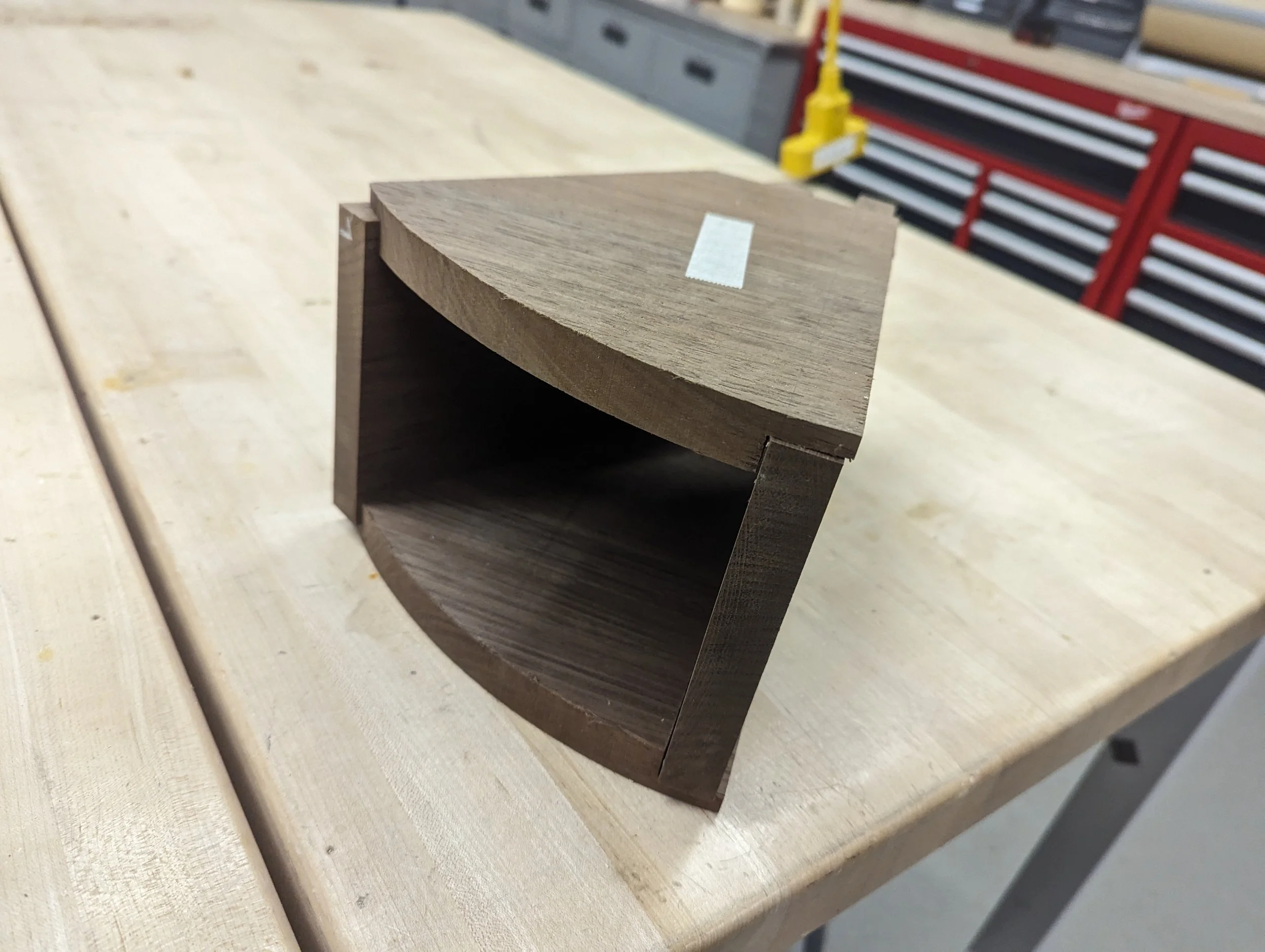
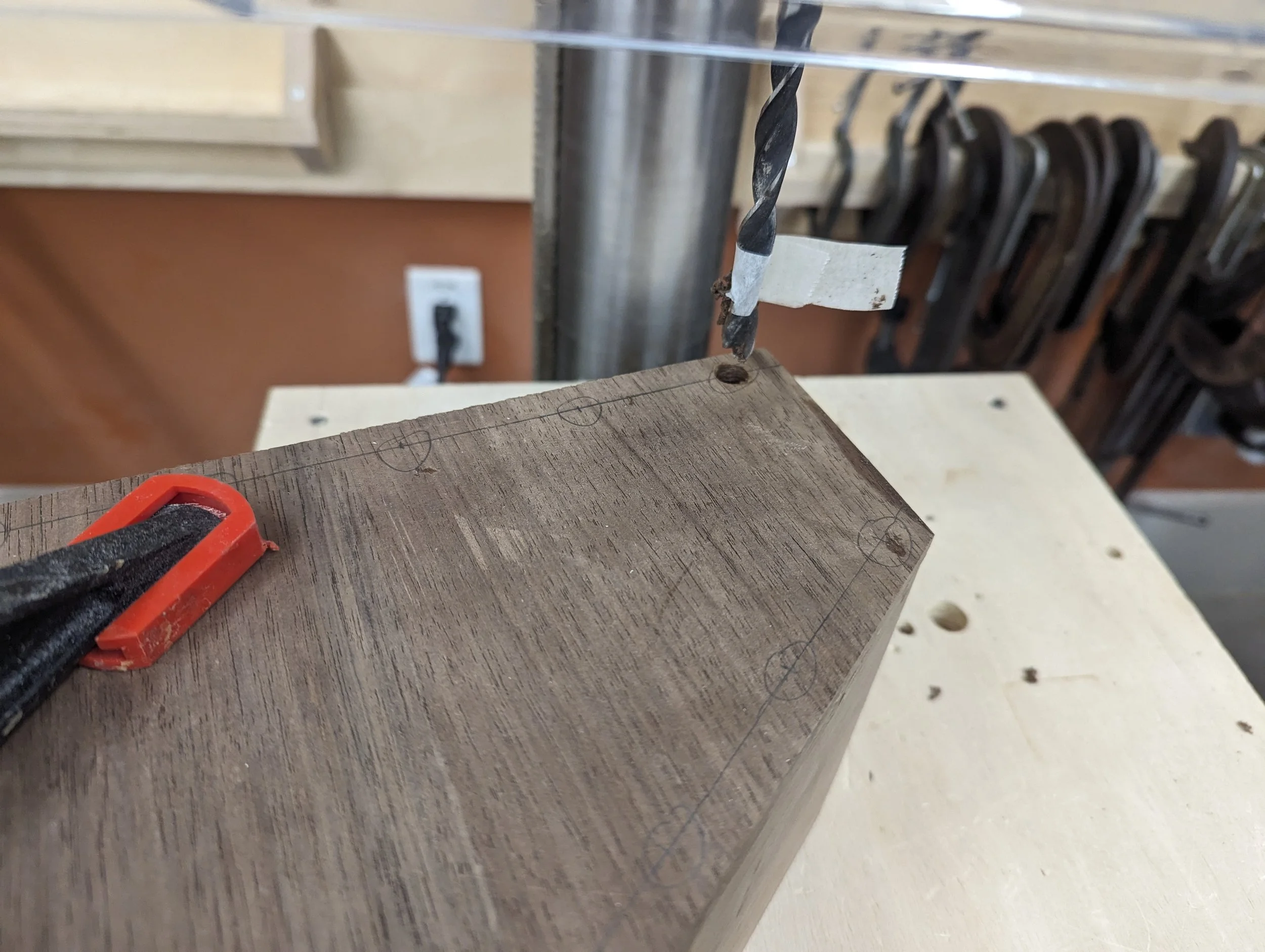
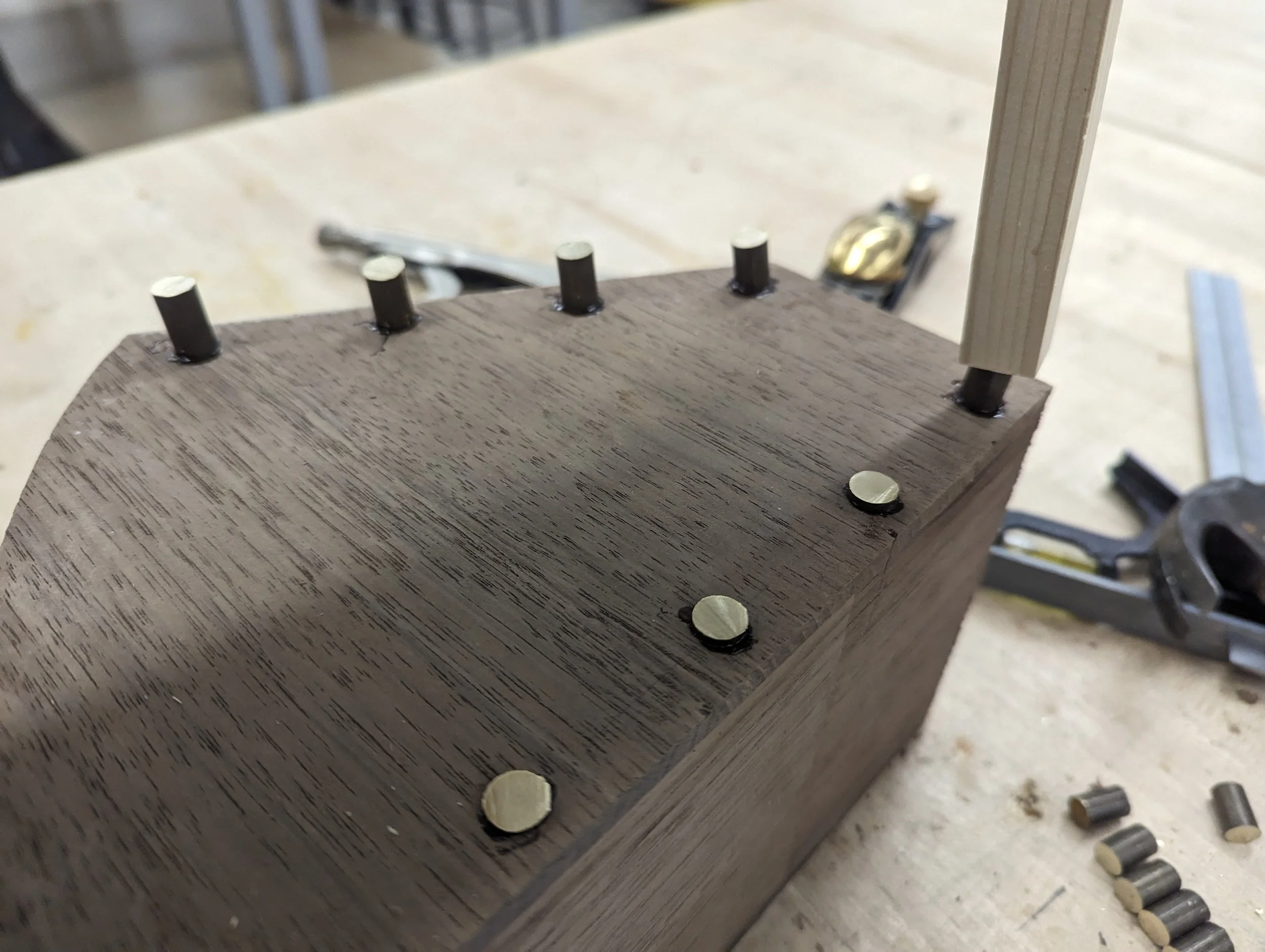
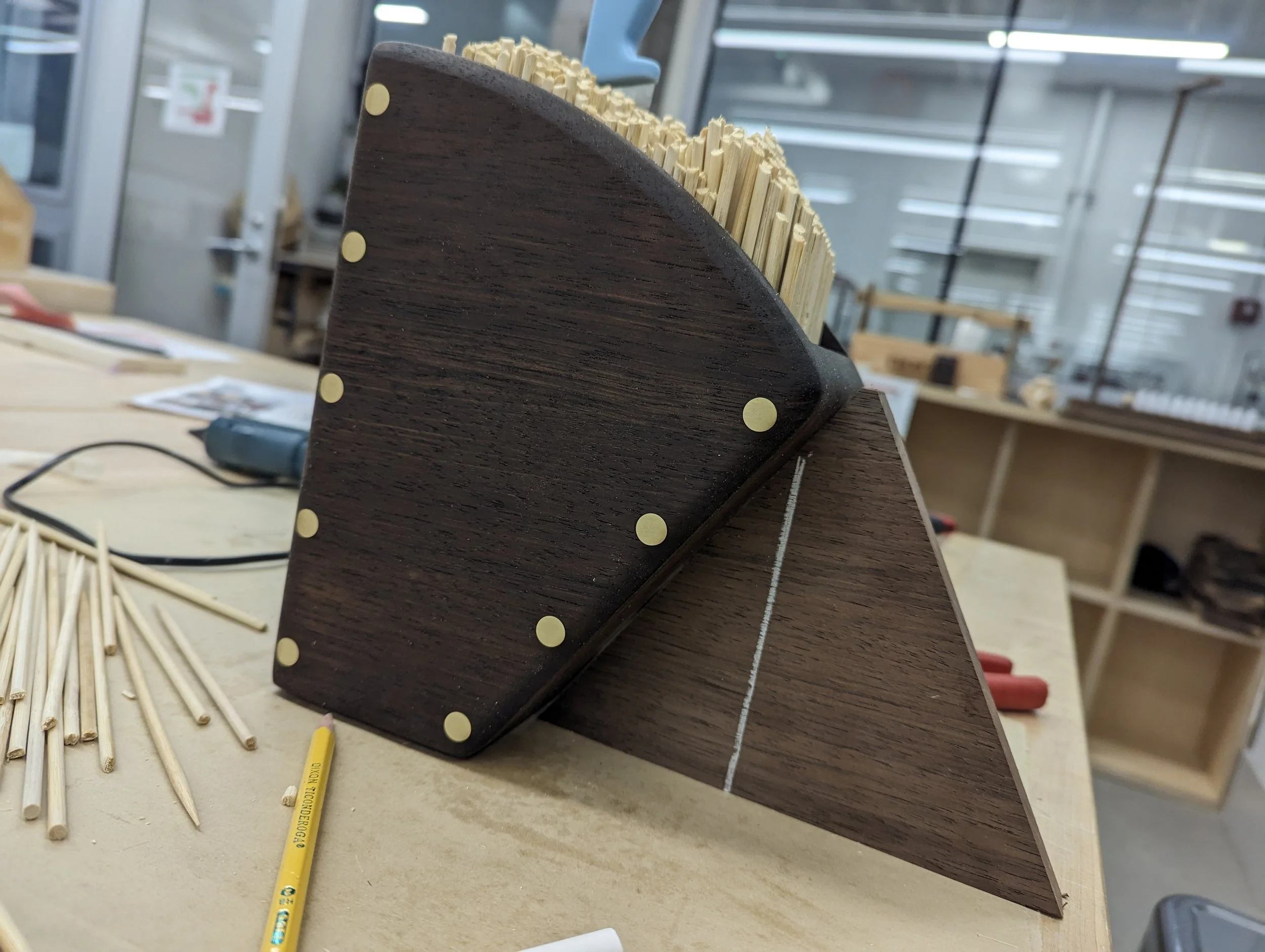
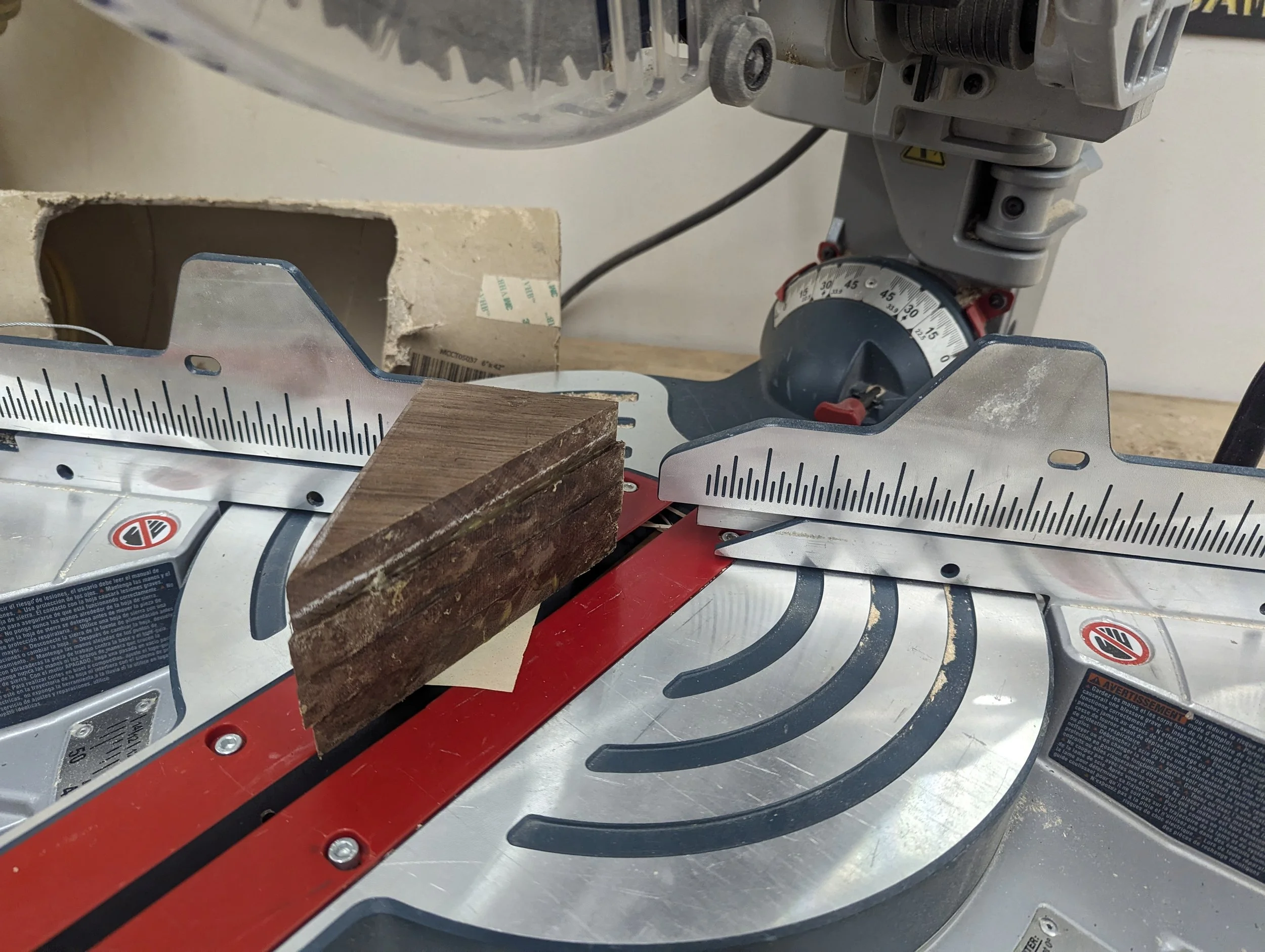
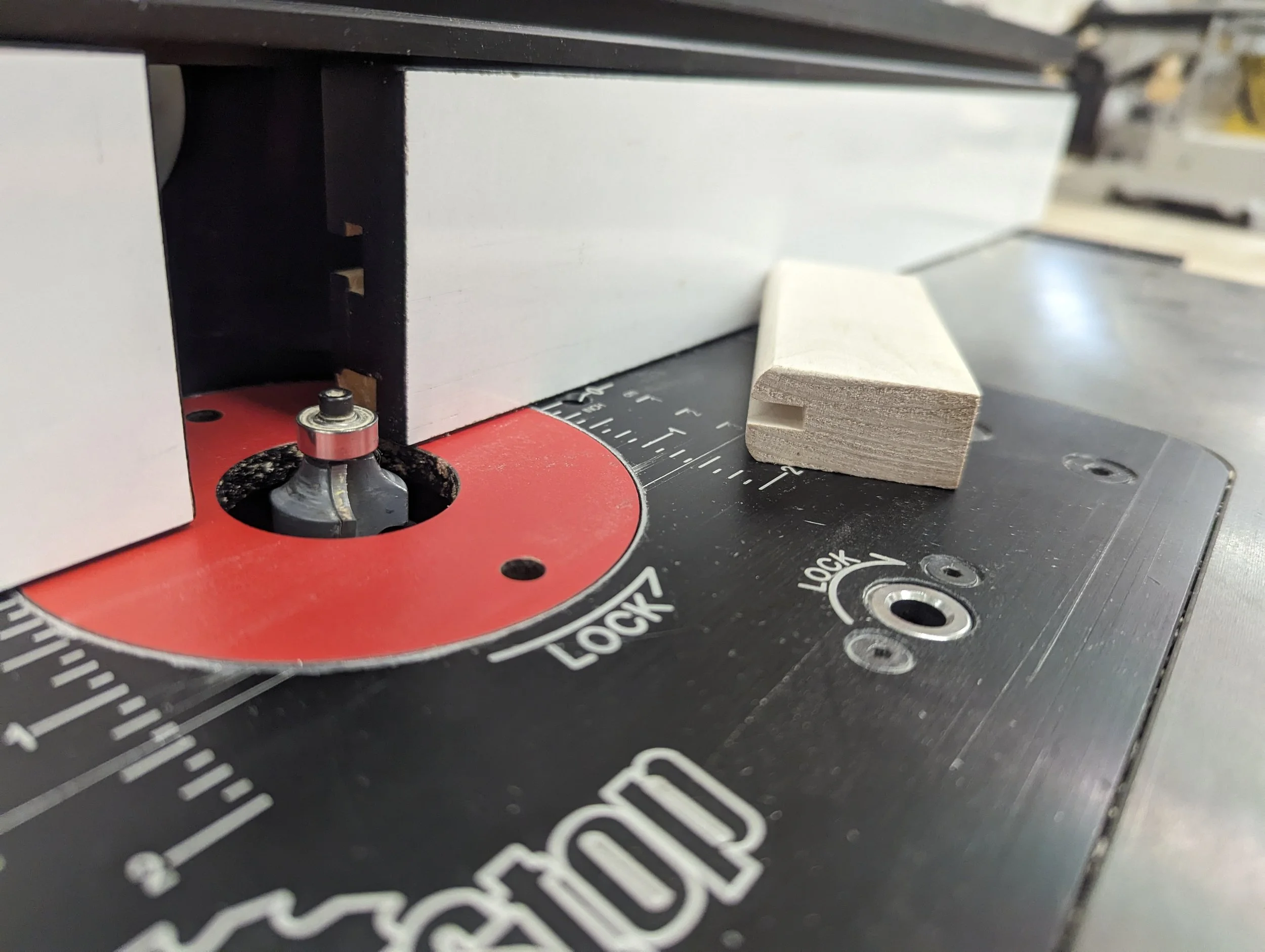
For the joinery, I decided to do rabbits instead of miters because of the geometry which would have required a special jig to cut a 45° angle on an angled piece of wood. The bottom of the knife block is a 1/4" Maple piece that is recessed in a dado. I added 3/8" brass rounds that are epoxied in place and provide some structural support but are mainly there for aesthetics and provide a nice contrast to the Walnut.
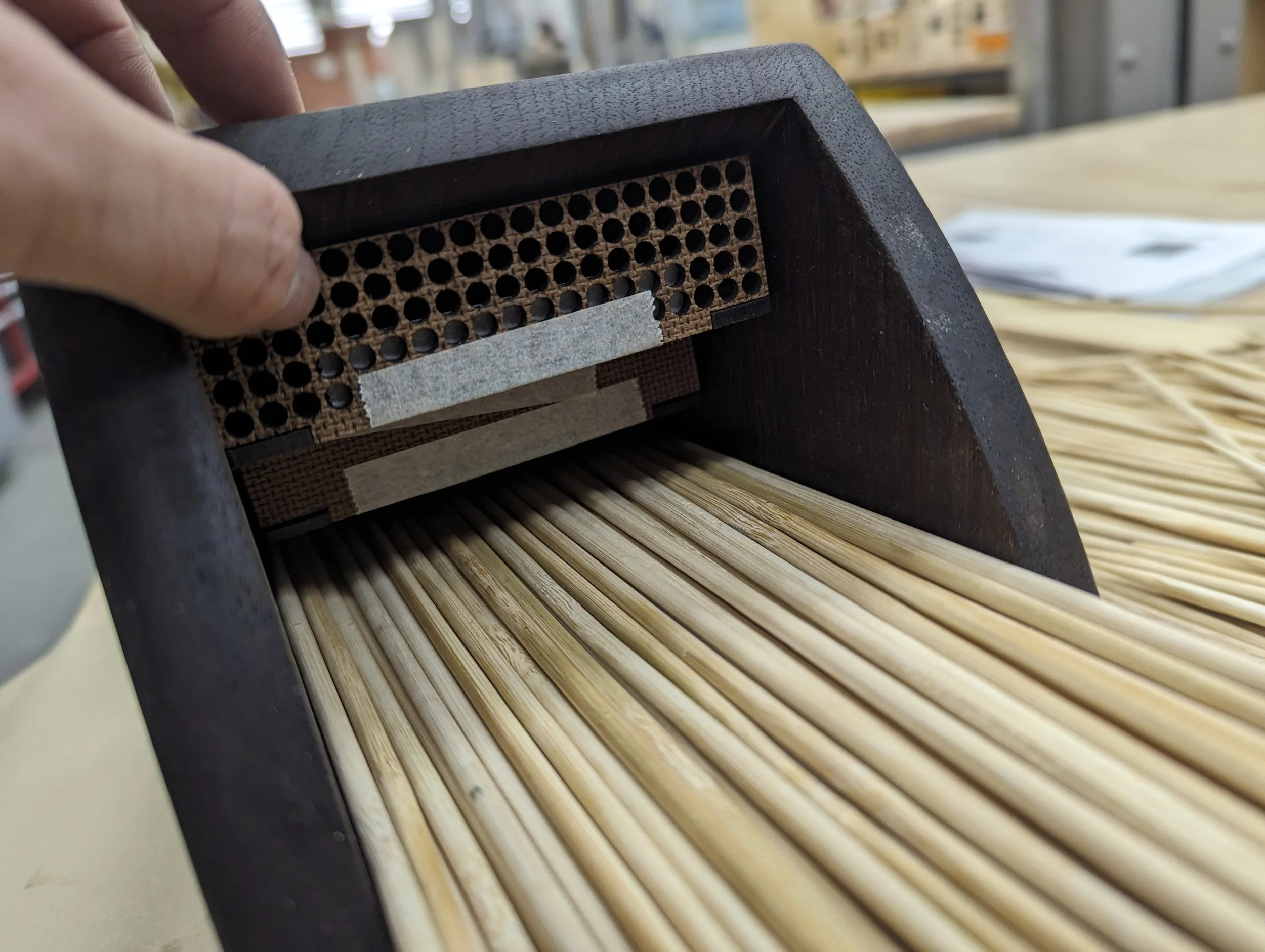
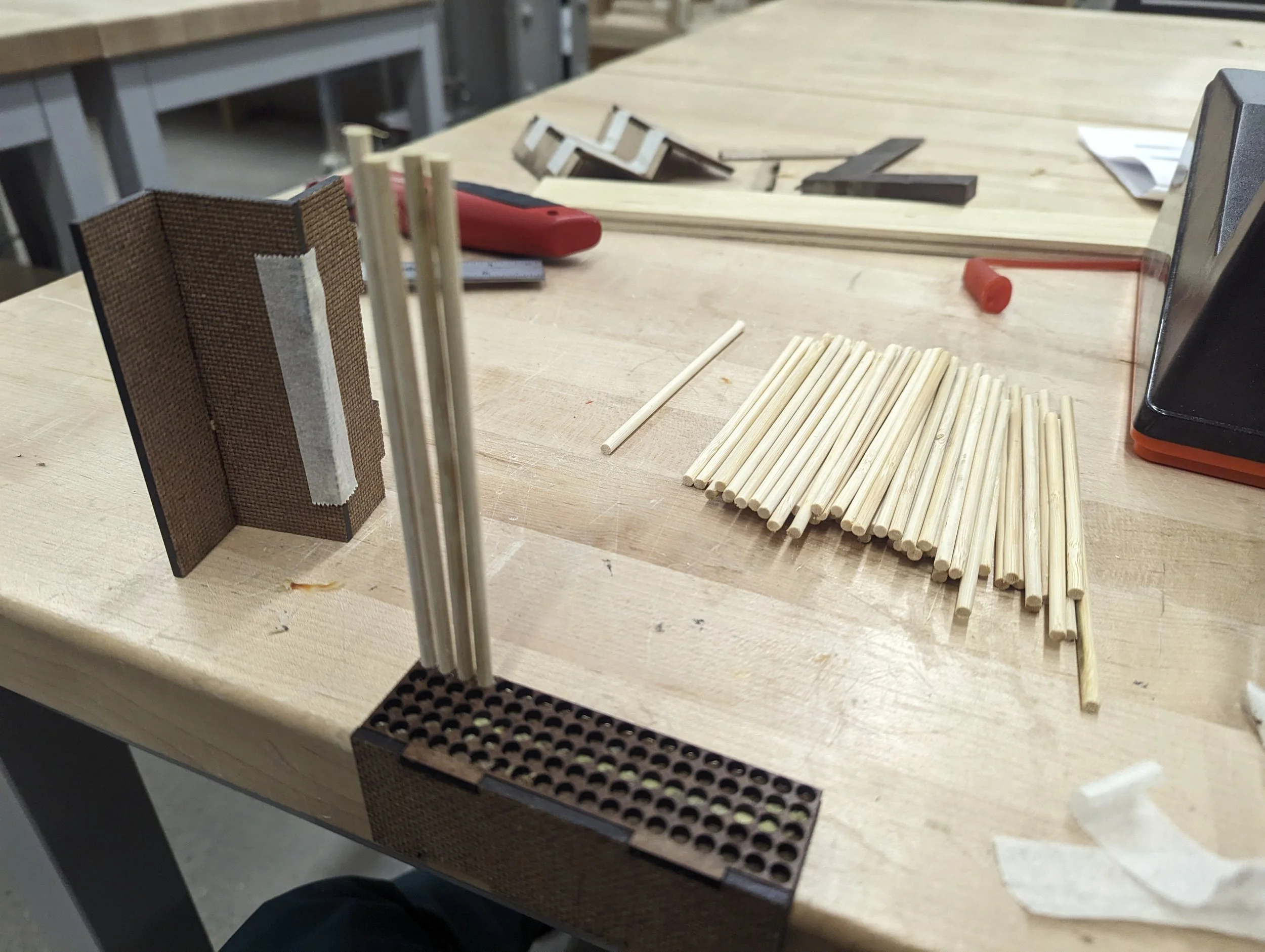
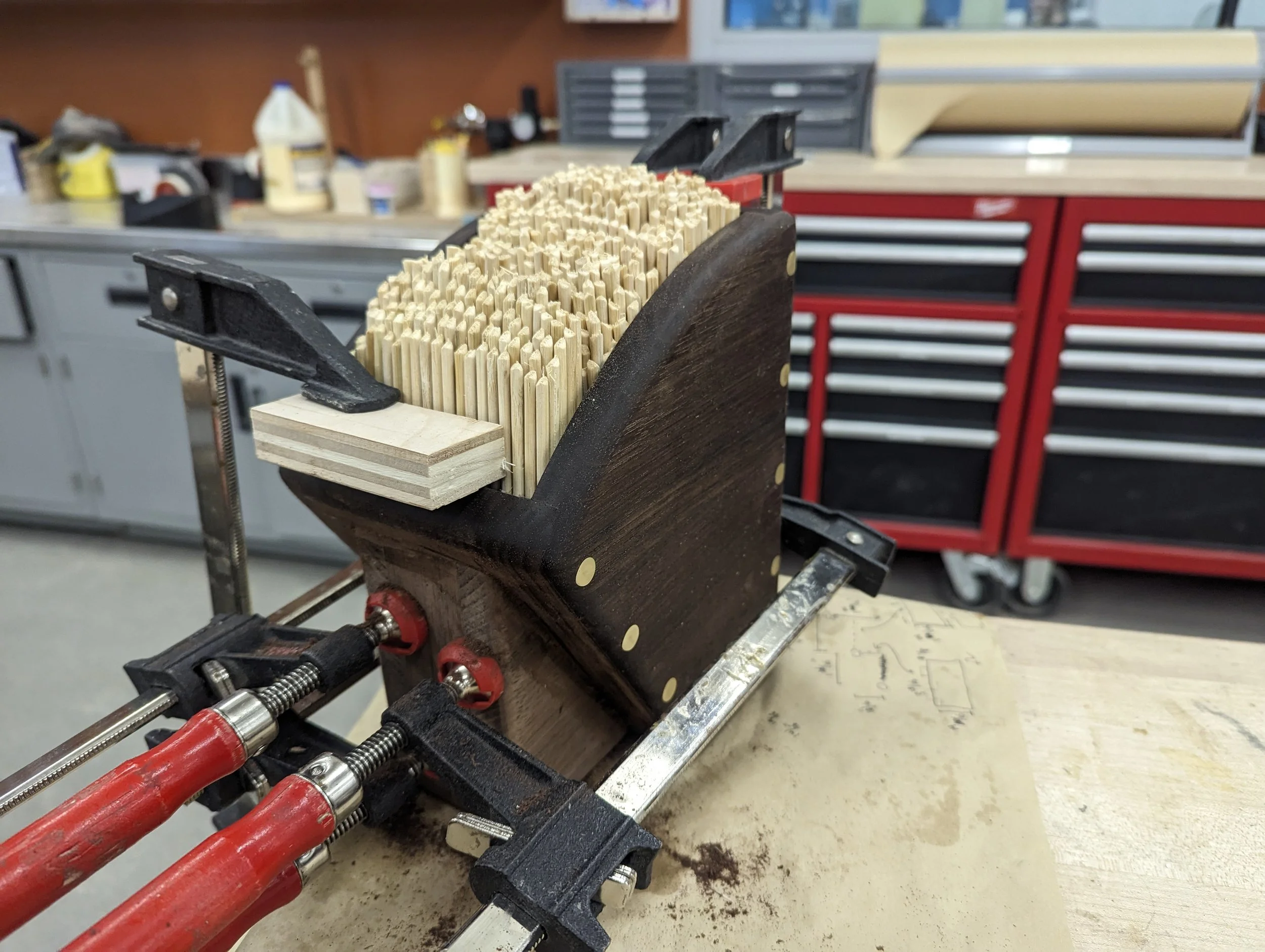
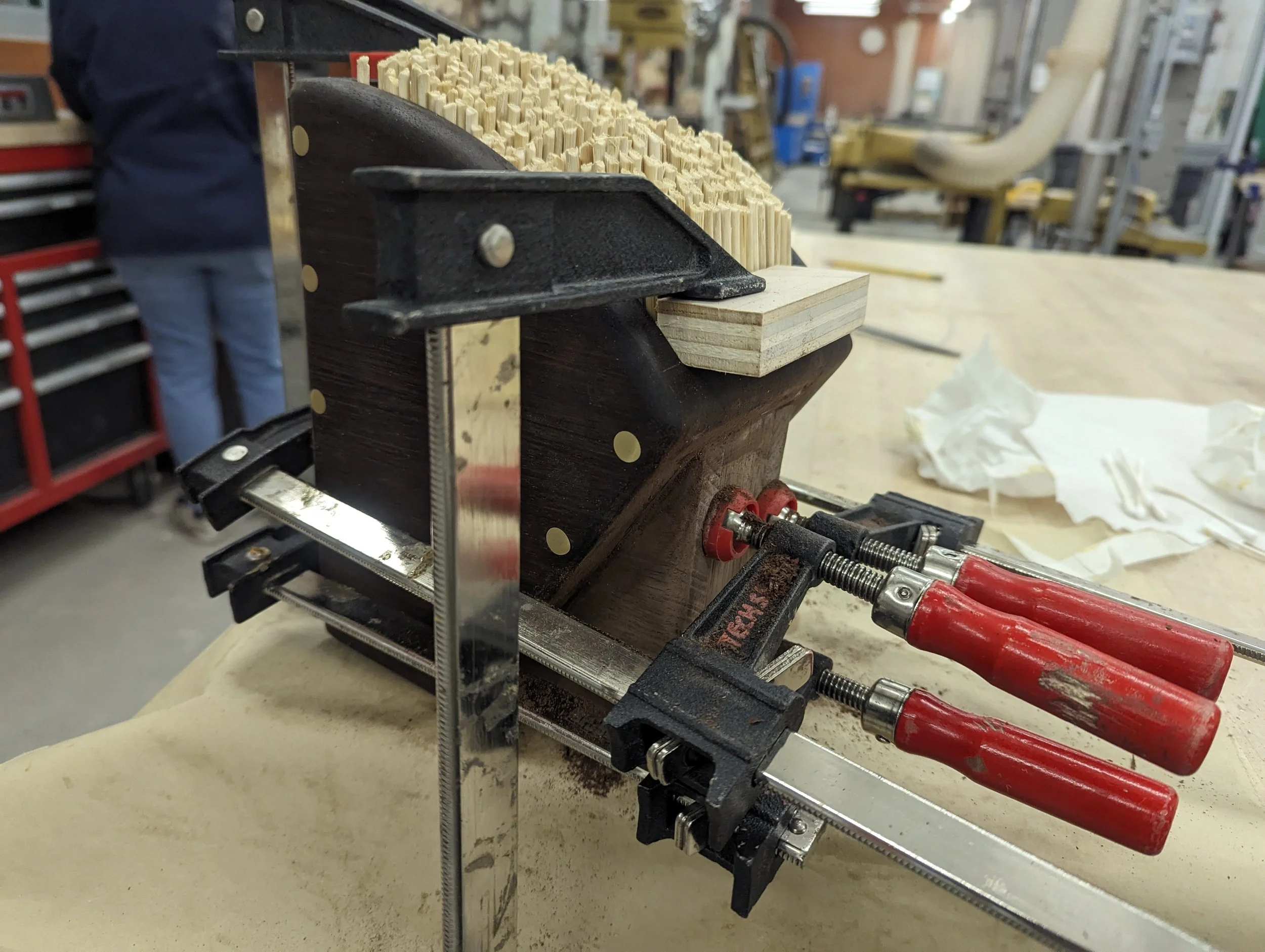
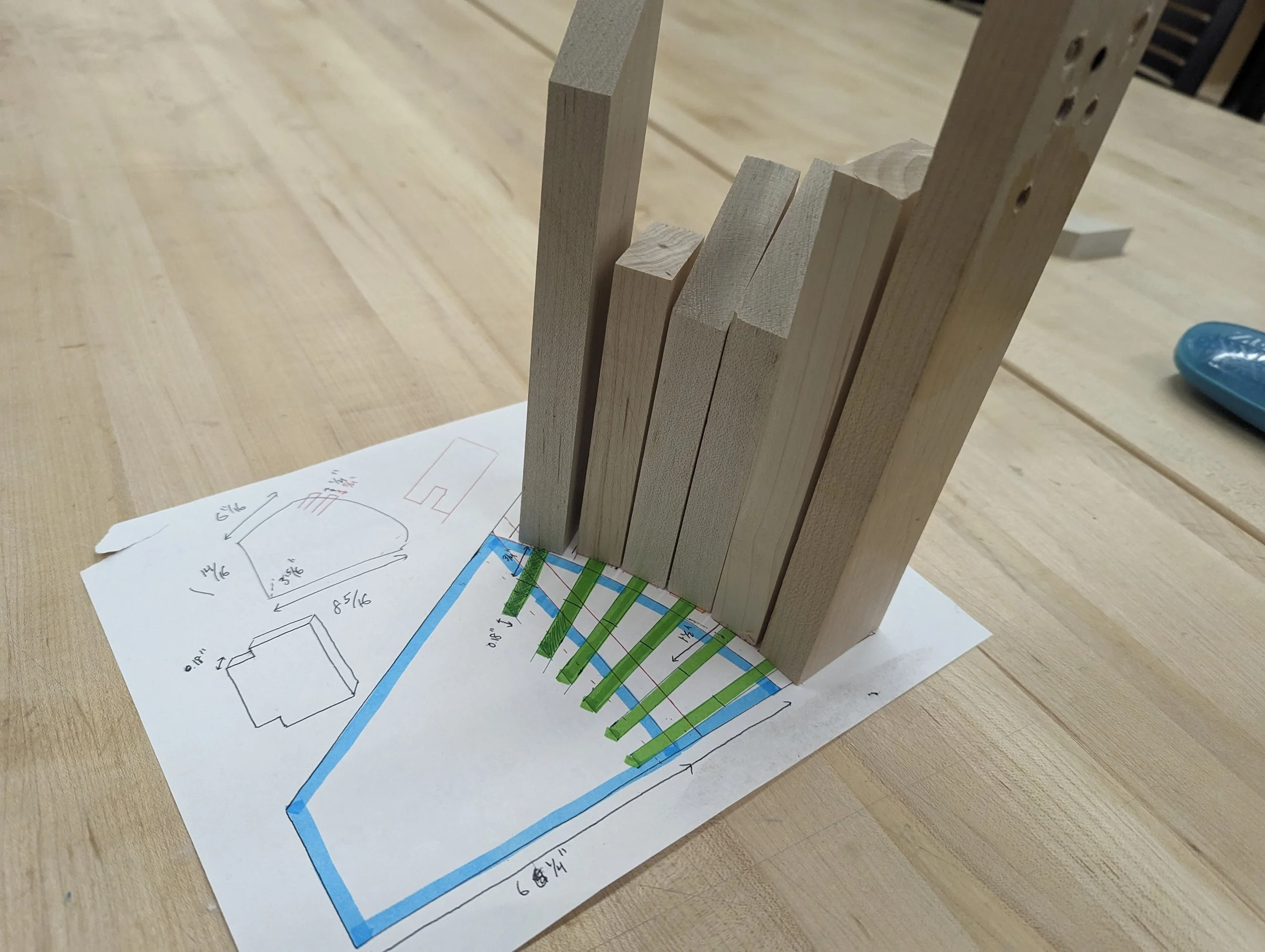
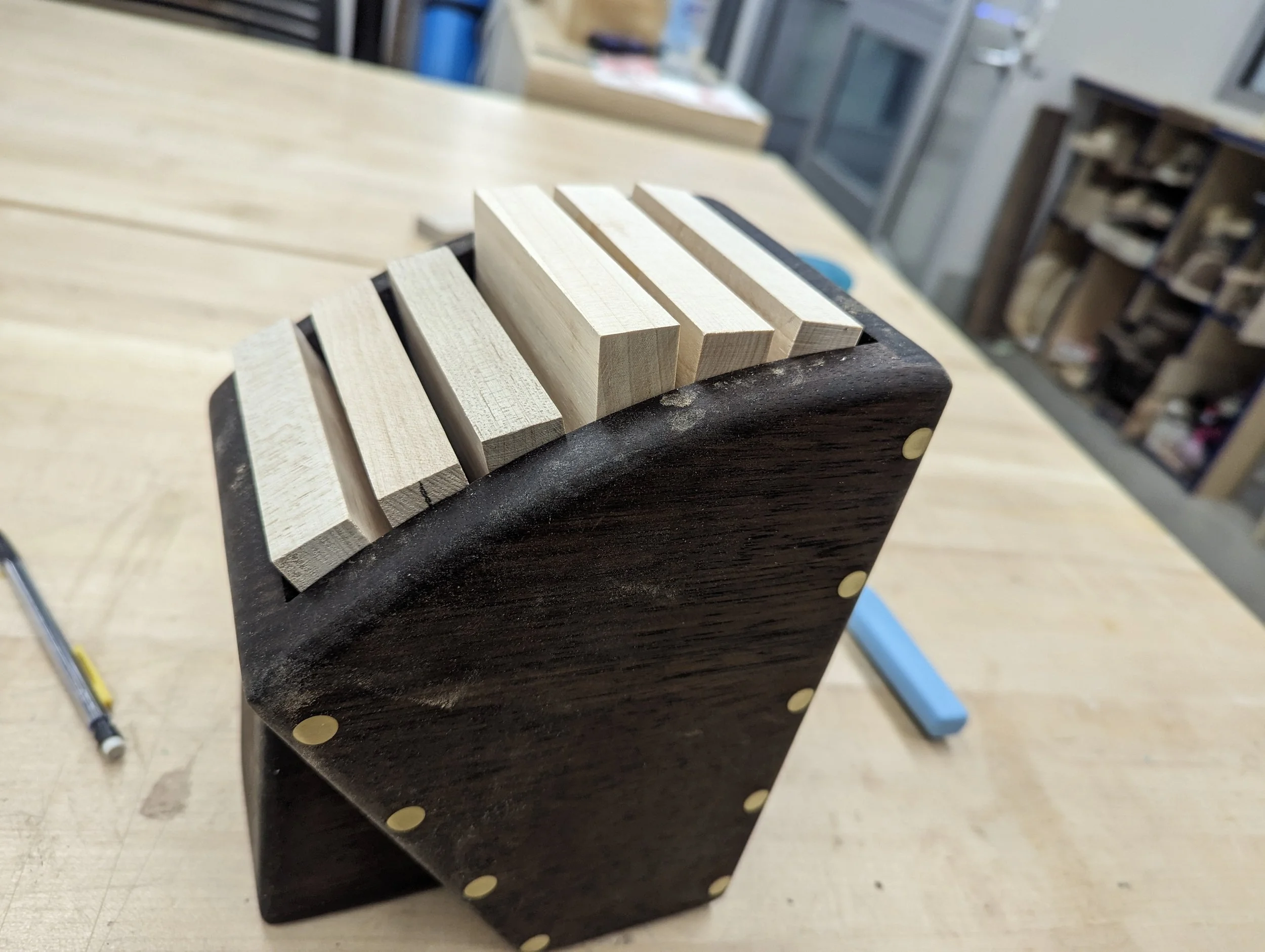
So far, everything had been going relatively smoothly, but this is where the issues began to arise. I initially planned to fill the block with skewers. What I didn't realize until I tried to fill the knife block with skewers was that because the profile of the knife block was essentially a 1/4 pie, the surface area was larger at the edge of the pie compared to the center, so the skewers didn't fit because they were a uniform width. The skewers would have to be wedge-shaped for them to fit. Another problem was trimming the skewers down to their final dimension, which I could only do once they were inserted into the knife block. Below is the list of the problems I faced and my attempted solutions.
Problem: Skewers don't fit
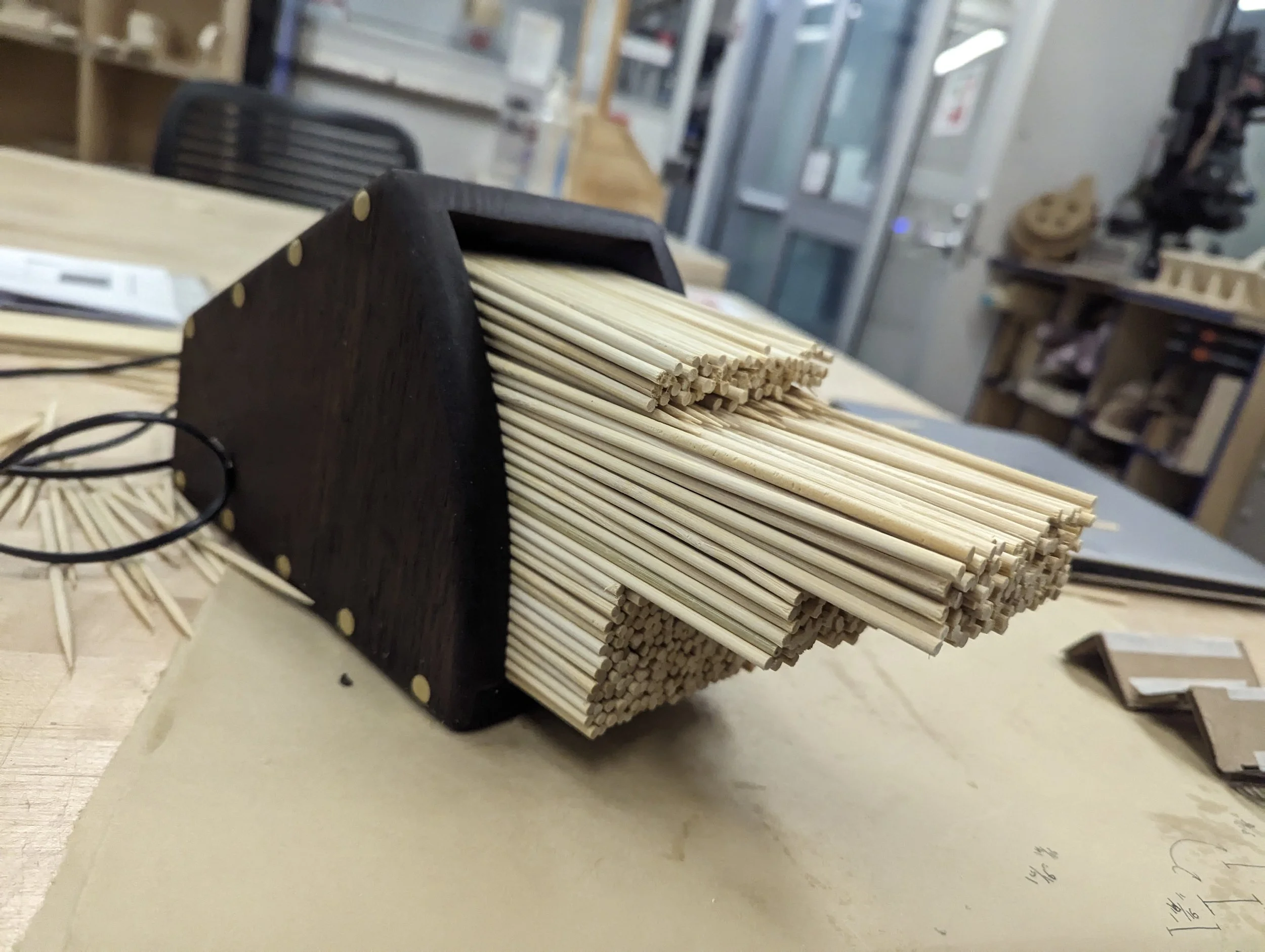
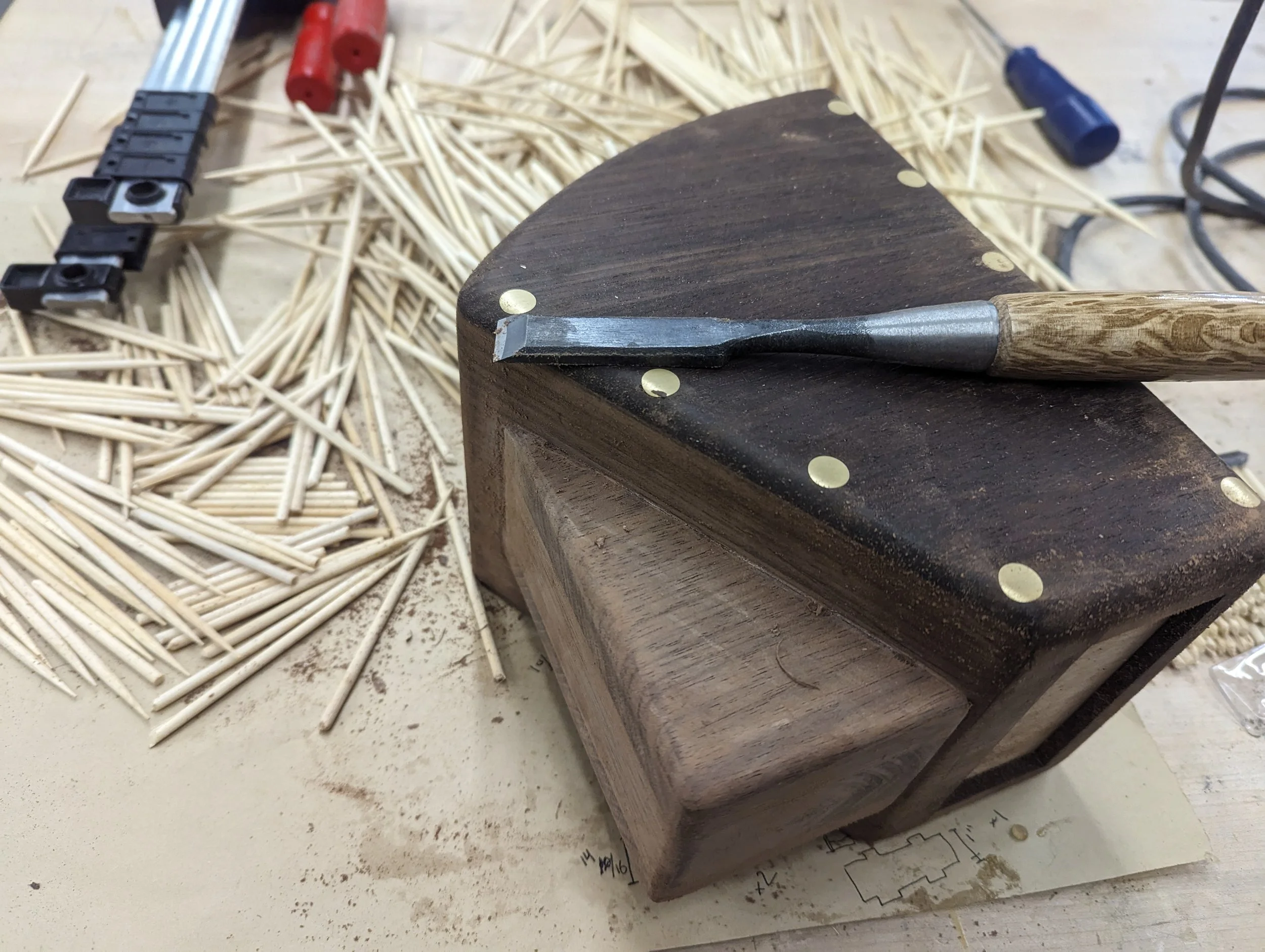
Solution: Create a stair like structure to increase the vertical surface area.
Result: Somewhat worked, but I discovered a new problem where the skewers would slide out when a knife a pulled out because the knife block was designed to sit horizontally.
Problem: How to trim to skewers to final length
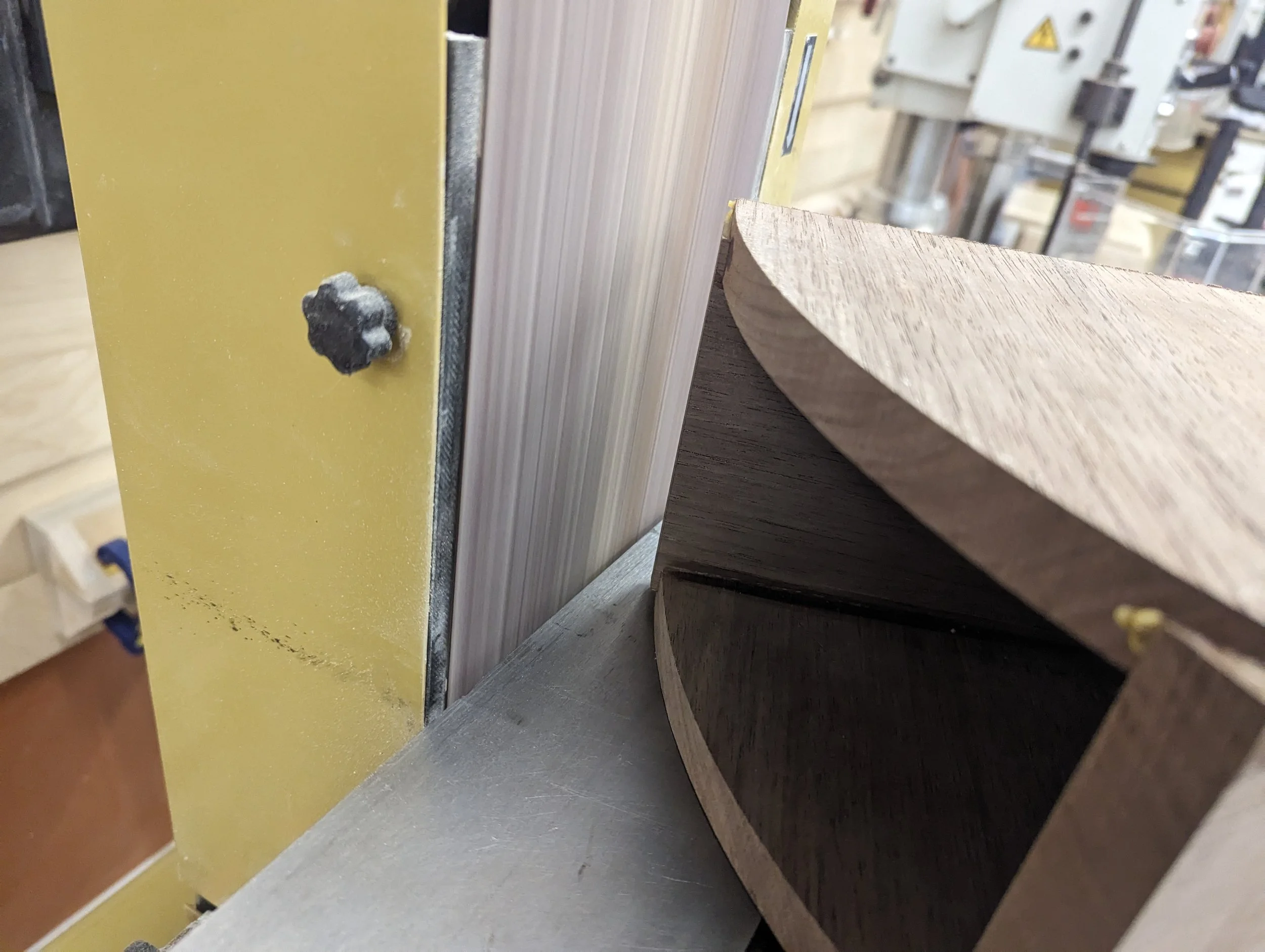
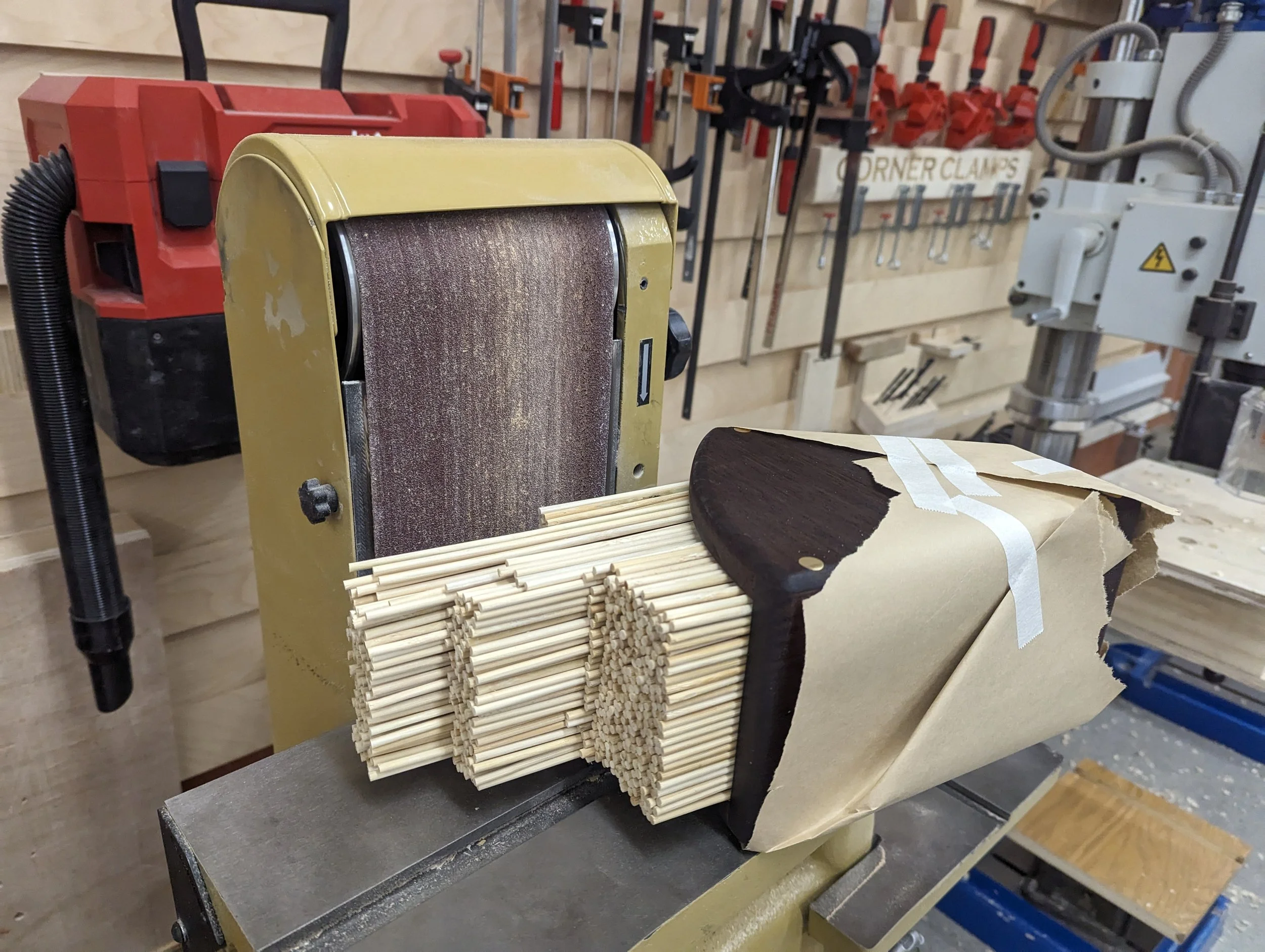
Solution #1: Belt Sand
Result: This took too long with little progress and caused a lot of burning.
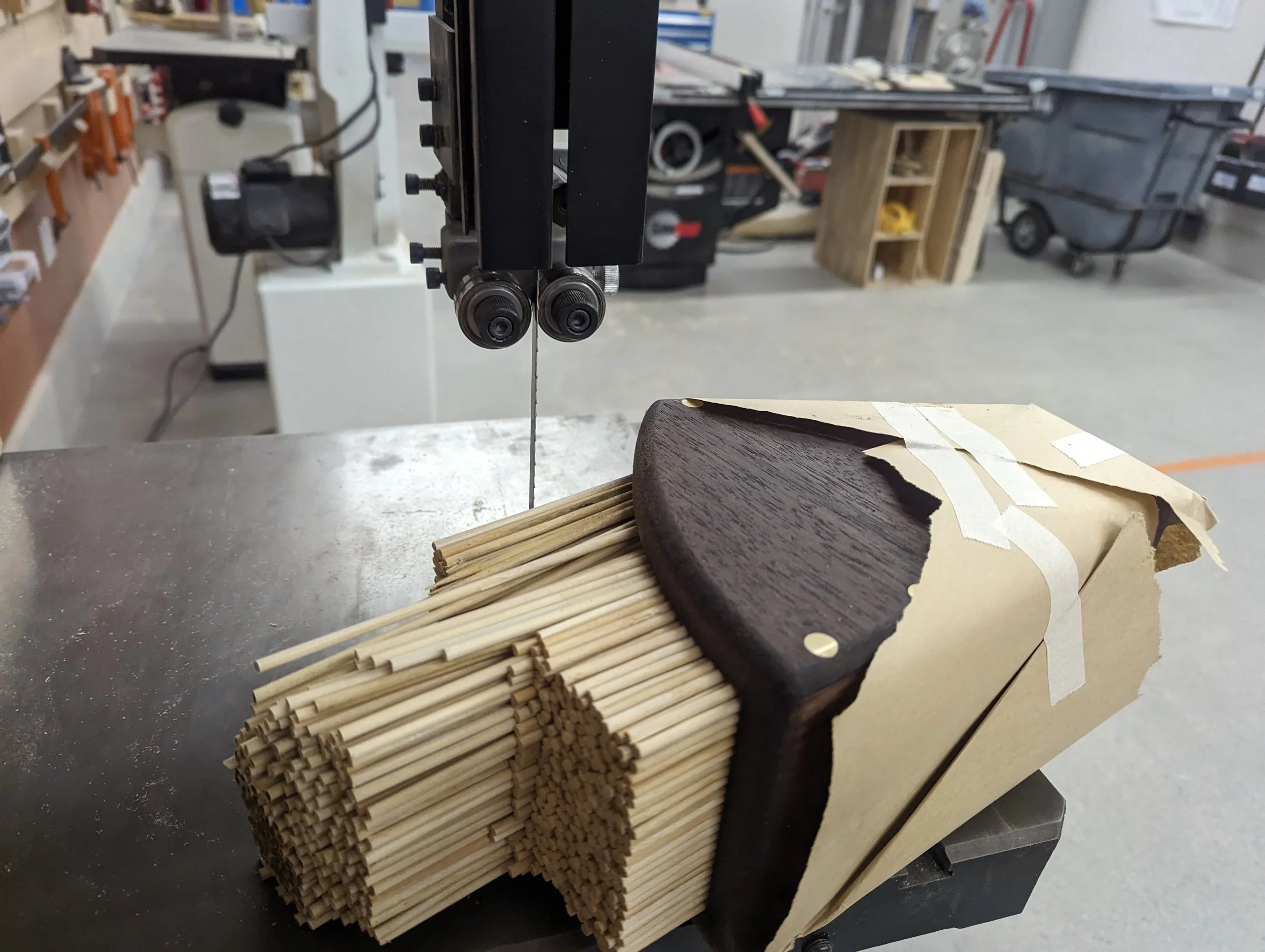
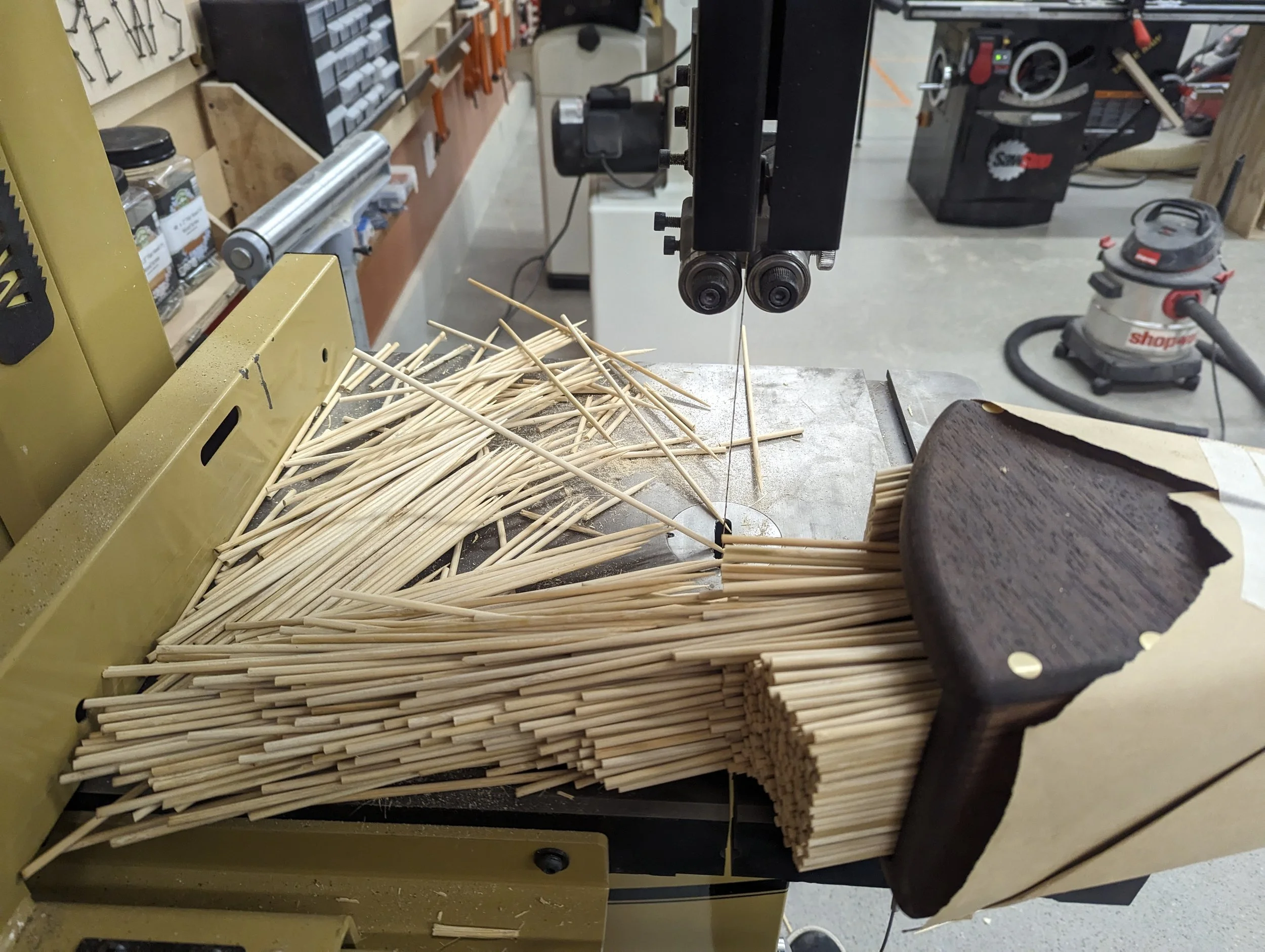
Solution #2: Bandsaw
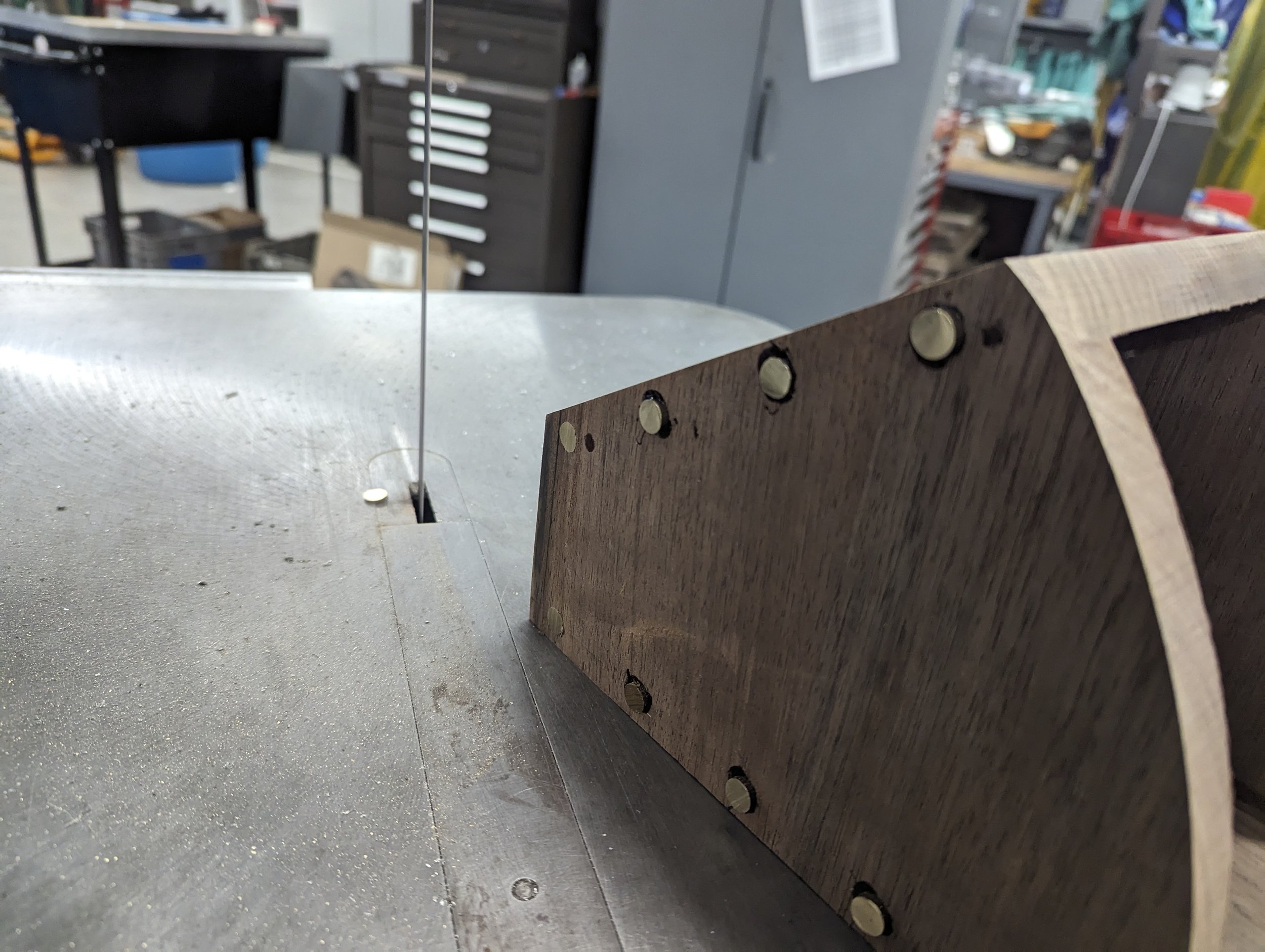
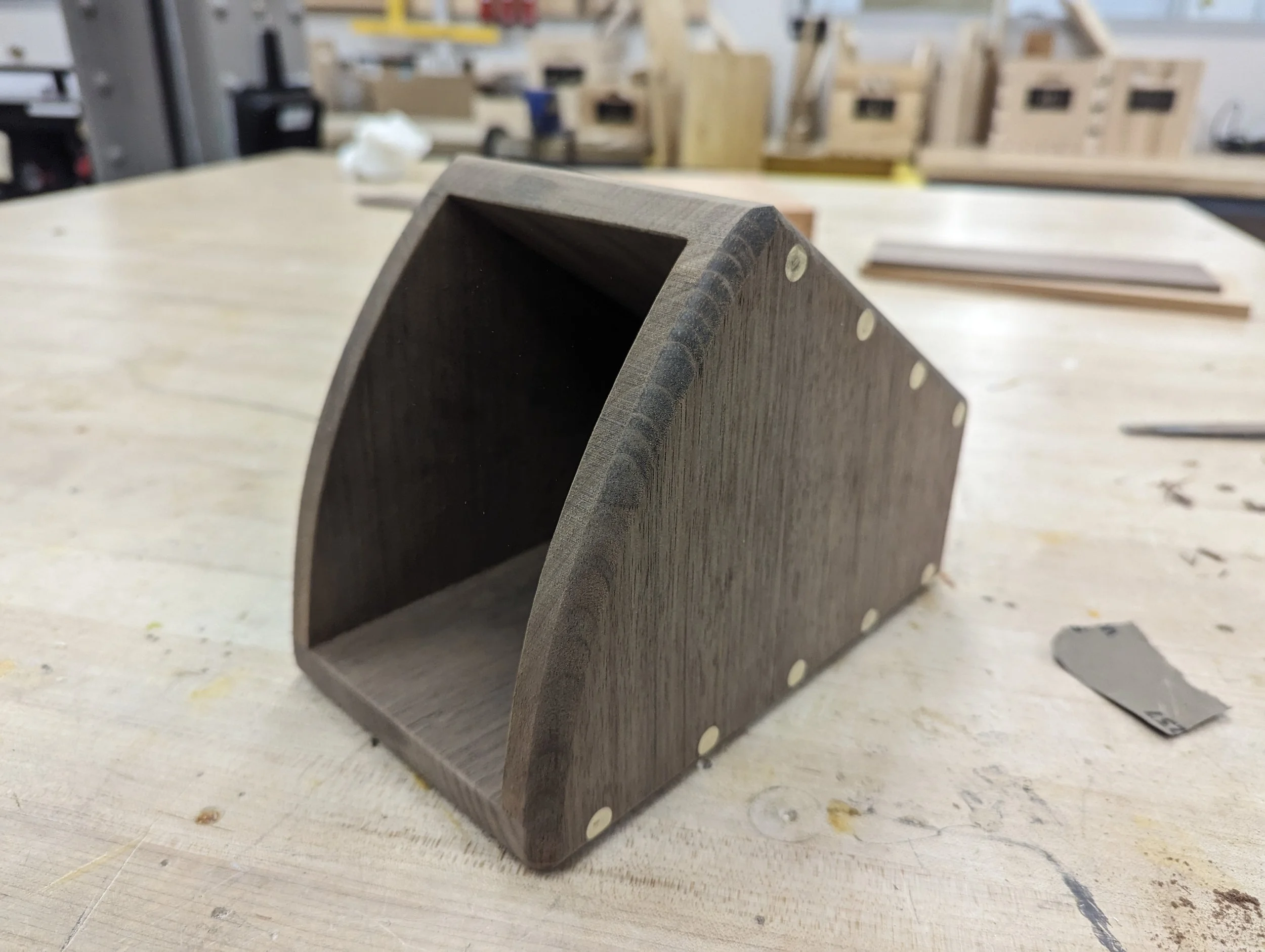
Result: I was not expecting to end well, but I tried it anyway. The skewers essentially exploded because they were not fixed to anything inside the knife block. (There is a picture of the aftermath below)
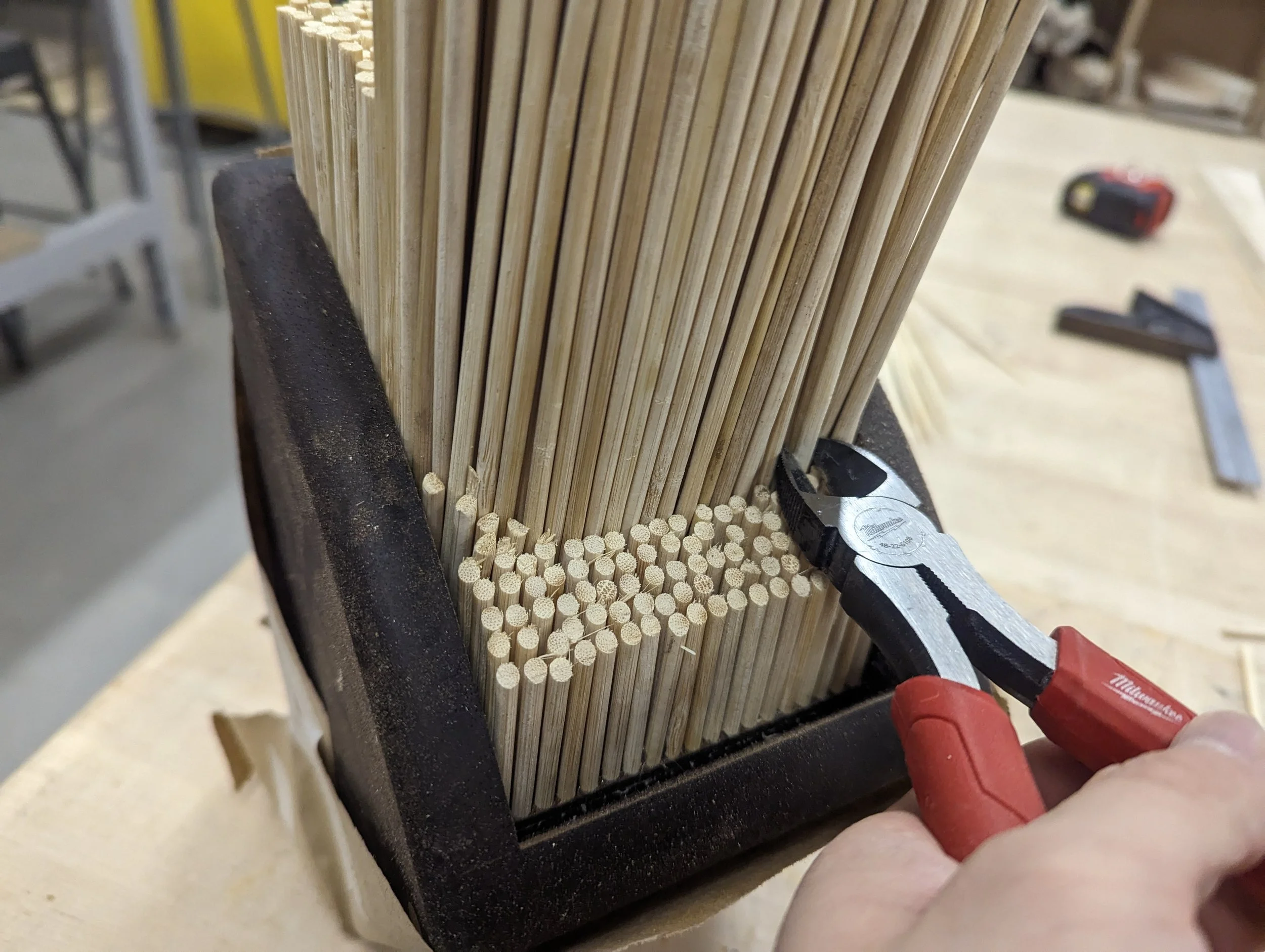
Solution #3: Hand cut with wire cutters
Result: This took forever and the uneven cut pattern had a somewhat organic shape, but didn't fit the aesthetic I was going for.
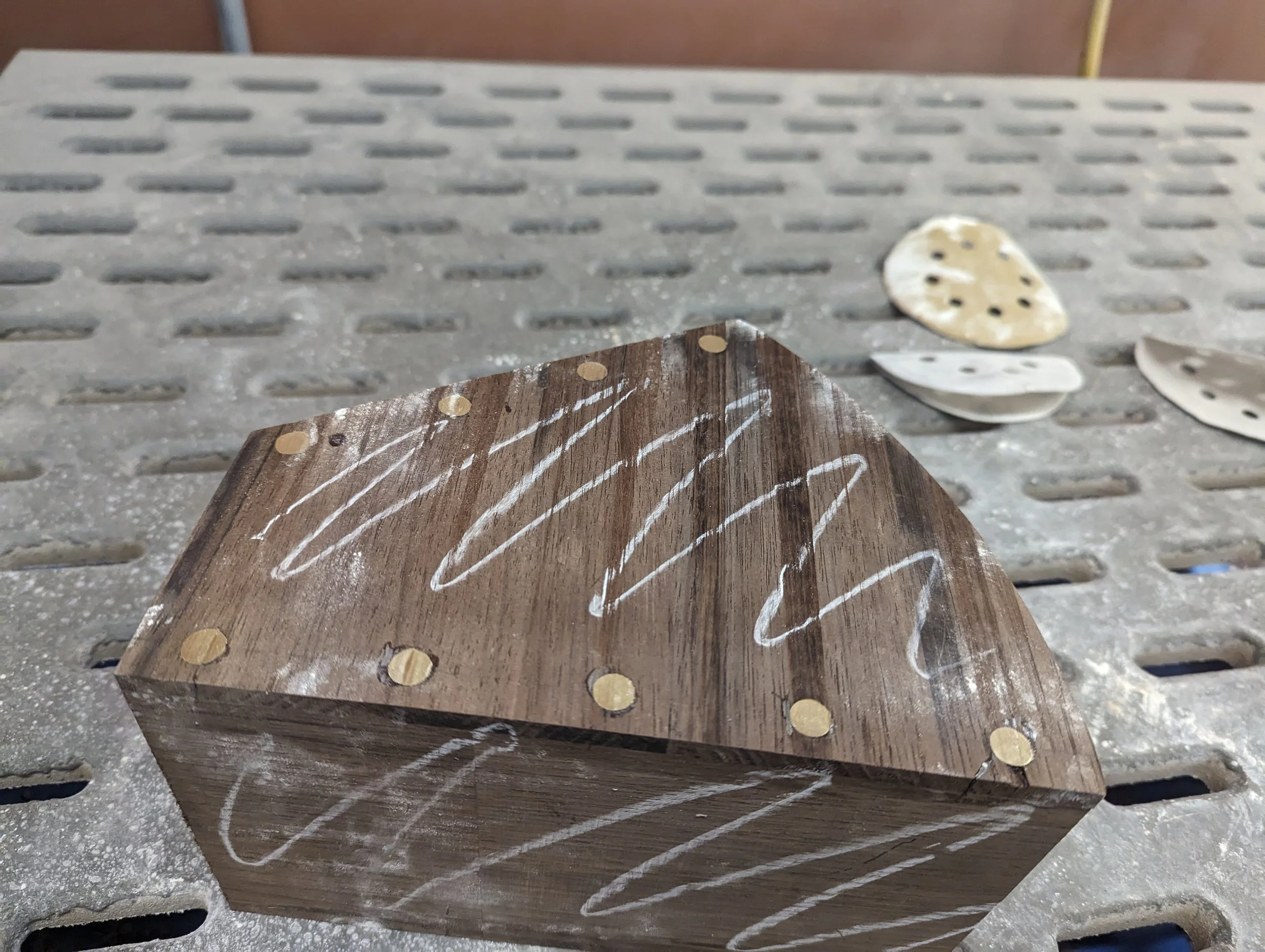
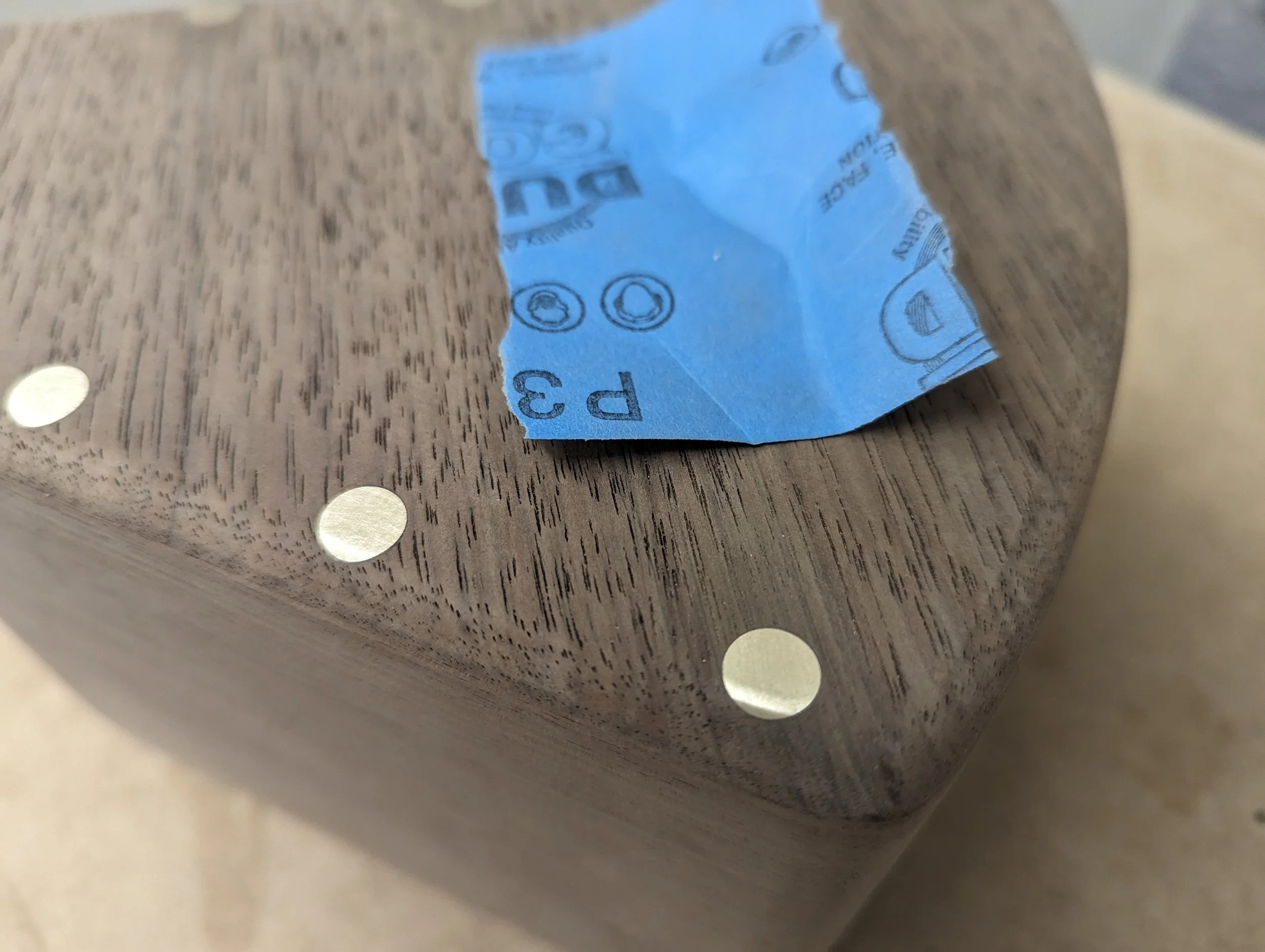
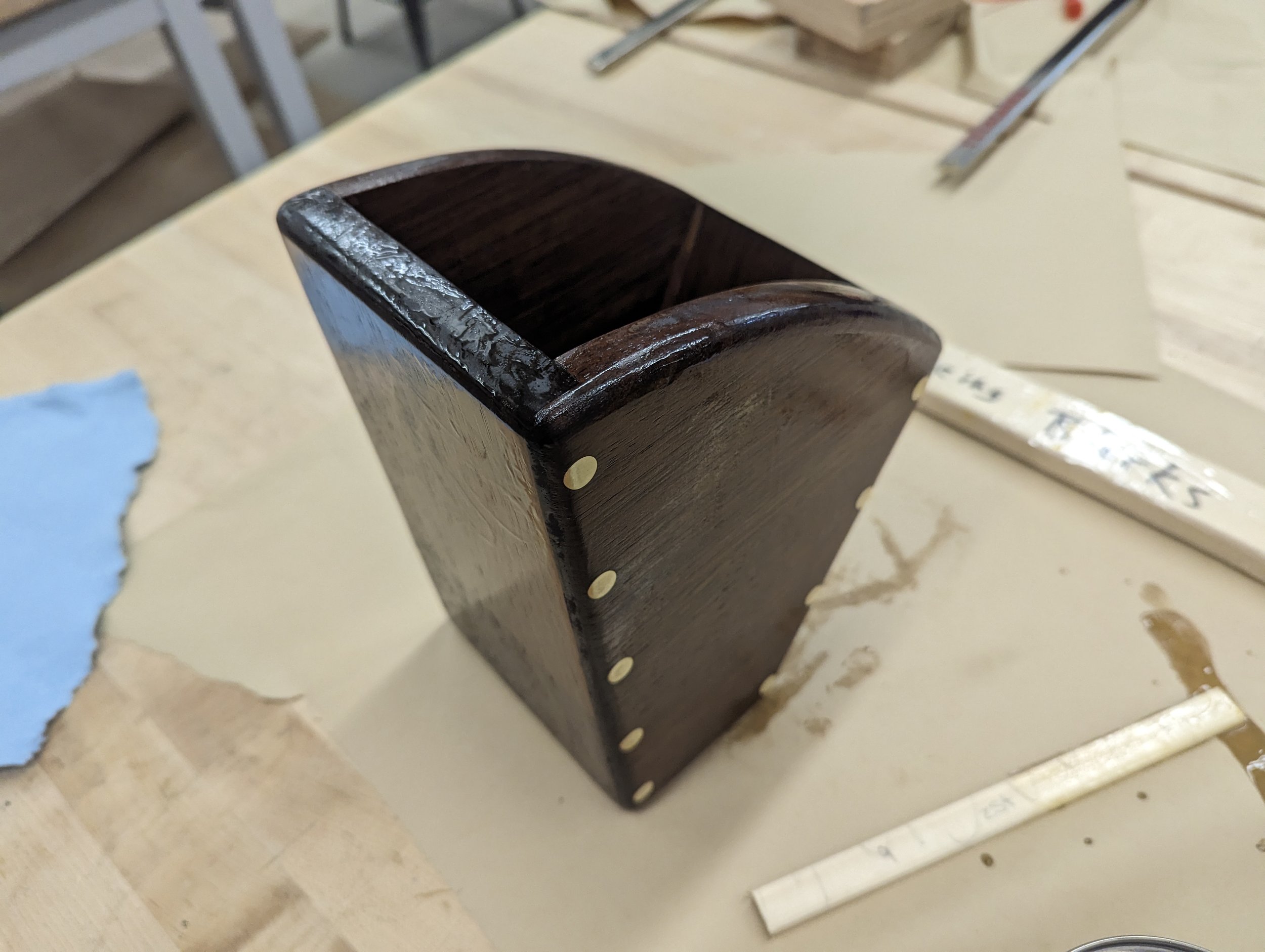
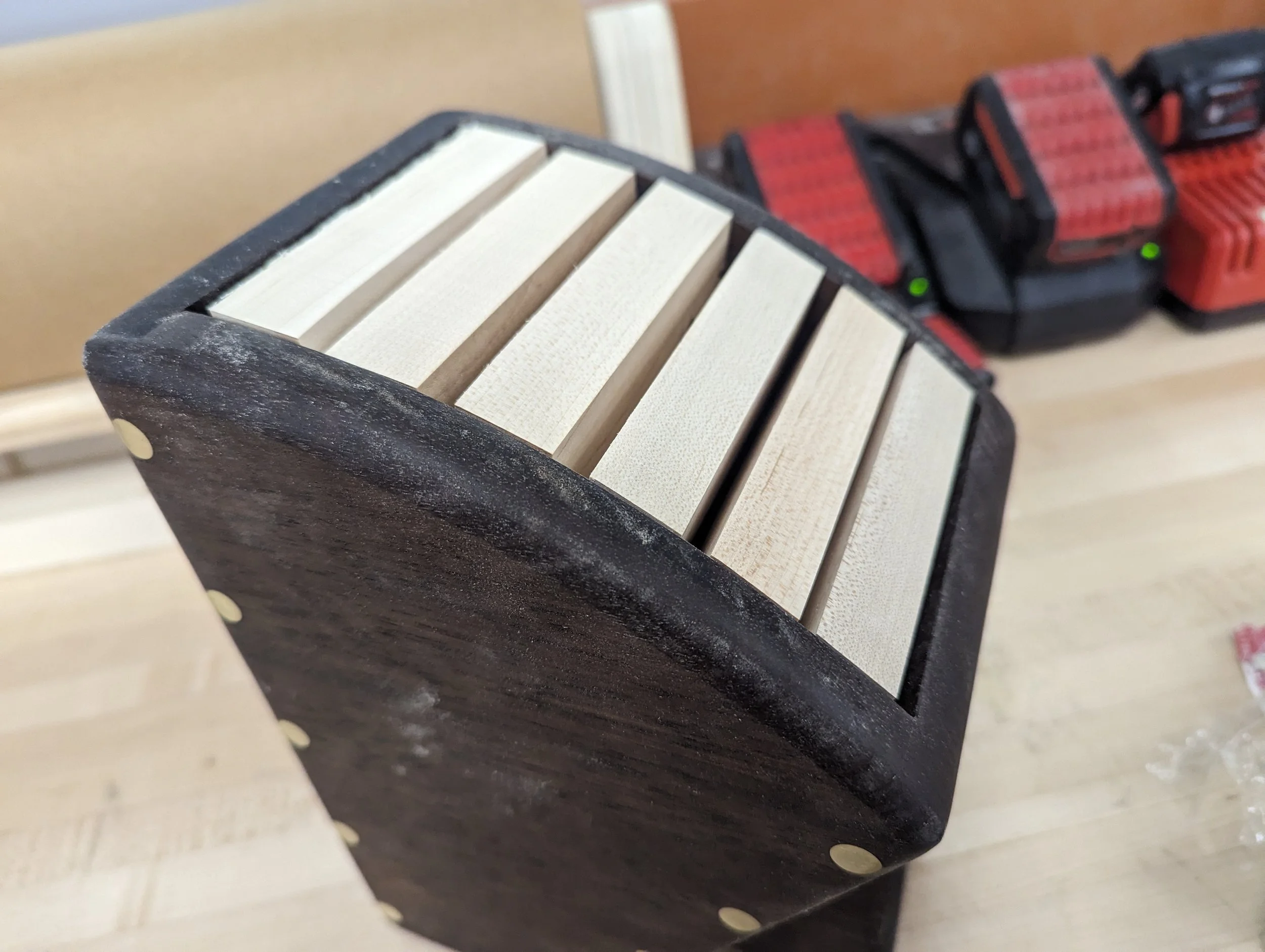
To solve the new problem of the skewers sliding out when a knife was pulled out, I decided to create a support block and rotated the knife block vertical instead. However, I had already put finish on, so to attach the support I had to sand off the finish on that face and reapply it.
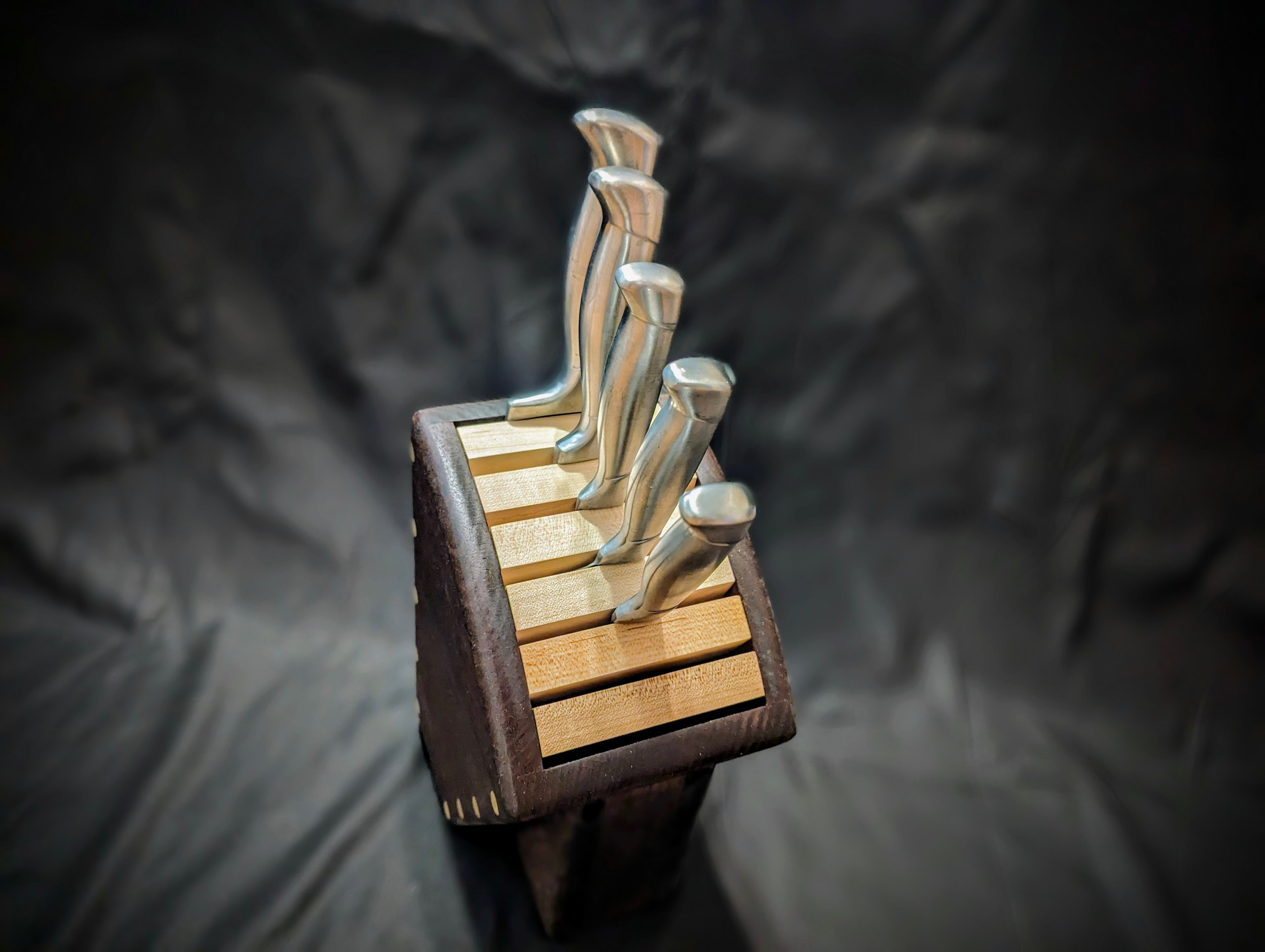
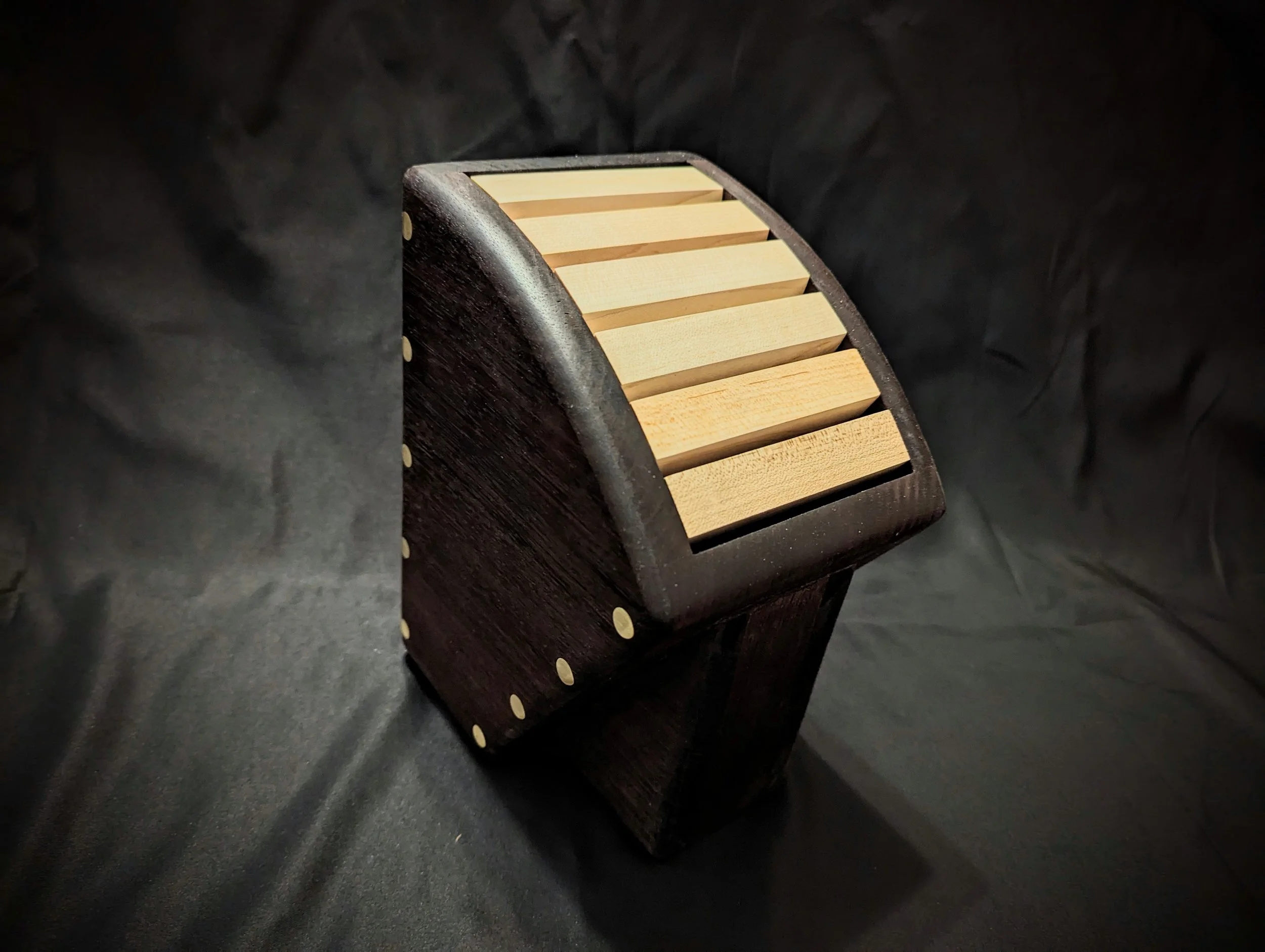
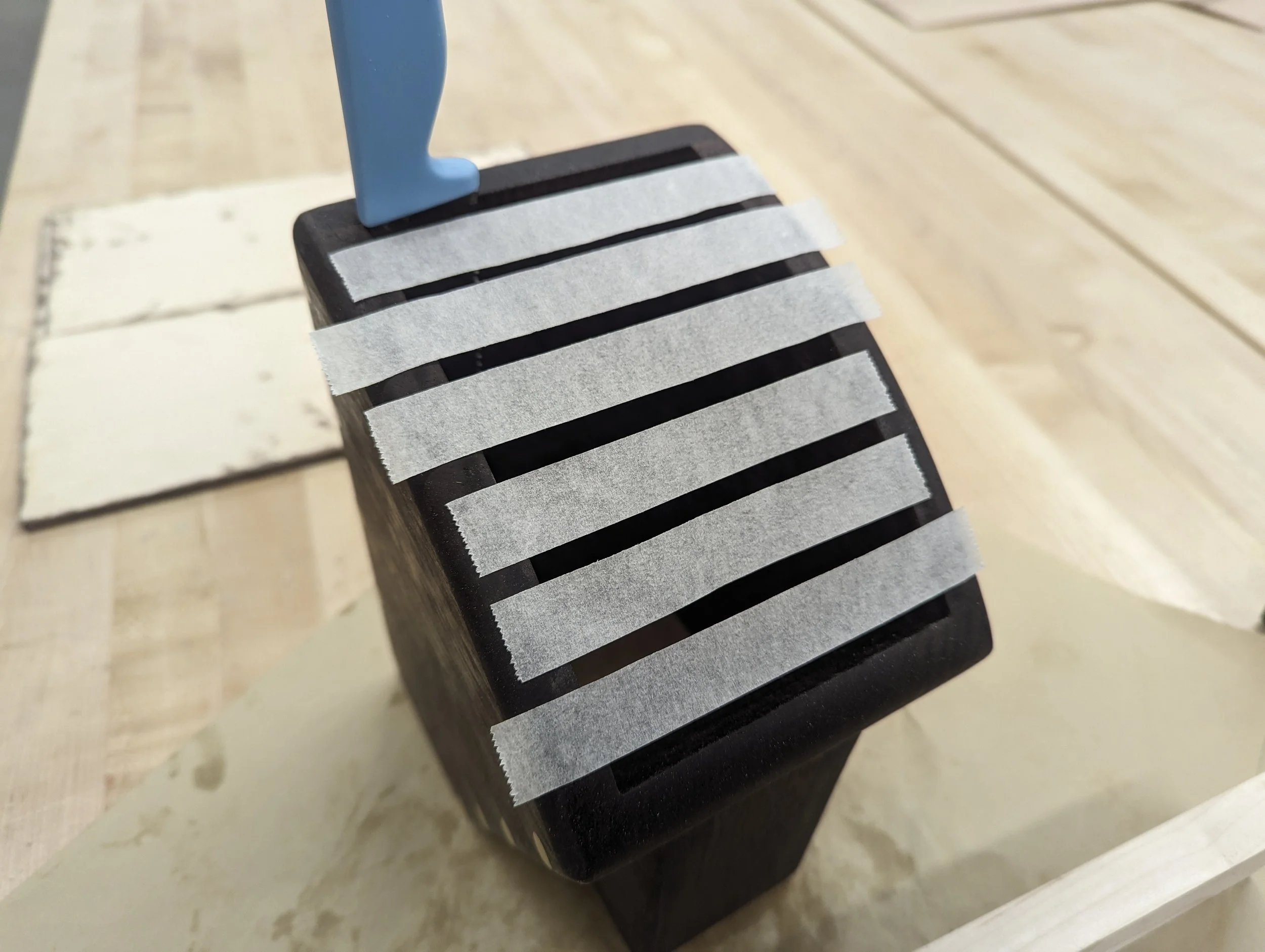
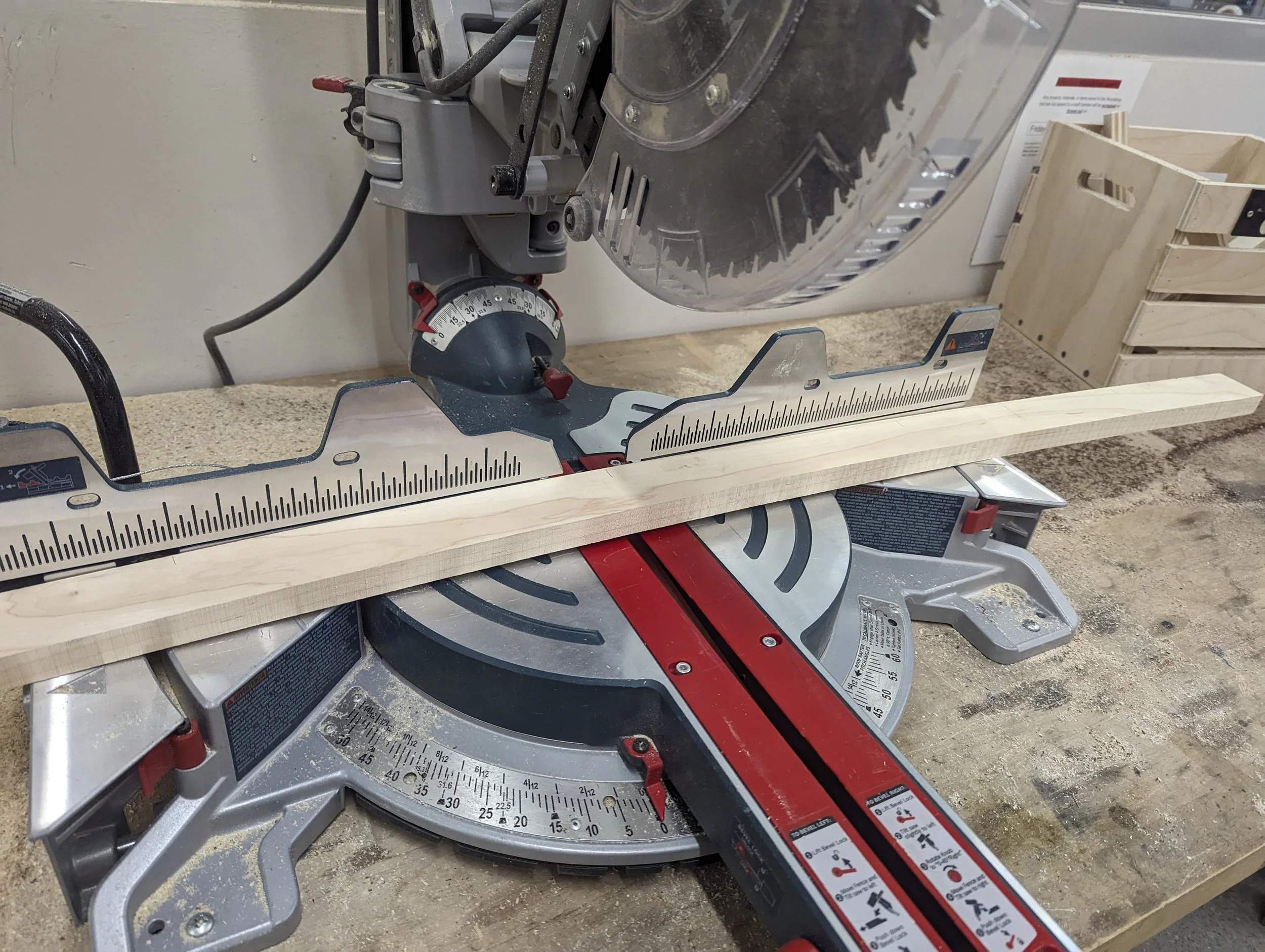
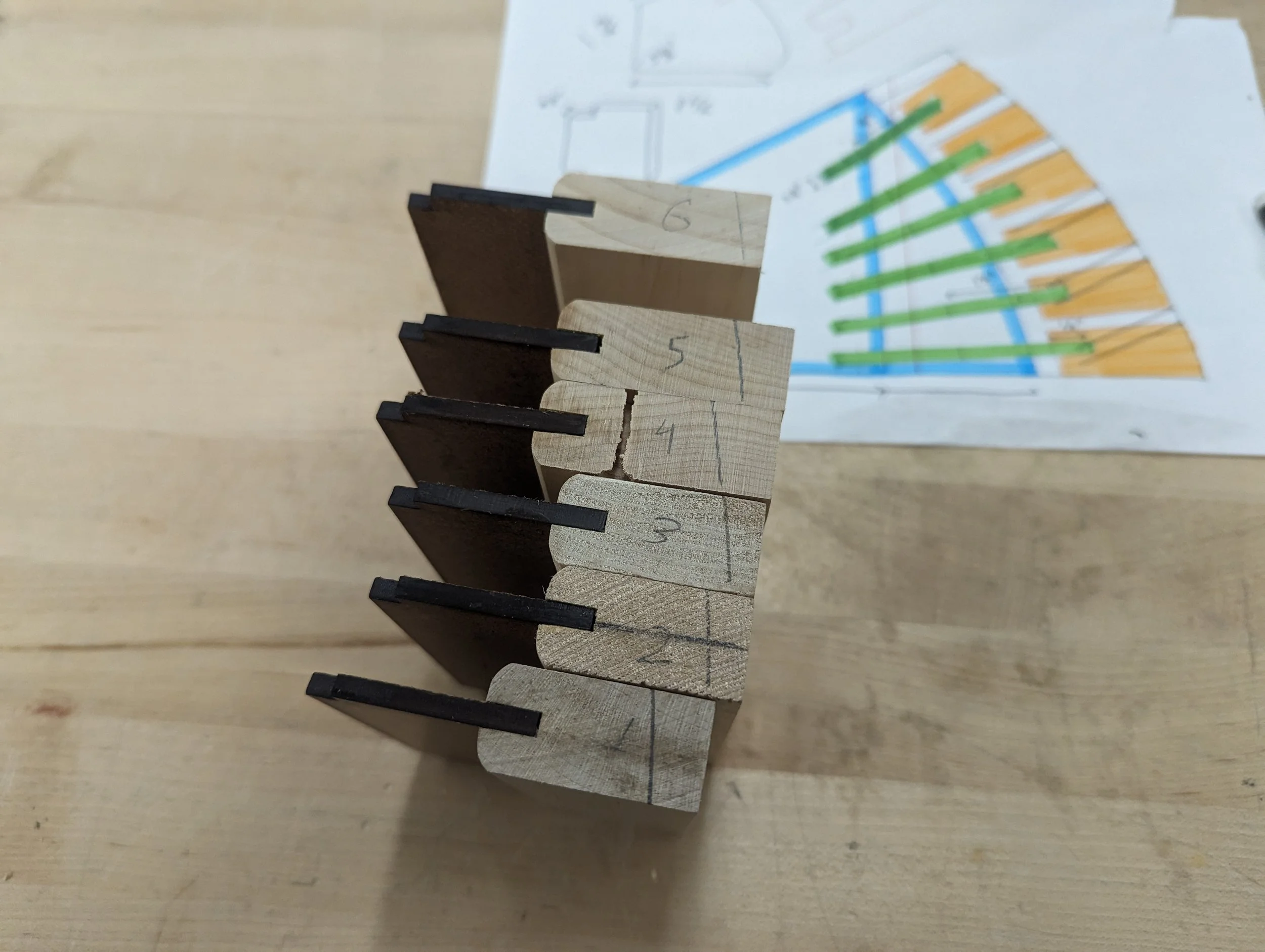
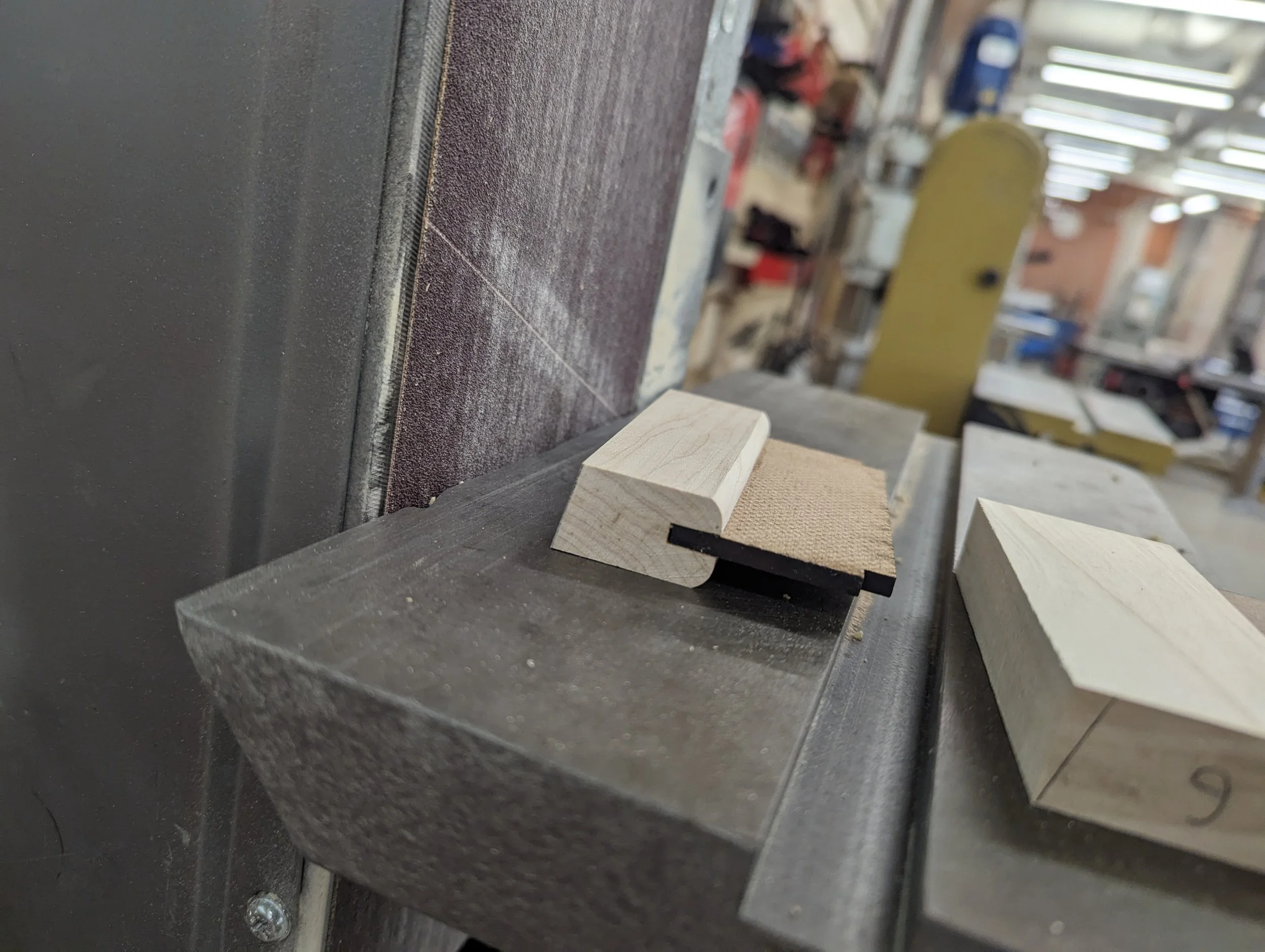
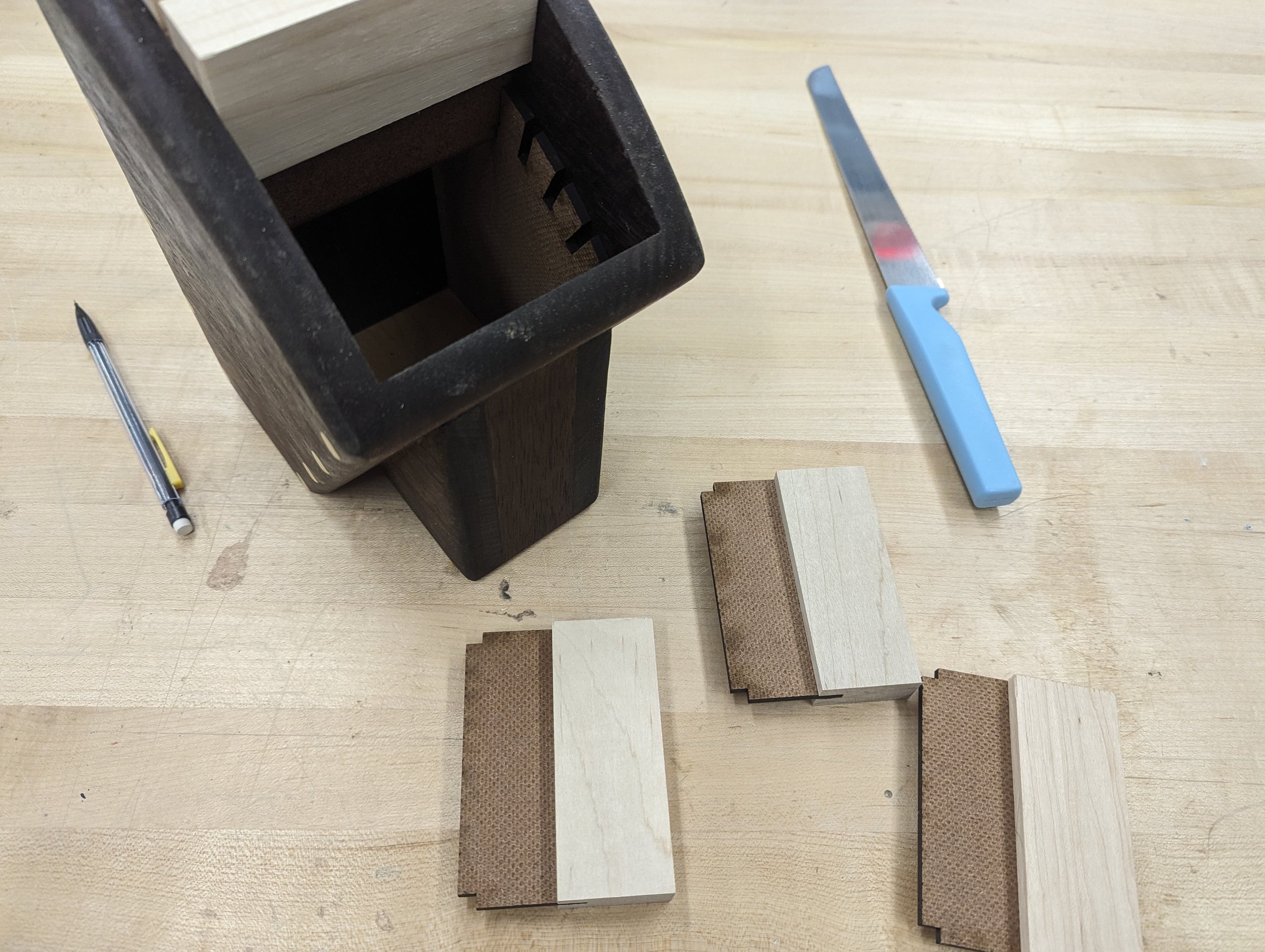
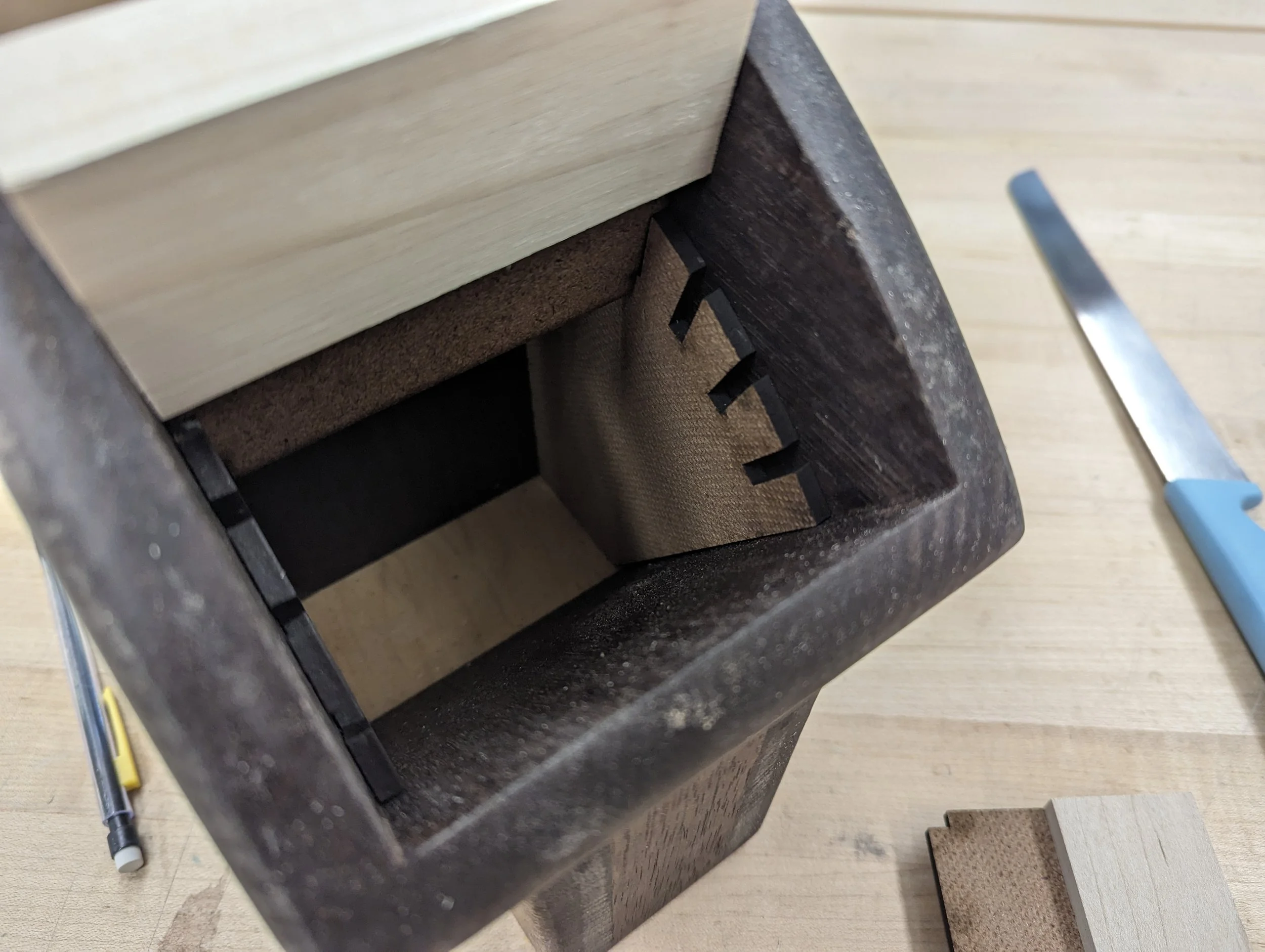
The skewers still looked bad so I decided to abandon that approach and used AutoCAD to create a custom insert that would support horizontal Maple dividers instead. The insert was cut from 1/4" pressboard, is friction fit into place, and not visible from the outside. I cut a dado on the back of the Maple fronts to attach them to the insert, rounded the pieces over in the back to provide more room for the knife blades, and belt sanded the Maple dividers down to their final curvature. This project took about 4 months to complete including a break in the middle where I switched to another project instead. The lesson learned here was to only use skewers in a rectangular knife block.